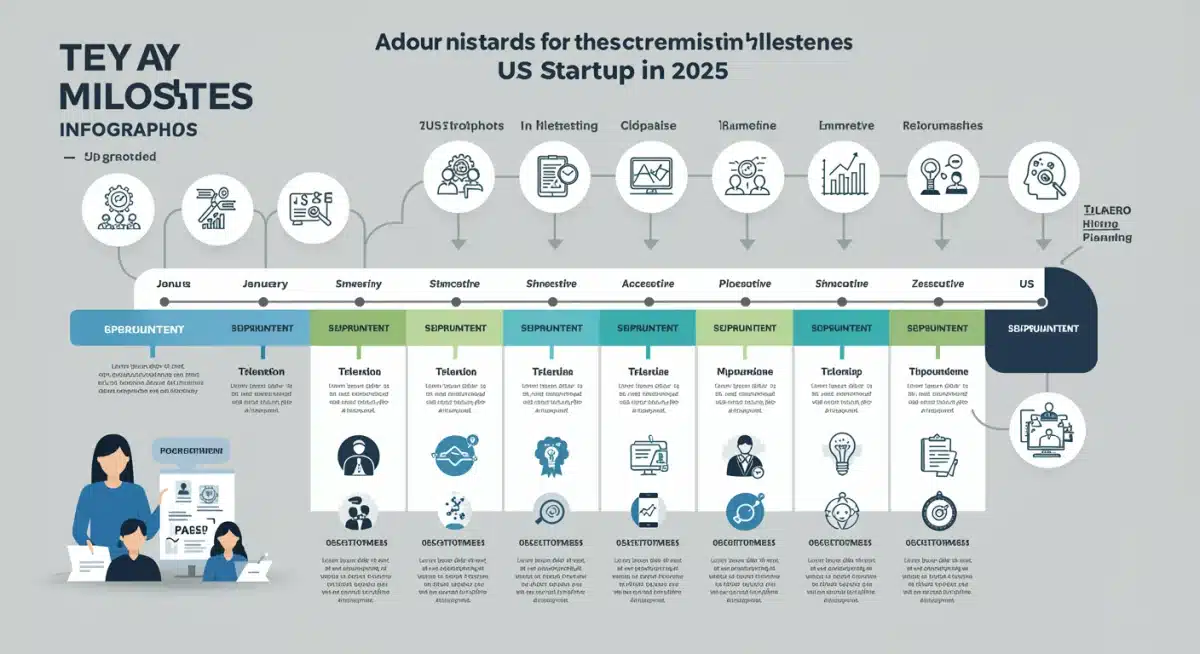
Scaling Your US Startup Team: 12-Month Hiring Roadmap
This article outlines a pragmatic 12-month hiring roadmap for US startups aiming to scale their teams effectively in 2025, focusing on strategic planning, talent acquisition, and successful onboarding for sustainable growth.
By: Eduarda Moura on October 14, 2025
Last updated on: November 28, 2025
Effectively scaling a US startup team in 2025 requires a meticulously planned 12-month hiring roadmap that integrates strategic talent acquisition with robust retention strategies to achieve sustainable growth.
For any ambitious US startup, understanding how to implement Practical Solutions: Scaling Your US Startup Team: A 12-Month Hiring Roadmap for 2025 is not just beneficial, it’s absolutely crucial for sustained growth and market leadership. This guide will walk you through a strategic, month-by-month approach to building a high-performing team, ensuring your startup is not just growing, but thriving in a competitive landscape.
Laying the foundation: strategic planning and needs assessment
The initial phase of any successful hiring roadmap involves rigorous strategic planning and a thorough needs assessment. Before even thinking about job descriptions, it’s imperative to understand the ‘why’ behind each hire. This means aligning your hiring strategy with your overarching business objectives for 2025, ensuring every new team member contributes directly to your startup’s mission and growth trajectory.
This foundational work prevents reactive hiring and ensures that each position filled is a strategic investment rather than a stop-gap measure. It also helps in identifying potential skill gaps and future leadership needs, allowing for proactive talent acquisition.
Defining your vision and values
A clear vision and well-defined company values are magnets for top talent. Startups often underestimate the power of their culture in attracting and retaining employees. Establishing these early on provides a framework for evaluating cultural fit during the hiring process.
Articulate your startup’s long-term vision and immediate goals for 2025.
Define core values that will guide your team’s behavior and decision-making.
Integrate these values into your employer branding and recruitment messaging.
Conducting a comprehensive needs analysis
Understanding your current team’s capabilities and identifying where future growth will demand new skills is paramount. This analysis should be both quantitative, looking at workload and output, and qualitative, assessing skill sets and team dynamics.
By the end of this foundational phase, your startup should have a clear understanding of its hiring priorities, the types of roles needed, and the ideal candidate profiles that align with both skill requirements and company culture. This robust planning sets the stage for efficient and effective recruitment.
Months 1-3: building your core recruitment infrastructure
With a solid strategic plan in place, the next three months are dedicated to establishing the core infrastructure for your recruitment efforts. This involves setting up the right tools, processes, and internal capabilities to support a continuous hiring pipeline. This period is crucial for optimizing efficiency and ensuring a smooth candidate experience.
Many startups rush into posting jobs without adequate preparation, leading to disorganized processes and missed opportunities. Investing time now to build a robust recruitment engine will pay dividends throughout the year.
Implementing an applicant tracking system (ATS)
An ATS is indispensable for managing applications, tracking candidate progress, and streamlining communication. Choosing the right ATS that scales with your startup’s needs is a critical decision in these early months.
Research and select an ATS that fits your budget and functionality requirements.
Configure the ATS to align with your hiring workflow and data tracking needs.
Train your hiring managers and recruitment team on effective ATS utilization.
Crafting compelling job descriptions
Job descriptions are often the first point of contact between your startup and potential candidates. They need to be more than just a list of responsibilities; they should convey your company culture, growth opportunities, and the impact a new hire can make.
Focus on creating clear, concise, and engaging job descriptions that highlight the unique aspects of working at your startup. Use inclusive language and clearly outline both required skills and desired attributes. This attention to detail will attract a higher quality of applicants and set appropriate expectations from the outset.
Months 4-6: proactive sourcing and employer branding
As your recruitment infrastructure solidifies, months 4-6 shift focus to proactive sourcing and strengthening your employer brand. In a competitive talent market, waiting for candidates to apply is often not enough. Startups need to actively seek out top talent and present a compelling reason for them to join.
This phase is about making your startup an attractive destination for professionals, not just through compensation, but through culture, mission, and growth potential. A strong employer brand reduces recruitment costs and speeds up the hiring process.
Leveraging diverse sourcing channels
To reach a broad and diverse talent pool, startups must utilize a variety of sourcing channels beyond traditional job boards. This includes professional networks, industry events, social media, and direct outreach.
Explore niche job boards and professional communities relevant to your industry.
Actively engage on platforms like LinkedIn, GitHub, and industry-specific forums.
Consider partnerships with universities or coding bootcamps for emerging talent.
Developing a strong employer brand narrative
Your employer brand is a reflection of what it’s like to work at your startup. It’s built on your values, culture, and employee experiences. Developing a compelling narrative helps attract candidates who align with your mission.
Share employee testimonials, highlight team successes, and showcase your company culture through various online and offline channels. Authenticity is key; candidates are increasingly looking for genuine connections and a sense of purpose in their work. This period is vital for building a reputation as a desirable employer.
Months 7-9: optimizing the interview process and candidate experience
With an established pipeline of candidates, months 7-9 are dedicated to refining your interview process and ensuring an exceptional candidate experience. A well-structured and positive interview process can significantly impact your offer acceptance rates and overall brand perception.
Even if a candidate isn’t hired, a positive experience can turn them into an advocate for your brand. Conversely, a poor experience can deter future applicants and damage your reputation. This phase focuses on making every interaction count.
Structuring effective interviews
Interviews should be standardized yet flexible enough to assess both technical skills and cultural fit. Develop structured interview guides and train your interviewers to ask consistent, behavioral questions that reveal true capabilities and values alignment.
Create clear interview stages with defined objectives for each stage.
Implement a scoring rubric to ensure objective candidate evaluation.
Provide timely feedback to candidates, regardless of the outcome.
Enhancing candidate communication
Consistent and transparent communication is crucial throughout the hiring process. Candidates appreciate knowing where they stand and what to expect next. Delays or lack of communication can lead to frustration and withdrawal from the process.
Utilize your ATS to automate communication where appropriate, but also ensure personalized touchpoints. Regular updates, clear next steps, and prompt responses to queries demonstrate respect for candidates’ time and effort. A positive candidate experience is a powerful tool for attracting and securing top talent.
Months 10-12: onboarding, development, and retention strategies
The final quarter of your 12-month roadmap shifts focus from hiring to integrating new team members and fostering their long-term success. Effective onboarding and continuous development are critical for retention, ensuring that your investment in talent yields maximum returns.
Hiring is only half the battle; keeping your best people engaged and productive is what truly drives sustainable growth. This period emphasizes creating an environment where employees can thrive and contribute meaningfully.
Designing an impactful onboarding program
Onboarding should extend beyond the first day, providing new hires with the tools, information, and support they need to become productive members of your team quickly. A well-designed program reduces ramp-up time and improves employee satisfaction.
Develop a structured onboarding plan that covers company culture, roles, and responsibilities.
Assign mentors or buddies to new hires to facilitate integration and support.
Schedule regular check-ins to address questions and provide early feedback.
Investing in continuous employee development
Top talent is always looking for opportunities to learn and grow. Startups that invest in their employees’ professional development are more likely to retain them. This includes providing access to training, workshops, and career advancement opportunities.
Encourage a culture of continuous learning and provide resources that support skill development relevant to both individual career paths and company goals. This commitment to growth fosters loyalty and ensures your team remains at the forefront of their respective fields. Regular performance reviews and goal setting also play a crucial role in this phase.
Measuring success and adapting your strategy
Throughout the entire 12-month hiring roadmap, it’s essential to continuously measure your progress and adapt your strategy as needed. The startup landscape is dynamic, and your hiring approach must be agile enough to respond to changes in market conditions, talent availability, and your own business needs.
This iterative process ensures that your recruitment efforts remain effective and aligned with your organizational goals, allowing for adjustments that optimize both efficiency and outcomes. Without proper measurement, it’s impossible to know what’s working and what isn’t.
Key performance indicators (KPIs) for recruitment
Tracking specific KPIs provides objective data on the effectiveness of your hiring process. This data can inform future decisions and help identify areas for improvement.
Monitor time-to-hire, cost-per-hire, and offer acceptance rates.
Track source-of-hire to identify the most effective recruitment channels.
Measure new hire retention rates and performance during their first year.
Gathering feedback and iterating
Solicit feedback from both candidates and hiring managers regularly. Candidate surveys can provide valuable insights into their experience, while internal feedback helps refine interview processes and onboarding programs.
Use this feedback to make continuous improvements to your hiring strategy. The goal is to create a recruitment process that is not only efficient but also consistently delivers high-quality talent that contributes significantly to your startup’s success. This ongoing refinement ensures your US startup hiring roadmap remains effective and competitive.
Key Milestone
Brief Description
Strategic Planning
Define 2025 hiring needs, align with business goals, and establish core values.
Recruitment Infrastructure
Implement ATS, craft compelling job descriptions, and set up internal processes.
Talent Sourcing & Branding
Proactively source talent across diverse channels and strengthen employer brand.
Onboarding & Retention
Develop robust onboarding programs and invest in continuous employee development.
Frequently asked questions about scaling a US startup team
What is the most critical first step for a US startup scaling its team?▼
The most critical first step is conducting a comprehensive strategic planning and needs assessment. This involves clearly defining your startup’s vision, values, and identifying specific skill gaps and future roles required to achieve your 2025 business objectives. This foundation ensures every hire is strategic.
How can a startup attract top talent in a competitive US market?▼
Attracting top talent requires a strong employer brand that articulates your unique culture, mission, and growth opportunities. Proactive sourcing through diverse channels, engaging job descriptions, and showcasing employee testimonials are essential to stand out in the competitive US market.
What role does an ATS play in a 12-month hiring roadmap?▼
An Applicant Tracking System (ATS) is crucial for managing the entire recruitment pipeline efficiently. It helps streamline application management, track candidate progress, automate communications, and provide valuable data for optimizing your hiring process throughout the 12-month roadmap, improving overall organization.
Why is a positive candidate experience so important for startups?▼
A positive candidate experience enhances your startup’s reputation, increases offer acceptance rates, and can turn non-hires into brand advocates. Transparent communication, timely feedback, and a structured interview process demonstrate respect, leaving a lasting positive impression regardless of the hiring outcome.
How do you ensure new hires become long-term assets?▼
Ensuring new hires become long-term assets involves robust onboarding and continuous employee development. A structured onboarding program integrates them into the culture and role effectively. Investing in ongoing training, mentorship, and career growth opportunities fosters loyalty and maximizes their contribution to the startup.
Conclusion
Successfully scaling a US startup team in 2025 demands more than just filling vacancies; it requires a thoughtful, strategic, and adaptable 12-month hiring roadmap. By meticulously planning, building robust recruitment infrastructure, actively engaging with talent, optimizing the candidate experience, and prioritizing retention through development, startups can build high-performing teams that are not only capable of meeting current demands but are also poised for future innovation and sustained growth. This holistic approach ensures every hiring decision contributes to the long-term success and resilience of your venture.
Eduarda Moura has a degree in Journalism and a postgraduate degree in Digital Media. With experience as a copywriter, Eduarda strives to research and produce informative content, bringing clear and precise information to the reader.