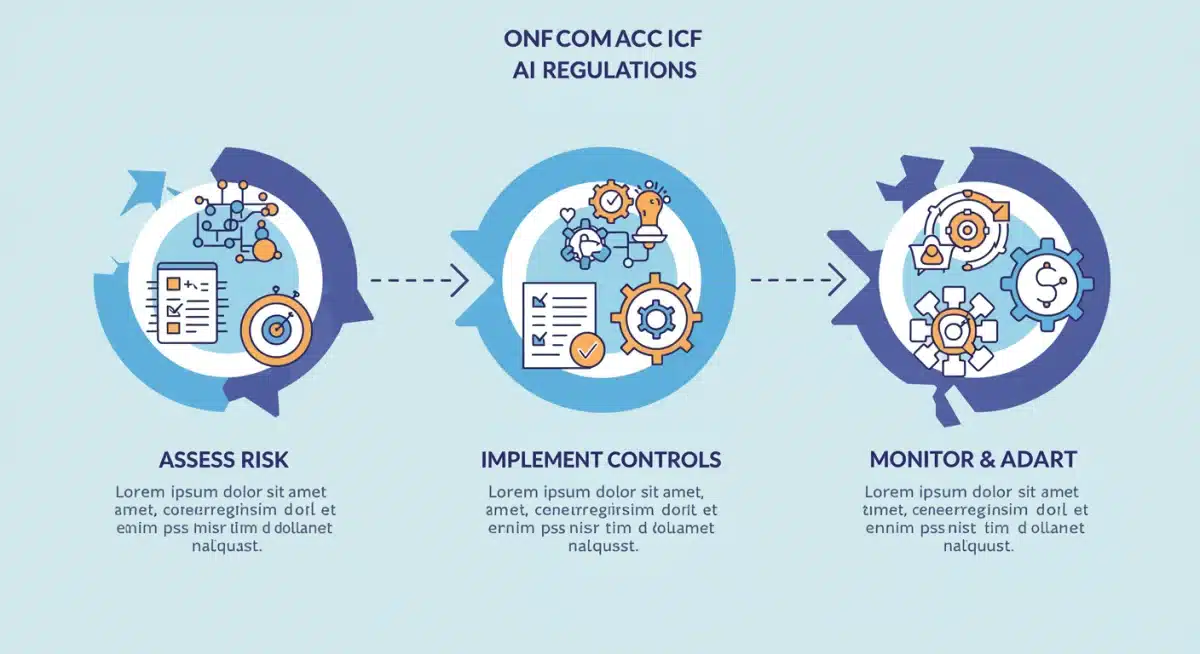
US AI Regulations: 3-Step Compliance for Tech Startups
Tech startups must proactively address the evolving US AI regulatory landscape. This guide provides a practical 3-step compliance checklist to navigate new requirements, ensuring responsible innovation and avoiding potential legal pitfalls.
By: Eduarda Moura on July 11, 2025
Last updated on: November 28, 2025
Navigating new US AI regulations requires tech startups to implement a proactive, multi-faceted compliance strategy focusing on risk assessment, robust control implementation, and continuous monitoring to ensure responsible innovation and legal adherence.
For tech startups, successfully navigating the complex and rapidly evolving landscape of US AI regulations compliance is not just a legal obligation but a strategic imperative. The era of unchecked AI development is drawing to a close, replaced by a growing demand for accountability, transparency, and ethical considerations. Understanding and implementing a robust compliance framework is crucial for fostering innovation responsibly and ensuring long-term viability in a competitive market.
Understanding the Evolving US AI Regulatory Landscape
The regulatory environment for artificial intelligence in the United States is dynamic, characterized by a patchwork of federal and state-level initiatives rather than a single, overarching law. This complexity presents unique challenges for tech startups, which often operate with limited resources but are at the forefront of AI innovation. Staying informed about these developments is the first critical step towards effective compliance.
Key federal efforts include the National Institute of Standards and Technology (NIST) AI Risk Management Framework, which provides voluntary guidance for managing AI risks. Additionally, various agencies, from the Federal Trade Commission (FTC) to the Equal Employment Opportunity Commission (EEOC), are interpreting existing laws through an AI lens, focusing on consumer protection, anti-discrimination, and data privacy. State-level initiatives, such as those in California and Colorado regarding automated decision-making, add another layer of complexity that startups must address.
Key Regulatory Bodies and Their Focus
Different federal agencies are approaching AI regulation from their specific mandates, leading to a multi-faceted regulatory environment. Understanding who is regulating what is essential for startups to tailor their compliance efforts effectively.
Federal Trade Commission (FTC): Focuses on consumer protection, ensuring AI systems are not deceptive, unfair, or discriminatory.
Equal Employment Opportunity Commission (EEOC): Addresses AI’s impact on employment, particularly concerning bias in hiring algorithms and automated decision-making.
National Institute of Standards and Technology (NIST): Develops voluntary standards and guidelines, like the AI Risk Management Framework, to promote trustworthy AI.
Sector-Specific Regulators: Agencies like the FDA (healthcare AI) and DOT (autonomous vehicles) are developing rules pertinent to their industries.
Beyond federal mandates, several states are enacting their own AI-specific laws, particularly in areas like data privacy and automated decision-making. These state laws can impose stricter requirements or cover areas not yet fully addressed at the federal level, necessitating a geographically aware compliance strategy for startups operating across state lines.
In summary, the US AI regulatory landscape is a complex web of existing laws, emerging guidelines, and sector-specific rules, with both federal and state entities playing significant roles. Startups must cultivate a continuous awareness of these evolving mandates to build a resilient and compliant AI development strategy.
Step 1: Conduct a Comprehensive AI Risk Assessment
The foundational step in any effective US AI regulations compliance strategy is to conduct a thorough AI risk assessment. This process involves identifying, analyzing, and evaluating the potential risks associated with your AI systems, from development to deployment. A robust risk assessment goes beyond mere technical vulnerabilities, encompassing ethical, legal, and societal impacts.
Startups must scrutinize their AI models for potential biases, privacy infringements, security vulnerabilities, and lack of transparency. This requires a deep dive into the data used for training, the algorithms themselves, and the context in which the AI system will operate. Ignoring these risks can lead to significant legal penalties, reputational damage, and erosion of user trust.
Identifying Potential Biases and Discrimination
Bias is a pervasive risk in AI, often stemming from biased training data or flawed algorithmic design. Identifying and mitigating these biases is paramount, especially given the EEOC’s scrutiny of AI in employment and the FTC’s focus on unfair practices.
Data Audit: Examine training datasets for underrepresentation or overrepresentation of certain demographic groups, historical biases, or proxy variables that could lead to discriminatory outcomes.
Algorithmic Review: Analyze the AI model’s decision-making process for fairness metrics and disparate impact on different groups. Employ explainable AI (XAI) techniques to understand how decisions are made.
Impact Assessment: Evaluate the potential real-world impact of biased AI on affected individuals or communities, particularly in sensitive areas like credit scoring, healthcare, or criminal justice.
Beyond bias, startups must also assess data privacy implications. This involves understanding how personal data is collected, processed, stored, and shared by AI systems, ensuring adherence to regulations like the California Consumer Privacy Act (CCPA) and emerging state-specific privacy laws. Security vulnerabilities, which could lead to data breaches or manipulation of AI models, also require careful evaluation.
A comprehensive AI risk assessment provides a clear roadmap for addressing potential compliance gaps and ethical concerns. By proactively identifying and understanding these risks, startups can strategically allocate resources and develop targeted mitigation strategies, laying a solid groundwork for responsible AI innovation.
Step 2: Implement Robust AI Governance and Control Mechanisms
Once risks are identified, the next crucial step in US AI regulations compliance is to implement robust governance and control mechanisms. This involves establishing clear policies, procedures, and internal structures to manage AI development and deployment responsibly. Effective governance ensures that ethical considerations and legal requirements are embedded throughout the AI lifecycle, not merely as an afterthought.
For startups, this means developing an internal framework that assigns clear responsibilities, defines ethical principles, and outlines processes for data management, model validation, and incident response. This framework should be proportionate to the startup’s size and the complexity of its AI systems, yet comprehensive enough to address identified risks.
Establishing Internal Policies and Ethical Guidelines
Creating clear internal policies is essential for guiding employee behavior and ensuring consistent adherence to compliance standards. These policies should reflect both legal requirements and the startup’s commitment to ethical AI development.
Data Governance Policy: Define rules for data collection, usage, storage, and retention, ensuring compliance with privacy laws and ethical data handling.
AI Ethics Code: Establish core ethical principles (e.g., fairness, transparency, accountability, human oversight) that guide the design, development, and deployment of all AI systems.
Model Development Guidelines: Outline procedures for model documentation, testing, validation, and explainability to ensure reliability and reduce bias.
Beyond policies, startups should also implement practical control mechanisms. This includes technical safeguards, such as data anonymization techniques and secure development practices, as well as procedural controls like mandatory ethics training for AI development teams and regular internal audits. The goal is to create a culture of responsibility and due diligence.
Furthermore, establishing a dedicated AI ethics committee or assigning a responsible AI officer, even in a small startup, can provide crucial oversight and ensure that ethical considerations are consistently integrated into decision-making. These control mechanisms are vital for demonstrating a commitment to compliance and mitigating potential liabilities.
Step 3: Continuous Monitoring, Auditing, and Adaptation
The final, yet ongoing, step in US AI regulations compliance is continuous monitoring, regular auditing, and proactive adaptation. The regulatory landscape is constantly evolving, and AI systems themselves are dynamic. A static compliance approach is insufficient; startups must build mechanisms for ongoing oversight and responsiveness.
This involves continuously tracking the performance and impact of deployed AI systems, staying updated on new regulatory developments, and being prepared to adjust internal policies and technical controls as needed. Proactive monitoring helps identify emerging risks or compliance gaps before they escalate into major issues.
Regular Performance and Bias Audits
Once an AI system is in production, its behavior and impact must be continuously assessed. This is particularly important for detecting concept drift, data drift, or emergent biases that may not have been apparent during initial testing.
Automated Monitoring Tools: Implement tools to continuously track key performance indicators (KPIs), fairness metrics, and data integrity of AI models in real-time.
Periodic Audits: Conduct regular, independent audits of AI systems to review their compliance with internal policies, ethical guidelines, and external regulations. These audits should cover data, models, and deployment environments.
Feedback Loops: Establish mechanisms for collecting user feedback and complaints about AI system performance or perceived unfairness, using this information to inform improvements.
Beyond internal monitoring, startups must also keep a close eye on the external regulatory environment. This includes subscribing to regulatory updates, participating in industry forums, and consulting with legal experts to understand how new laws or interpretations might affect their operations. The NIST AI Risk Management Framework, while voluntary, offers a valuable structure for this continuous improvement cycle.
Furthermore, an effective incident response plan is critical. In the event of a compliance breach, security incident, or ethical lapse, having a predefined plan for investigation, remediation, and communication can minimize damage and demonstrate a commitment to accountability. This continuous cycle of monitoring, auditing, and adaptation ensures that a startup’s AI compliance framework remains robust and relevant in the face of change.
Building a Culture of Responsible AI Innovation
Beyond the three-step checklist, true US AI regulations compliance for tech startups hinges on fostering a pervasive culture of responsible AI innovation. Compliance should not be seen as a burdensome obligation but as an integral part of developing trustworthy and sustainable AI solutions. This cultural shift begins at the top, with leadership championing ethical principles and integrating them into the company’s DNA.
When responsibility is embedded in every stage of development, from initial concept to post-deployment monitoring, it leads to better products, stronger customer relationships, and a more resilient business. This proactive approach helps startups anticipate regulatory changes and adapt more quickly, turning potential challenges into opportunities for differentiation.
Leadership Buy-in and Employee Training
For a culture of responsible AI to flourish, leadership must visibly support and invest in compliance efforts. This sends a clear message throughout the organization about the importance of ethical and legal adherence.
Executive Sponsorship: Ensure senior management actively champions responsible AI initiatives, allocating necessary resources and setting clear expectations.
Cross-Functional Collaboration: Promote collaboration between legal, engineering, product, and ethics teams to ensure a holistic approach to AI development and compliance.
Continuous Training: Provide regular training for all employees involved in AI development and deployment on ethical AI principles, regulatory requirements, and internal policies.
Encouraging open dialogue about AI’s potential impacts and challenges within the organization is also vital. Creating safe spaces for employees to raise concerns without fear of reprisal can help identify issues early and foster a more ethical development process. This extends to engaging with external stakeholders, including users, academics, and policymakers, to gain diverse perspectives and build trust.
Ultimately, a culture of responsible AI innovation transforms compliance from a reactive checklist into a proactive strategic advantage. It enables startups to build AI systems that are not only technologically advanced but also ethically sound, legally compliant, and socially beneficial, positioning them for long-term success in the evolving digital landscape.
The Strategic Advantage of Proactive Compliance
While US AI regulations compliance might initially appear as another hurdle for lean tech startups, viewing it purely as a cost center misses a significant opportunity. Proactive compliance is, in fact, a powerful strategic differentiator that can confer numerous long-term benefits. In a market increasingly wary of AI’s potential pitfalls, a commitment to responsible development can build trust, attract investment, and unlock new business opportunities.
Startups that embed compliance into their core operations from day one are better positioned to earn the confidence of customers, partners, and regulators. This trust is invaluable, especially when dealing with sensitive data or high-impact AI applications, where ethical lapses can quickly erode market standing.
Attracting Investment and Talent
In today’s investment climate, venture capitalists and angel investors are increasingly scrutinizing the ethical and regulatory posture of AI startups. A robust compliance framework signals maturity and reduces perceived risks, making a startup more attractive to potential investors.
Investor Confidence: Demonstrating a clear plan for regulatory adherence and risk management can significantly enhance investor confidence, facilitating fundraising efforts.
Talent Acquisition: Top AI talent is often drawn to companies that prioritize ethical development and social responsibility. A strong compliance culture can be a key factor in attracting and retaining skilled professionals.
Partnership Opportunities: Larger enterprises seeking AI solutions are more likely to partner with startups that can demonstrate adherence to high ethical and compliance standards, mitigating their own supply chain risks.
Moreover, proactive compliance can foster innovation by providing clear boundaries and ethical guardrails. Rather than stifling creativity, a well-defined framework can guide developers toward more responsible and sustainable AI applications, potentially leading to novel solutions that address real-world problems while respecting societal values. It also helps avoid costly retrofits or legal battles down the line, freeing up resources for core product development.
In essence, seeing compliance as a strategic asset rather than a mere burden allows tech startups to not only survive but thrive in the regulated AI era. It builds a foundation of credibility and trust, essential ingredients for long-term success and market leadership.
Future-Proofing Your AI Startup in a Regulated World
The trajectory of AI regulation in the US is undeniably towards greater oversight and more specific requirements. For tech startups, the challenge is not just to comply with current laws but to future-proof their operations against anticipated changes. This requires a forward-looking perspective, anticipating regulatory trends, and building flexible, adaptable compliance systems.
Future-proofing involves more than just staying informed; it means actively participating in the conversation, advocating for sensible regulations, and building AI systems with modularity and transparency in mind. The goal is to create an AI infrastructure that can readily adapt to new standards without requiring a complete overhaul.
Anticipating Legislative Changes and Global Impact
While US AI regulation is still fragmented, there are clear indications of potential future directions, including calls for comprehensive federal AI legislation. Startups should monitor these discussions and consider their potential impact.
Legislative Tracking: Keep abreast of proposed federal and state legislation, white papers, and policy discussions that could shape future AI laws.
Global Context: Understand that US regulations may eventually align with or be influenced by global standards, such as Europe’s AI Act. Designing for broader compliance can offer a competitive advantage.
Ethical AI by Design: Integrate ethical considerations and compliance requirements into the very design phase of AI systems, making them inherently more adaptable to future regulations.
The concept of ‘AI by Design’ emphasizes building AI systems with privacy, security, transparency, and fairness as core architectural principles from the outset. This approach reduces the need for expensive and time-consuming retrofitting when new regulations emerge. It also promotes a stronger defense against potential legal challenges or public scrutiny.
Furthermore, actively engaging with industry associations, regulatory bodies, and academic institutions can provide valuable insights into future regulatory directions and allow startups to contribute to the shaping of these policies. By adopting a proactive and adaptable stance, tech startups can navigate the evolving regulatory landscape with confidence, ensuring their longevity and continued innovation in the AI space.
Key Compliance Step
Brief Description
AI Risk Assessment
Identify and evaluate potential biases, privacy issues, and security vulnerabilities in AI systems.
Implement Governance
Establish internal policies, ethical guidelines, and control mechanisms for responsible AI development.
Monitor & Adapt
Continuously track AI performance, conduct audits, and adapt to evolving regulatory landscapes.
Foster Responsible Culture
Embed ethical AI principles throughout the organization through leadership and training.
Frequently Asked Questions About US AI Regulations
What are the primary federal agencies overseeing AI regulation in the US?▼
Several federal agencies, including the FTC, EEOC, and NIST, play key roles. The FTC focuses on consumer protection and unfair practices, the EEOC addresses AI’s impact on employment discrimination, and NIST develops voluntary AI risk management frameworks.
Why is an AI risk assessment crucial for tech startups?▼
An AI risk assessment helps identify potential biases, privacy infringements, and security vulnerabilities early on. This proactive step prevents legal penalties, reputational damage, and builds user trust, which is vital for long-term startup success and responsible innovation.
How can startups address AI bias in their systems?▼
Startups can address AI bias through thorough data audits to detect skewed datasets, algorithmic reviews to analyze fairness metrics, and impact assessments to understand real-world effects. Implementing explainable AI (XAI) techniques also helps in understanding and mitigating bias.
What role does continuous monitoring play in AI compliance?▼
Continuous monitoring ensures that AI systems remain compliant and perform as expected after deployment. It helps detect concept drift, data drift, or emergent biases, allowing startups to adapt swiftly to new regulatory requirements and maintain ethical standards over time.
Can proactive AI compliance offer a strategic advantage for startups?▼
Absolutely. Proactive AI compliance builds trust with customers and partners, attracts investment by demonstrating maturity and risk mitigation, and helps acquire top talent. It also fosters innovation by providing clear ethical boundaries, leading to more sustainable and responsible AI solutions.
Conclusion
The journey of US AI regulations compliance is not a sprint but a continuous marathon for tech startups. By embracing a structured, three-step approach—comprehensive risk assessment, robust governance implementation, and continuous monitoring and adaptation—startups can navigate the complexities of the evolving regulatory landscape. This proactive stance not only ensures legal adherence but also cultivates a culture of responsible AI innovation, transforming compliance from a potential burden into a significant strategic advantage. In an increasingly regulated world, building trustworthy AI is paramount for long-term success and sustained growth.
Eduarda Moura has a degree in Journalism and a postgraduate degree in Digital Media. With experience as a copywriter, Eduarda strives to research and produce informative content, bringing clear and precise information to the reader.