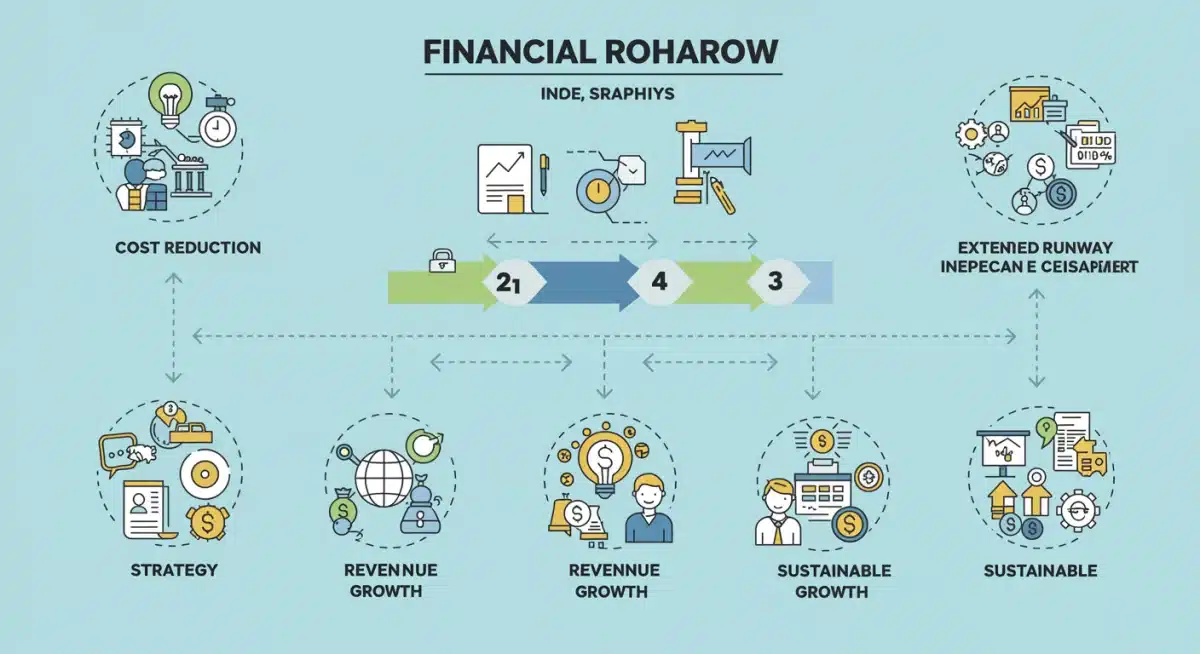
Optimizing Burn Rate for US Startups: A 20% Reduction Strategy for 2025
Effectively optimizing burn rate is crucial for US startups' longevity and success. This guide outlines a 20% reduction strategy for 2025, focusing on strategic cost-cutting, efficient resource allocation, and robust revenue growth to extend runway and foster sustainable development.
By: Eduarda Moura on September 11, 2025
Last updated on: November 28, 2025
Optimizing burn rate is critical for US startups, requiring a strategic 20% reduction by 2025 through vigilant financial management and operational efficiency to ensure sustained growth and extended runway.
In the dynamic landscape of the US startup ecosystem, managing finances effectively is paramount for survival and growth. The concept of ‘burn rate’ – the speed at which a startup spends its capital before generating positive cash flow – is a critical metric. This article delves into the Financial Impact: Optimizing Burn Rate for US Startups – A 20% Reduction Strategy for 2025, offering actionable insights for founders navigating these challenging waters.
Understanding burn rate and its critical impact
Burn rate represents the negative cash flow of a startup, indicating how quickly it consumes its available cash. For US startups, a high burn rate without a clear path to profitability can quickly lead to financial distress, even for promising ventures. Understanding this metric is the first step toward effective financial management.
The critical impact of burn rate extends beyond mere survival; it dictates a startup’s runway – the amount of time before it runs out of cash. A longer runway provides more time to achieve product-market fit, secure additional funding, or reach profitability. Conversely, a short runway creates immense pressure and can force premature strategic decisions.
Defining gross vs. net burn
Gross Burn: This refers to the total operating expenses a startup incurs over a specific period, typically monthly. It includes salaries, rent, marketing, and other operational costs.
Net Burn: This is the more commonly cited metric, calculated by subtracting revenue from gross burn. It represents the actual cash a startup loses each month.
For US startups aiming for a 20% reduction by 2025, focusing on net burn provides a more accurate picture of financial health and the effectiveness of cost-cutting measures. It highlights the gap between spending and revenue generation, which is crucial for strategic adjustments. A clear understanding of both gross and net burn is fundamental for any effective burn rate optimization strategy.
Ultimately, a deep understanding of burn rate allows startups to make informed decisions about spending, investment, and fundraising. It’s not just about cutting costs, but about optimizing financial outflows to maximize impact and extend the company’s lifespan.
Strategic cost-cutting measures for 2025
Achieving a 20% reduction in burn rate by 2025 demands a proactive and strategic approach to cost management. This isn’t about arbitrary cuts but about identifying areas where spending can be optimized without compromising core operations or growth potential. Focus on high-impact areas first.
Many startups fall into the trap of incremental cost reductions, which often yield minimal results. Instead, a holistic review of all expenditures is necessary, challenging every line item to justify its contribution to the company’s strategic goals. This critical assessment helps uncover hidden inefficiencies and opportunities for significant savings.
Re-evaluating software subscriptions and tools
In today’s digital age, startups often accumulate numerous software subscriptions, many of which are underutilized or redundant. A thorough audit can reveal significant savings.
Identify unused tools: Cancel subscriptions for software that is no longer essential or has been replaced by other solutions.
Negotiate better rates: For critical software, explore annual payment options or negotiate bulk discounts with providers.
Consolidate functionalities: Look for all-in-one solutions that can replace multiple single-purpose tools, reducing overall subscription costs.
Beyond software, consider operational expenses like office space. With the rise of remote and hybrid work models, traditional office leases might be an unnecessary drain on resources. Downsizing or opting for co-working spaces can lead to substantial reductions in fixed costs. These strategic adjustments contribute directly to a healthier burn rate.
Furthermore, examining vendor contracts and supply chain costs can uncover opportunities for negotiation. Don’t shy away from renegotiating terms with suppliers or exploring alternative vendors that offer similar quality at a lower price. Every dollar saved in operational expenditure directly impacts the burn rate, bringing the 20% reduction goal closer.
Optimizing personnel expenses and talent management
Personnel costs typically represent the largest portion of a startup’s burn rate. Therefore, optimizing these expenses is crucial for achieving a 20% reduction by 2025. This doesn’t necessarily mean widespread layoffs, but rather a thoughtful re-evaluation of workforce structure, efficiency, and talent acquisition strategies.
A strategic approach to talent management involves ensuring that every team member is utilized effectively and contributes directly to core business objectives. It also means being smart about hiring, focusing on critical roles that drive immediate value and considering alternative employment models.
Leveraging fractional and remote talent
Hiring full-time employees can be expensive, especially in competitive markets. Fractional and remote talent offer a flexible and cost-effective alternative.
Fractional expertise: Engage highly skilled professionals on a part-time or project basis for specialized needs (e.g., fractional CMO, CFO, legal counsel).
Remote workforce: Expand your talent pool globally to access skilled individuals at potentially lower cost, reducing overheads like office space and benefits.
Outsourcing non-core functions: Delegate tasks like customer support, administrative work, or certain development components to specialized agencies or freelancers.
Implementing performance management systems can also help identify areas where productivity can be improved, ensuring that personnel costs translate into tangible output. Regular performance reviews and goal setting can align individual efforts with company objectives, reducing wasted resources. By carefully managing personnel expenses, US startups can significantly impact their burn rate without sacrificing quality or growth potential.
Enhancing revenue generation for burn rate mitigation
While cost-cutting is vital, a sustainable burn rate optimization strategy also heavily relies on robust revenue generation. Increasing revenue directly offsets expenses, thereby reducing net burn. For US startups, this means not just selling more, but selling smarter, with a focus on high-margin products or services and efficient customer acquisition.
A diversified revenue stream can also provide greater financial stability, reducing reliance on a single product or market segment. This proactive approach to revenue growth is essential for extending runway and achieving long-term profitability.
Focusing on customer lifetime value (CLTV)
Acquiring new customers is often more expensive than retaining existing ones. Maximizing CLTV is a powerful way to enhance revenue efficiency.
Improve retention strategies: Implement loyalty programs, exceptional customer service, and personalized experiences to keep customers engaged.
Upsell and cross-sell: Identify opportunities to offer existing customers higher-value products or complementary services.
Optimize pricing strategy: Regularly review and adjust pricing to reflect market value and customer willingness to pay, ensuring maximum profitability.
Furthermore, exploring new distribution channels or market segments can unlock untapped revenue potential. This might involve strategic partnerships, expanding into new geographical areas, or developing variations of existing products to appeal to different customer bases. By actively pursuing avenues for revenue growth, startups can significantly mitigate their burn rate and build a more resilient financial foundation.
Improving cash flow management and forecasting
Effective cash flow management is the backbone of burn rate optimization. It involves meticulously tracking money coming in and going out, and accurately forecasting future financial needs. For US startups aiming for a 20% burn rate reduction, superior cash flow management provides the visibility and control necessary to make timely and informed decisions.
Poor cash flow can undermine even the most profitable ventures, as it can lead to liquidity issues. Therefore, understanding cash cycles and implementing robust forecasting models are critical practices for any startup focused on financial sustainability.
Implementing robust cash flow projections
Accurate cash flow projections allow startups to anticipate future financial needs and potential shortfalls, enabling proactive measures.
Develop rolling forecasts: Update cash flow projections regularly (e.g., weekly or bi-weekly) to reflect current performance and market changes.
Scenario planning: Create best-case, worst-case, and most-likely scenarios to understand potential impacts on cash reserves and prepare contingency plans.
Monitor key metrics: Track accounts receivable, accounts payable, and inventory turnover to identify trends and potential bottlenecks in cash flow.
Additionally, optimizing payment terms with both customers and suppliers can significantly impact cash flow. Negotiating shorter payment cycles with clients and extended terms with vendors can free up working capital. Implementing discount incentives for early payments from customers can also accelerate cash inflows. By mastering cash flow management, startups empower themselves to effectively manage their burn rate and secure their future.
Leveraging technology for financial efficiency
In the digital age, technology offers powerful tools for enhancing financial efficiency and contributing to burn rate optimization. For US startups, adopting the right technological solutions can automate processes, provide deeper financial insights, and reduce the need for extensive manual labor, thereby lowering operational costs.
The strategic application of technology moves beyond mere automation; it transforms financial operations into a data-driven function, enabling quicker, more accurate decision-making. This shift is vital for startups seeking a competitive edge and a 20% burn rate reduction by 2025.
Adopting financial automation software
Automation can streamline repetitive financial tasks, reduce errors, and free up valuable time for strategic analysis.
Accounting software: Utilize platforms like QuickBooks or Xero for automated bookkeeping, invoicing, and expense tracking.
Spend management tools: Implement solutions that provide real-time visibility into company spending, allowing for better budget control and identification of wasteful expenditures.
Payroll automation: Automate payroll processing to ensure accuracy, compliance, and efficiency, reducing administrative burden.
Moreover, business intelligence (BI) tools can analyze financial data and present it in an easily digestible format, offering actionable insights into spending patterns, revenue trends, and operational efficiencies. These insights are invaluable for identifying areas for burn rate optimization that might otherwise go unnoticed. By embracing technological solutions, startups can build a leaner, more efficient financial operation.
Building a culture of financial accountability
Achieving a significant burn rate reduction, such as the target 20% by 2025, requires more than just implementing strategies; it demands a fundamental shift in company culture. A culture of financial accountability ensures that every team member understands their role in managing resources and contributing to the company’s financial health. This collective mindset fosters prudent spending and innovative cost-saving ideas.
When financial responsibility is embedded in the company’s DNA, it becomes a shared objective rather than solely the finance department’s burden. This proactive approach cultivates an environment where efficiency is valued and waste is actively avoided.
Empowering teams with budget ownership
Delegating budget ownership to department heads and team leads can foster a greater sense of responsibility and encourage more thoughtful spending.
Transparent budgeting: Provide teams with clear budgets and regular reports on their spending versus allocated funds.
Incentivize efficiency: Recognize and reward teams that effectively manage their budgets and contribute to cost savings.
Education and training: Offer training on financial literacy and best practices for resource management to all employees.
Regular communication about the company’s financial performance and burn rate progress can also unify the team around common goals. When employees understand the ‘why’ behind cost-saving initiatives, they are more likely to embrace them and contribute positively. By fostering a strong culture of financial accountability, US startups can ensure that burn rate optimization is a continuous, company-wide effort, leading to sustainable success.
Key Strategy
Brief Description
Strategic Cost-Cutting
Systematically review and reduce non-essential expenditures, including software, office space, and vendor contracts.
Talent Optimization
Leverage fractional, remote, and outsourced talent to manage personnel costs efficiently without compromising expertise.
Revenue Enhancement
Focus on increasing customer lifetime value, optimizing pricing, and exploring new revenue streams to offset burn.
Cash Flow Management
Implement robust forecasting and optimize payment terms to ensure steady liquidity and financial visibility.
Frequently asked questions about burn rate optimization
What is a healthy burn rate for a US startup?▼
A healthy burn rate is highly contextual, depending on the startup’s stage, industry, and funding. Generally, it’s considered healthy if it provides a runway of at least 12-18 months. This allows sufficient time for product development, market penetration, and securing subsequent funding rounds without immediate financial pressure.
How can technology aid in reducing burn rate?▼
Technology can significantly reduce burn rate by automating financial processes, minimizing manual errors, and providing real-time insights into spending. Tools for accounting, spend management, and payroll automation streamline operations, while business intelligence platforms help identify cost-saving opportunities and optimize resource allocation effectively.
What are the risks of aggressive burn rate reduction?▼
Aggressive burn rate reduction, while sometimes necessary, carries risks. It can lead to underinvestment in critical areas like product development or marketing, stifle innovation, and negatively impact team morale through layoffs. It’s crucial to balance cost-cutting with strategic investments to maintain growth potential and avoid long-term damage.
How often should a startup review its burn rate?▼
Startups should review their burn rate monthly, or even bi-weekly, especially during periods of rapid growth or financial uncertainty. Regular monitoring allows for prompt identification of deviations from projections and enables timely adjustments to spending or revenue strategies. Consistent review is key to proactive financial management and maintaining a healthy runway.
Is a 20% burn rate reduction realistic for most startups?▼
A 20% burn rate reduction is ambitious but achievable for many startups with a disciplined approach. It requires a comprehensive strategy encompassing strategic cost-cutting, revenue enhancement, and efficient resource allocation. Success depends on leadership commitment, team buy-in, and continuous monitoring and adjustment of financial strategies to meet the target.
Conclusion
Optimizing burn rate is not merely a financial exercise; it’s a strategic imperative for US startups aiming for sustained success in a competitive market. The 20% reduction strategy for 2025 outlined here emphasizes a holistic approach, combining vigilant cost-cutting, aggressive revenue generation, precise cash flow management, technological leverage, and a pervasive culture of financial accountability. By meticulously implementing these measures, startups can significantly extend their runway, build resilience, and pave the way for long-term growth and profitability, transforming potential challenges into opportunities for strategic advantage.
Eduarda Moura has a degree in Journalism and a postgraduate degree in Digital Media. With experience as a copywriter, Eduarda strives to research and produce informative content, bringing clear and precise information to the reader.