Practical Solutions: Secure Your First $500K US Angel Investment
Achieving your first $500,000 in US angel investment by mid-2025 requires strategic planning, a compelling pitch, and a deep understanding of investor expectations and market dynamics.
By: Eduarda Moura on July 9, 2025
Last updated on: November 28, 2025
Securing your first $500,000 in US angel investment by mid-2025 necessitates a robust business plan, strategic networking, and a clear understanding of investor motivations.
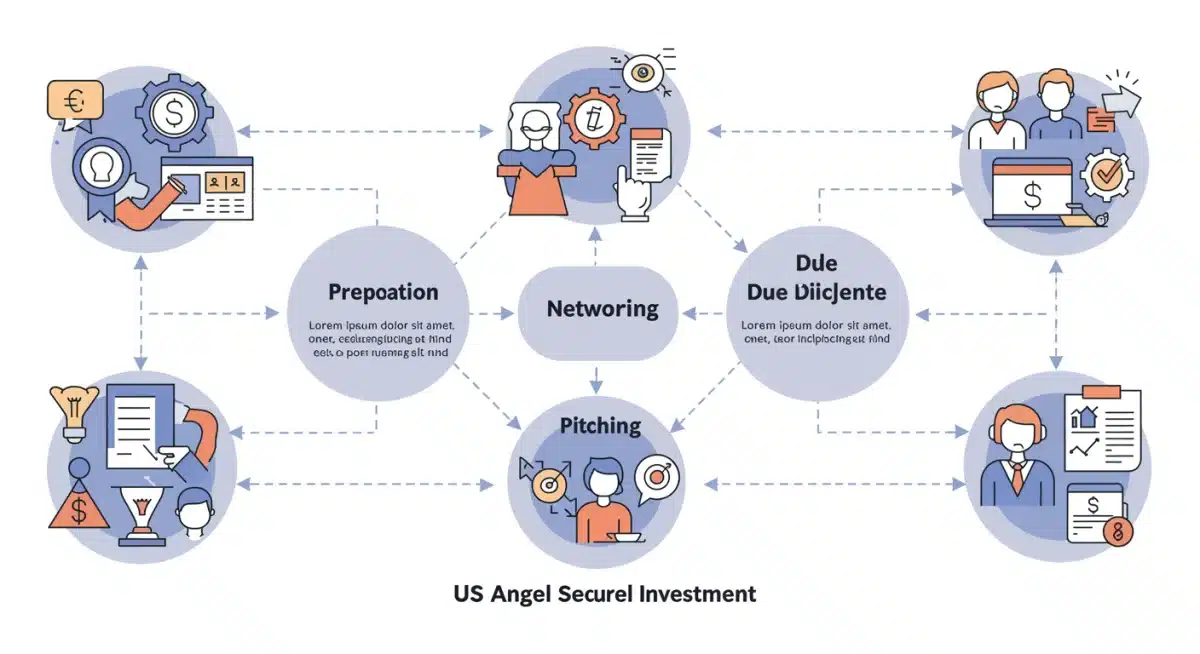
Embarking on the journey to secure early-stage funding can be daunting, but with a clear roadmap, your startup can achieve significant milestones. This article provides Practical Solutions: 5 Steps to Secure Your First $500,000 in US Angel Investment by mid-2025, offering actionable insights for entrepreneurs aiming to navigate the competitive landscape and attract crucial capital.
Understanding the US Angel Investor Landscape
The US angel investor landscape is dynamic and highly competitive, characterized by a vast network of high-net-worth individuals who provide capital for startups in exchange for ownership equity. These investors are often seasoned entrepreneurs or executives, bringing not only financial resources but also invaluable mentorship and industry connections. Understanding their motivations and investment criteria is paramount for any startup seeking early-stage funding.
Angel investors typically look for disruptive ideas, strong management teams, and significant market potential. They are often the first institutional money a startup receives, bridging the gap between bootstrapping and venture capital. Their investment decisions are frequently driven by a combination of financial return potential and a passion for supporting innovation.
The Investor’s Perspective: What They Seek
Angel investors are not merely looking for a good idea; they are looking for a great team that can execute that idea. They want to see a clear path to market, a well-defined problem that your solution addresses, and a scalable business model. Furthermore, they often prioritize ventures that align with their personal expertise or industry experience, allowing them to add value beyond just capital.
Strong Team: Investors back founders they trust and believe in.
Market Opportunity: A large, growing market with clear demand for your product or service.
Scalability: The ability for your business to grow significantly without proportional increases in resources.
Clear Problem/Solution: A well-articulated problem and an innovative, effective solution.
In essence, securing US angel investment involves more than just a compelling pitch; it requires building a relationship based on trust, demonstrating a deep understanding of your market, and showcasing your team’s capability to deliver on your vision. By aligning your strategy with their expectations, you significantly enhance your chances of securing that initial capital injection.
Step 1: Build an Irresistible Business Foundation
Before approaching any investor, your startup needs an unshakeable foundation. This isn’t just about having a great idea; it’s about validating that idea, understanding your market inside and out, and developing a clear, concise business plan that articulates your vision, strategy, and financial projections. Angel investors are astute; they will scrutinize every aspect of your business model.
Start by rigorously testing your core assumptions. Is there a genuine market need for your product or service? Who are your target customers, and what value do you offer them that competitors don’t? A strong foundation demonstrates that you’ve done your homework and are not just operating on speculation.
Market Validation and Product-Market Fit
Achieving product-market fit is crucial. This means having a product that satisfies a strong market demand. Conduct thorough market research, gather customer feedback, and iterate on your product based on real-world insights. A minimum viable product (MVP) that demonstrates traction, even in its early stages, can be incredibly persuasive to potential investors.
Customer Surveys: Understand pain points and needs directly from your target audience.
Beta Testing: Get early users to test your product and provide feedback.
Competitive Analysis: Identify your unique selling proposition and how you stand out.
Traction Metrics: Showcase early user engagement, growth, or revenue.
Your business plan should not only outline your product but also detail your go-to-market strategy, operational plan, and team structure. Financial projections must be realistic yet ambitious, showing a clear path to profitability and a significant return on investment for angels. A well-crafted business foundation instills confidence and positions your startup as a serious contender for US angel investment.
Step 2: Craft a Compelling Pitch Deck and Story
Once your business foundation is solid, the next critical step is to translate it into a compelling narrative and a visually engaging pitch deck. Your pitch deck is often the first impression an angel investor will have of your startup, and your story is what will make them remember you. This is where you convey your vision, highlight your traction, and clearly articulate the investment opportunity.
A great pitch deck is concise, visually appealing, and tells a clear story. It should cover key areas such as the problem you’re solving, your solution, market size, business model, competitive advantage, team, traction, financial projections, and your funding request. Each slide should be a standalone piece of information, yet contribute to the overall narrative.
Storytelling for Impact
Humans are wired for stories, and investors are no different. Your story should begin with the problem your startup addresses, making it relatable and urgent. Then, introduce your solution as the hero, demonstrating its effectiveness and unique value. Conclude with the vision of the future you are building and how their investment will help you get there.
Problem-Solution Arc: Clearly define the challenge and how your offering resolves it.
Personal Connection: Share why you are passionate about this problem and solution.
Future Vision: Paint a vivid picture of success and impact.
Call to Action: Clearly state what you are asking for and why.
Remember, the goal is not just to inform but to inspire. Your pitch deck and story should make investors excited about your potential and eager to learn more. Practice your delivery until it feels natural and confident, ensuring you can articulate your vision succinctly and passionately. This preparation is vital for securing your first half-million in US Angel Investment.
Step 3: Strategic Networking and Introductions
Securing angel investment is rarely about cold outreach; it’s almost always about warm introductions. Networking strategically is perhaps the most crucial step in connecting with potential investors. This involves leveraging your existing network, attending relevant industry events, and actively seeking introductions from trusted advisors, mentors, and fellow entrepreneurs.
Start by mapping out your current connections. Who do you know that might know an angel investor? Don’t be afraid to ask for introductions, but do so thoughtfully and respectfully. Provide your contacts with a concise summary of your startup and what you’re looking for, making it easy for them to make a compelling introduction on your behalf.
Leveraging Your Network Effectively
Attendance at startup accelerators, pitch events, and industry conferences can put you in front of potential investors. However, simply being present isn’t enough; you need to engage. Seek out conversations, listen more than you speak, and be genuinely interested in building relationships. Every interaction is an opportunity to learn and potentially find a valuable connection.
Attend Industry Events: Conferences, meetups, and pitch competitions.
Connect with Mentors: Seek advice from experienced entrepreneurs who can open doors.
Utilize Online Platforms: LinkedIn and specific angel investor networks can be valuable.
Follow Up Thoughtfully: Nurture relationships with personalized follow-ups.
The key is to be patient and persistent. Building a strong network takes time, but the dividends are immense. A warm introduction from a respected peer can significantly increase your chances of getting a meeting with a busy angel investor. This strategic approach to networking is indispensable for attracting US Angel Investment.
Step 4: Navigate Due Diligence and Term Sheets
Once an angel investor expresses serious interest, you will enter the due diligence phase. This is where they thoroughly investigate every aspect of your business to validate your claims and assess the risks. Be prepared to provide extensive documentation, including legal paperwork, financial records, customer data, and intellectual property details. Transparency and organization are key during this stage.
Following successful due diligence, the investor will present a term sheet. This document outlines the proposed terms and conditions of the investment, including valuation, equity stake, investor rights, and other critical clauses. It’s crucial to understand every detail of the term sheet, as it will significantly impact your company’s future.
Understanding Term Sheet Components
The term sheet isn’t a legally binding contract in its entirety, but it sets the framework for the final investment agreement. Key components often include valuation caps, liquidation preferences, anti-dilution provisions, board representation, and vesting schedules. It’s highly advisable to seek legal counsel specializing in startup finance to review the term sheet and negotiate favorable terms.
Valuation: Agreement on your company’s worth and the equity percentage for the investment.
Liquidation Preference: Defines how proceeds are distributed in an acquisition or liquidation.
Anti-Dilution Provisions: Protects the investor’s percentage ownership from future equity rounds at lower valuations.
Board Representation: Specifies if the investor will have a seat on your board of directors.
Negotiating a term sheet is a delicate balance. You want to secure the funding while also protecting your long-term interests and maintaining control over your company. A well-negotiated term sheet ensures a fair partnership and sets the stage for a successful relationship with your new angel investor, crucial for securing that initial US Angel Investment.
Step 5: Closing the Deal and Building Relationships
The final step in securing your first $500,000 in US angel investment is closing the deal and, perhaps more importantly, cultivating a strong, lasting relationship with your new investor. Closing involves signing the definitive investment agreements, which are legally binding documents derived from the term sheet. This process requires meticulous attention to detail and often the guidance of legal professionals.
Once the funds are wired, the real work of leveraging that investment begins. Your relationship with your angel investor doesn’t end at the closing table; it’s just the beginning. These individuals are not just sources of capital; they are often valuable mentors, advisors, and connectors who can significantly contribute to your startup’s growth and success.
Nurturing Investor Relationships
Regular communication is vital. Keep your investors informed about your progress, successes, and challenges. Be transparent and proactive in sharing updates, whether through monthly newsletters, quarterly reports, or informal check-ins. Seek their advice and leverage their networks when appropriate. A strong relationship can lead to follow-on investments, strategic partnerships, and invaluable guidance.
Regular Updates: Share progress, milestones, and challenges consistently.
Seek Mentorship: Tap into their experience and industry insights.
Transparency: Be honest about performance, both good and bad.
Leverage Networks: Ask for introductions to potential partners or customers.
Remember, angel investors are invested in your success, both financially and often personally. Treat them as partners. By fostering a relationship built on trust and mutual respect, you not only ensure the successful deployment of your initial US Angel Investment but also lay the groundwork for future funding rounds and sustained growth. Their continued support can be a powerful asset as your startup scales.
Key Step
Brief Description
Business Foundation
Validate your idea, understand your market, and develop a robust business plan with clear projections.
Compelling Pitch
Craft a concise, visually appealing pitch deck and a memorable story that highlights your vision and traction.
Strategic Networking
Leverage warm introductions and attend industry events to connect with potential angel investors.
Due Diligence & Terms
Prepare for thorough investor scrutiny and carefully review and negotiate term sheets with legal guidance.
Frequently Asked Questions About Angel Investment
What is the typical timeline for securing US angel investment?▼
The timeline for securing US angel investment can vary significantly, typically ranging from three to nine months. This period encompasses everything from initial outreach and networking to due diligence and legal closing. Preparation and warm introductions can help expedite the process considerably.
What key metrics do angel investors prioritize in a pitch?▼
Angel investors prioritize several key metrics, including market size and growth potential, customer acquisition costs (CAC), customer lifetime value (LTV), and early traction data like user growth or revenue. They also heavily weigh the strength and experience of the founding team.
How important is a strong network for angel funding?▼
A strong network is incredibly important, often being the most effective way to secure angel funding. Warm introductions from trusted sources significantly increase your chances of getting a meeting and being taken seriously, as opposed to cold outreach which often yields low success rates.
Should I hire legal counsel for term sheet negotiation?▼
Absolutely. Hiring legal counsel specializing in startup finance is highly recommended for term sheet negotiation. They can help you understand complex clauses, protect your interests, and ensure that the terms are fair and favorable for your company’s long-term growth and control.
What happens after I secure the angel investment?▼
After securing the investment, focus on executing your business plan, achieving promised milestones, and maintaining open communication with your investors. Regularly update them on progress, challenges, and successes to foster a strong, collaborative relationship that can lead to future support.
Conclusion
Securing your first $500,000 in US angel investment by mid-2025 is an ambitious but achievable goal for determined entrepreneurs. It demands meticulous preparation, a compelling narrative, strategic networking, and careful navigation of legal and financial complexities. By building an irresistible business foundation, crafting an engaging pitch, leveraging your network for warm introductions, understanding the intricacies of due diligence and term sheets, and ultimately fostering strong investor relationships, you significantly enhance your prospects. This strategic framework not only helps you attract necessary capital but also lays the groundwork for sustainable growth and future success within the competitive startup ecosystem.
Eduarda Moura has a degree in Journalism and a postgraduate degree in Digital Media. With experience as a copywriter, Eduarda strives to research and produce informative content, bringing clear and precise information to the reader.