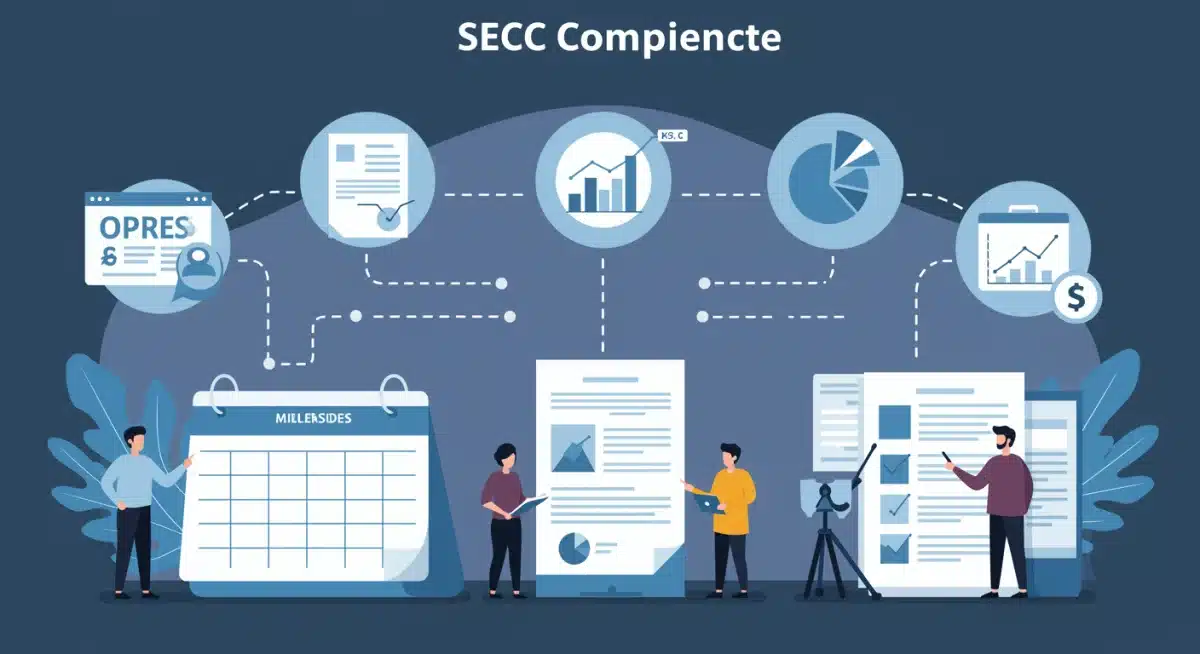
SEC Disclosure Rules 2025: Impact on Early-Stage US Startups
The SEC's new disclosure rules for 2025 are set to significantly impact early-stage US startups, demanding enhanced transparency and potentially altering fundraising strategies and compliance burdens.
By: Eduarda Moura on July 23, 2025
Last updated on: November 28, 2025
The SEC disclosure rules 2025 will fundamentally alter how early-stage US startups approach transparency, requiring a proactive re-evaluation of their operational and fundraising strategies to ensure compliance.
The landscape for early-stage US startups is constantly evolving, with new regulations frequently reshaping operational parameters and fundraising avenues. Among the most significant changes on the horizon are the Recent Updates: How the SEC’s New Disclosure Rules Impact Early-Stage US Startups in 2025. These forthcoming rules promise to introduce a new era of transparency and accountability, demanding a proactive approach from nascent companies to navigate the complexities and leverage opportunities.
Understanding the New SEC Disclosure Landscape
The Securities and Exchange Commission (SEC) continually refines its regulations to protect investors and maintain fair, orderly, and efficient markets. The new disclosure rules set to take effect in 2025 represent a significant overhaul, particularly for companies seeking capital from the public or private markets. These updates aim to provide greater transparency into various aspects of a company’s operations, financial health, and governance.
For early-stage US startups, understanding the nuances of these changes is not merely a legal formality; it’s a strategic imperative. The rules will likely influence everything from initial seed rounds to eventual IPOs, requiring a fundamental shift in how information is collected, managed, and presented to potential investors and the public.
Key Drivers Behind the Regulatory Shift
Several factors have contributed to the SEC’s decision to introduce these new disclosure requirements. Market volatility, increased investor activism, and a growing emphasis on environmental, social, and governance (ESG) factors have all played a role. The SEC seeks to arm investors with more comprehensive and standardized information, enabling them to make more informed decisions and fostering greater trust in financial markets.
Investor Protection: Ensuring that investors have access to complete and accurate information to mitigate risks.
Market Efficiency: Promoting a level playing field where all market participants have access to relevant data.
ESG Integration: Reflecting a broader societal demand for corporate responsibility and sustainability metrics.
Ultimately, these drivers underscore a broader trend towards enhanced corporate accountability. Startups, often characterized by their lean operations and rapid growth, will need to adapt quickly to integrate these new standards into their core business practices.
Direct Impact on Fundraising and Capital Access
One of the most immediate and critical areas affected by the new SEC disclosure rules 2025 will be fundraising. Early-stage startups heavily rely on venture capital, angel investors, and increasingly, crowdfunding platforms. The new rules could introduce additional hurdles or, conversely, create new opportunities for those prepared to meet the higher bar for transparency.
Private placements, often the lifeblood of early-stage funding, may see increased scrutiny. While some exemptions might remain for sophisticated investors, the general trend points towards a more rigorous disclosure environment. This could mean more detailed financial projections, clearer risk factor disclosures, and potentially, more standardized reporting on operational metrics.
Navigating Enhanced Due Diligence
Investors, armed with the new SEC mandates, will likely conduct even more thorough due diligence. Startups must be ready to provide a granular level of detail regarding their business model, financial performance, intellectual property, and management team. This preparedness can significantly streamline the fundraising process and build investor confidence.
Financial Transparency: Providing audited financials or robust internal accounting systems from an earlier stage.
Operational Clarity: Documenting business processes, customer acquisition strategies, and revenue models comprehensively.
Legal and IP Documentation: Ensuring all legal agreements and intellectual property registrations are meticulously managed and easily accessible.
The enhanced due diligence will require startups to invest in their internal controls and reporting infrastructure much earlier than they might have in the past. This upfront investment, while potentially burdensome, can ultimately lead to stronger, more resilient companies.
Operational Adjustments and Compliance Burdens
Beyond fundraising, the SEC disclosure rules 2025 will necessitate significant operational adjustments for early-stage US startups. Compliance will no longer be a reactive measure but an integral part of day-to-day operations. This includes developing robust internal reporting mechanisms, training staff, and potentially hiring new personnel or engaging expert consultants.
The scope of disclosure could extend beyond traditional financial statements to include non-financial metrics, such as cybersecurity risks, human capital management, and supply chain dependencies. Startups that proactively embed these considerations into their business strategy will be better positioned to meet the new requirements.
Building a Culture of Transparency
Cultivating a culture of transparency from the outset can transform compliance from a burden into a competitive advantage. This involves fostering open communication channels, implementing clear data governance policies, and regularly reviewing disclosure practices. Early adoption of best practices can prevent future headaches and build a strong foundation for growth.
For instance, tracking ESG metrics, even if not immediately mandated for private companies, can demonstrate forward-thinking leadership and appeal to a broader base of socially conscious investors. Similarly, robust cybersecurity protocols, clearly documented, can reassure investors about the protection of sensitive data.
The Role of Technology in Compliance
Technology will play an indispensable role in helping early-stage US startups comply with the new SEC disclosure rules 2025. Manual processes for data collection, analysis, and reporting will likely be insufficient to meet the increased demands for accuracy and timeliness. Leveraging compliance software, data analytics tools, and AI-driven solutions can automate many of these tasks.
From financial reporting software that integrates with accounting systems to governance, risk, and compliance (GRC) platforms, startups have a growing array of tools at their disposal. The key is to select and implement solutions that are scalable, secure, and tailored to the specific needs of an early-stage company.
Leveraging Data for Strategic Insights
Beyond mere compliance, technology can transform disclosure requirements into an opportunity for strategic insights. By systematically collecting and analyzing operational data, startups can gain a deeper understanding of their own performance, identify areas for improvement, and communicate their value proposition more effectively to investors.
Automated Reporting: Streamlining the generation of financial statements and other mandatory reports.
Risk Management Tools: Identifying and mitigating potential compliance risks before they escalate.
Data Visualization: Presenting complex information in an easily digestible format for stakeholders.
Investing in the right technology infrastructure early on can therefore provide a dual benefit: ensuring compliance while also enhancing internal decision-making and external communication.
Potential Opportunities and Competitive Advantages
While the new SEC disclosure rules 2025 present challenges, they also create significant opportunities for early-stage US startups. Companies that embrace transparency and proactively adapt to the new regulatory environment can gain a competitive edge. This can manifest in several ways, including attracting higher-quality investors, building stronger brand reputation, and even achieving better valuations.
Investors are increasingly looking for companies with robust governance structures and a clear commitment to ethical practices. Meeting the new disclosure standards demonstrates maturity and professionalism, which can be a powerful differentiator in a crowded startup ecosystem.
Attracting Impact Investors and Strategic Partners
The emphasis on ESG factors in the new rules aligns perfectly with the growing interest from impact investors and strategic partners who prioritize sustainability and social responsibility. Startups that can clearly articulate their positive impact, backed by verifiable data, will be exceptionally appealing to this segment of the market.
Furthermore, early compliance can simplify future fundraising rounds and potentially pave the way for smoother exits, such as acquisitions or IPOs. By establishing a strong foundation of transparency, startups can minimize legal and financial risks down the line.
Preparing Your Startup for 2025 and Beyond
The time to prepare for the SEC disclosure rules 2025 is now. Early-stage US startups should begin by conducting a thorough assessment of their current reporting practices and identifying any gaps that need to be addressed. This involves engaging legal counsel, financial advisors, and compliance experts who specialize in startup ecosystems and SEC regulations.
Developing a detailed compliance roadmap, complete with timelines and assigned responsibilities, is crucial. This plan should encompass everything from data collection protocols to internal audit procedures and investor relations strategies. Continuous monitoring and adaptation will be key as the new rules fully unfold.
Key Steps for Proactive Compliance
A structured approach to compliance can mitigate risks and ensure a smooth transition. Startups should consider these actionable steps:
Educate Your Team: Ensure all relevant personnel understand the implications of the new rules.
Review Existing Disclosures: Compare current practices against anticipated 2025 requirements.
Invest in Infrastructure: Upgrade accounting, IT, and compliance systems as needed.
Engage Experts: Seek advice from legal and financial professionals experienced in SEC compliance.
Develop a Culture of Accountability: Embed transparency and ethical practices throughout the organization.
By taking these proactive steps, early-stage US startups can not only meet the new regulatory demands but also enhance their overall operational efficiency, investor appeal, and long-term sustainability. The journey towards compliance in 2025 is an opportunity for fundamental growth and strategic maturation.
Key Aspect
Impact on Startups
Fundraising
Increased scrutiny and demand for detailed financial and operational disclosures from investors.
Compliance Burden
Need for robust internal reporting, data governance, and potentially new personnel or tools.
Technological Adoption
Leveraging software and AI for automated reporting, risk management, and data visualization.
Competitive Advantage
Early adopters gain investor trust, attract impact investors, and streamline future exits.
Frequently Asked Questions About SEC Disclosure Rules
What are the primary goals of the new SEC disclosure rules for 2025?▼
The primary goals are to enhance investor protection by providing more comprehensive and standardized information, improve market efficiency through greater transparency, and integrate ESG factors into corporate reporting, reflecting broader societal demands for accountability.
How will these rules specifically affect early-stage startup fundraising?▼
Early-stage startups will face increased investor scrutiny and demand for more detailed financial projections, risk factor disclosures, and standardized operational reporting, even in private placements. This requires enhanced internal controls and meticulous documentation.
What types of operational changes might startups need to implement?▼
Startups may need to develop robust internal reporting mechanisms, train staff on new compliance standards, and potentially hire compliance experts. Disclosure could expand to include non-financial metrics like cybersecurity risks and human capital management.
Can technology help startups comply with these new regulations?▼
Absolutely. Technology is crucial. Compliance software, data analytics tools, and AI-driven solutions can automate data collection, analysis, and reporting, ensuring accuracy and timeliness. This can streamline processes and provide strategic insights.
What are the potential benefits for startups that proactively adapt to these rules?▼
Proactive adaptation can lead to significant competitive advantages, including attracting higher-quality investors, building a stronger brand reputation, and achieving better valuations. It also simplifies future fundraising and exit strategies by demonstrating maturity and professionalism.
Conclusion
The SEC disclosure rules 2025 represent a pivotal moment for early-stage US startups, shifting the regulatory paradigm towards greater transparency and accountability. While the immediate implications may seem daunting, viewing these changes as an opportunity for strategic growth and operational maturation is crucial. By embracing proactive compliance, leveraging technology, and fostering a culture of transparency, startups can not only meet the new demands but also emerge stronger, more resilient, and more attractive to investors in an increasingly discerning market. The path forward demands foresight and adaptability, but the rewards for those who navigate it successfully are substantial.
Eduarda Moura has a degree in Journalism and a postgraduate degree in Digital Media. With experience as a copywriter, Eduarda strives to research and produce informative content, bringing clear and precise information to the reader.