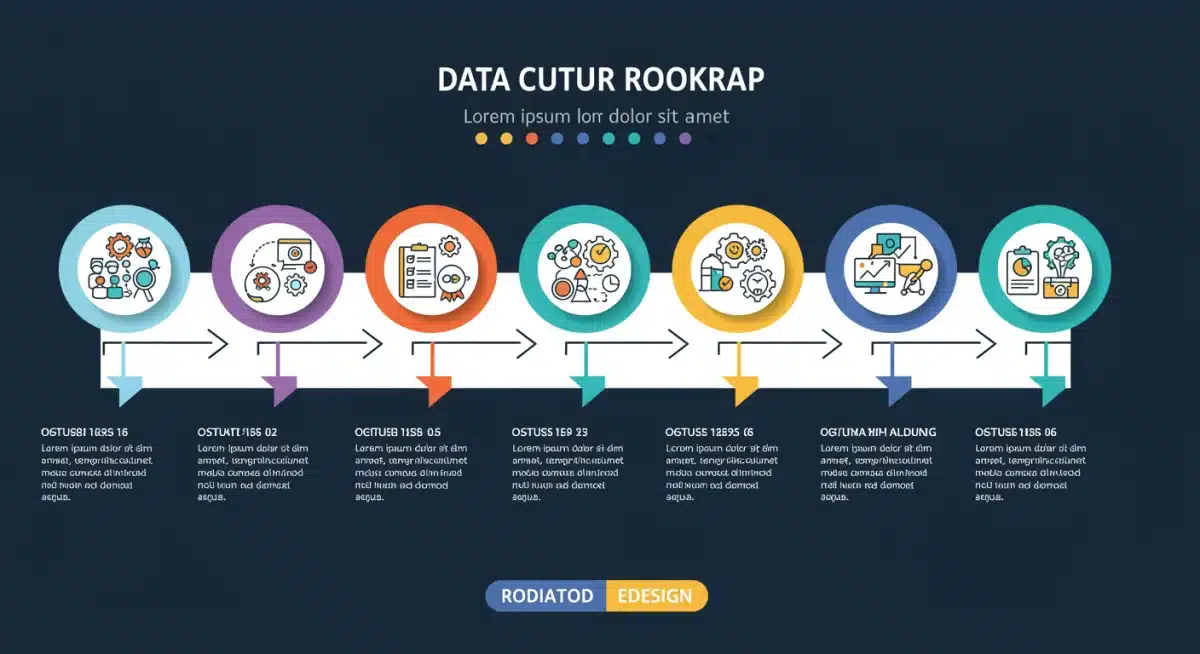
Building a Robust Data Culture in US Organizations: A 6-Month Roadmap
A robust data culture in US organizations is crucial for competitive advantage, empowering employees with data literacy through a strategic 6-month roadmap by Q4 2025 to foster informed decision-making and innovation.
By: Eduarda Moura on August 25, 2025
Last updated on: November 28, 2025
Building a robust data culture in US organizations is critical for fostering innovation and competitive advantage, necessitating a strategic 6-month roadmap to empower employees with data literacy by Q4 2025.
In today’s rapidly evolving business landscape, the ability to harness data is no longer a luxury but a necessity for survival and growth. For US organizations, establishing a robust data culture in US organizations: a 6-month roadmap to empower employees with data literacy by Q4 2025 is paramount. This strategic initiative aims to integrate data into every facet of decision-making, transforming how teams operate and innovate. It’s about more than just tools; it’s about cultivating a mindset where every employee feels confident and capable of leveraging data to drive value.
Understanding the Imperative of Data Culture in US Business
The digital transformation sweeping across industries has fundamentally reshaped how businesses operate. In the United States, organizations are increasingly recognizing that data is their most valuable asset. However, merely collecting data is insufficient; the true power lies in its interpretation and application. A strong data culture ensures that data is not only accessible but also understood and utilized effectively by everyone, from front-line staff to executive leadership.
This shift requires a deliberate and structured approach, moving beyond siloed data departments to embed data literacy across the entire workforce. The competitive nature of the US market demands that companies make informed, data-driven decisions at an unprecedented pace. Those that fail to empower their employees with the necessary data skills risk falling behind, unable to adapt to market changes or identify new opportunities.
The Benefits of Data-Driven Decision-Making
Enhanced Efficiency: Data helps streamline operations, identify bottlenecks, and optimize processes.
Improved Customer Experience: Understanding customer data leads to personalized services and products.
Increased Innovation: Data insights can spark new ideas and drive product development.
Competitive Advantage: Organizations that effectively use data gain a significant edge over rivals.
Ultimately, a robust data culture is about democratizing data, making it a shared language and a collective responsibility. It fosters an environment where curiosity is encouraged, and decisions are grounded in evidence, leading to more resilient and agile organizations prepared for the challenges and opportunities of the future.
Phase 1: Assessment and Vision Setting (Months 1-2)
The journey to building a robust data culture begins with a thorough understanding of the current state and a clear vision for the future. This initial phase, spanning the first two months, is foundational, involving a comprehensive assessment of existing data capabilities, infrastructure, and employee readiness. Without a clear picture of where an organization stands, any subsequent efforts will lack direction and effectiveness.
During this period, US organizations must engage key stakeholders across all departments to gather insights and foster a sense of collective ownership. It’s crucial to identify internal champions who can advocate for and drive the data culture transformation.
Current State Analysis and Gap Identification
The first step involves a detailed audit of current data practices. This includes assessing the quality and accessibility of existing data, identifying data silos, and evaluating the tools and technologies currently in use. Equally important is understanding the current level of data literacy among employees. This can be achieved through surveys, interviews, and informal assessments.
Data Infrastructure Audit: Evaluate current data storage, processing, and visualization tools.
Employee Skill Assessment: Determine existing data literacy levels and identify knowledge gaps.
Stakeholder Interviews: Gather perspectives from various departments on data needs and challenges.
Identify Data Silos: Pinpoint areas where data is isolated and not easily shareable.
Based on this assessment, organizations can then define their desired future state for data culture. This involves articulating a clear vision that aligns with the overall business objectives and outlining specific, measurable goals for data literacy and utilization. This vision should inspire and motivate employees, illustrating the tangible benefits of a data-driven approach for both the individual and the organization.
Phase 2: Developing a Data Literacy Program (Months 3-4)
Once the assessment is complete and a clear vision is established, the next critical step is to develop and implement a comprehensive data literacy program. This phase, covering months three and four, focuses on empowering employees with the knowledge and skills necessary to interact with, interpret, and leverage data effectively. The program should be tailored to the specific needs identified during the assessment phase, ensuring relevance and maximum impact.
A successful data literacy program goes beyond basic training; it involves creating engaging learning experiences that cater to different skill levels and roles within the organization. It should demystify data, making it approachable and actionable for everyone.
Designing Targeted Training Modules
Not all employees require the same level of data proficiency. Therefore, the data literacy program should offer tiered training modules. For instance, basic modules might cover understanding common data terms and reading dashboards, while advanced modules could delve into data analysis techniques and predictive modeling. The content should be practical, using real-world examples relevant to the organization’s operations.
Foundational Data Concepts: Introduce basic terminology, data types, and common metrics.
Data Visualization Skills: Teach employees how to interpret and create effective charts and graphs.
Tool-Specific Training: Provide hands-on experience with the organization’s data analytics platforms.
Ethical Data Use: Educate on data privacy, security, and responsible data handling practices.
The delivery methods should also be diverse, incorporating workshops, online courses, webinars, and even peer-to-peer learning opportunities. The goal is to make learning accessible and continuous, integrating it into the daily workflow rather than treating it as a one-off event. Regular feedback loops should be established to refine the program based on employee needs and evolving organizational requirements.
Phase 3: Implementation and Tool Rollout (Months 4-5)
With a data literacy program in motion, months four and five are dedicated to the practical implementation of new data tools and processes. This phase is about putting the learned skills into practice, providing employees with the necessary resources to actively engage with data. It involves deploying user-friendly data platforms and establishing clear guidelines for data access and usage across the organization.
Successful tool rollout requires careful planning, ensuring that the chosen technologies integrate seamlessly with existing systems and meet the diverse needs of various departments. It’s not just about installing software; it’s about enabling a new way of working.
Selecting and Integrating Data Platforms
The choice of data analytics platforms is crucial. Organizations should select tools that are intuitive, scalable, and capable of handling their specific data volumes and types. Integration with existing business intelligence (BI) systems, CRM, and ERP platforms is essential to create a unified data ecosystem. This allows for a single source of truth and reduces data fragmentation.
User-Friendly Interfaces: Prioritize tools with intuitive designs that minimize the learning curve.
Scalability: Ensure platforms can grow with the organization’s data needs.
Integration Capabilities: Verify compatibility with current IT infrastructure and other business systems.
Security Features: Implement robust data security and access control mechanisms.
Alongside tool rollout, establishing clear data governance policies is vital. This includes defining data ownership, quality standards, and access protocols. Empowering employees with data means also entrusting them with responsibility. Providing clear guidelines ensures that data is used ethically and effectively, maintaining its integrity and reliability throughout the organization.
Phase 4: Fostering a Culture of Experimentation and Collaboration (Month 6)
As the final month of the initial roadmap unfolds, the focus shifts to solidifying the data culture by encouraging experimentation, collaboration, and continuous learning. This phase is about embedding data-driven thinking into the organizational DNA, moving beyond formal training to create an environment where data exploration is natural and celebrated. It’s where the initial investments in data literacy begin to yield tangible results in innovation and problem-solving.
Encouraging employees to experiment with data and share their findings fosters a dynamic learning environment. This collaborative spirit transforms data from a mere resource into a catalyst for collective intelligence.
Promoting Data Storytelling and Knowledge Sharing
One of the most effective ways to foster data culture is by encouraging data storytelling. This involves teaching employees how to communicate insights from data in a compelling and understandable manner, using narrative to make data more impactful. Regular forums for sharing data insights, such as internal conferences or departmental presentations, can significantly boost engagement and cross-functional collaboration.
Data Hackathons: Organize internal events to encourage exploration and problem-solving with data.
Knowledge Sharing Platforms: Implement internal wikis or forums for sharing best practices and insights.
Mentorship Programs: Pair data experts with less experienced colleagues to facilitate learning.
Recognize Achievements: Celebrate successes where data has led to significant improvements or innovations.
By the end of this phase, US organizations should see a noticeable shift towards a proactive, data-informed approach to decision-making. The emphasis is on building a self-sustaining ecosystem where employees feel empowered to ask data-driven questions, seek out answers, and contribute to the collective knowledge base, ensuring the data culture continues to evolve and thrive beyond the initial six-month roadmap.
Sustaining Data Culture Beyond the Roadmap
While the 6-month roadmap provides a solid foundation, building a robust data culture is an ongoing journey, not a destination. To ensure long-term success, US organizations must implement strategies for continuous improvement, adaptation, and reinforcement of data-driven practices. This includes regularly reviewing the effectiveness of the data literacy program, updating tools and technologies, and maintaining strong leadership commitment.
A sustained data culture requires continuous investment and a commitment to nurturing an environment where data is respected, understood, and utilized as a strategic asset. It’s about embedding data into the very fabric of the organization’s operational rhythm.
Continuous Learning and Adaptation
The data landscape is constantly changing, with new technologies and methodologies emerging regularly. Therefore, the data literacy program must be dynamic, evolving to incorporate new trends and address emerging skill gaps. Regular refreshers, advanced training modules, and access to external learning resources can help employees stay current.
Regular Program Reviews: Assess the effectiveness of training and update content as needed.
Technology Upgrades: Keep data platforms current to leverage the latest analytical capabilities.
Feedback Mechanisms: Solicit ongoing feedback from employees to refine data initiatives.
Leadership Reinforcement: Ensure executives continue to model and advocate for data-driven decision-making.
Furthermore, establishing clear metrics to track the impact of the data culture on business outcomes is crucial. This could include measuring improvements in efficiency, customer satisfaction, or revenue growth directly attributable to data-driven initiatives. Demonstrating tangible ROI reinforces the value of the data culture and justifies continued investment, ensuring its longevity and continued success within the organization.
Key Phase
Brief Description
Months 1-2: Assessment & Vision
Evaluate current data capabilities, infrastructure, and employee literacy; define organizational data vision.
Months 3-4: Literacy Program
Develop and implement targeted data literacy training modules for all employee levels.
Months 4-5: Tool Rollout
Deploy user-friendly data platforms and establish governance policies for effective data use.
Month 6: Collaboration & Experimentation
Foster a culture of data storytelling, knowledge sharing, and continuous experimentation.
Frequently Asked Questions About Data Culture
What is data culture and why is it important for US organizations?▼
Data culture is an organizational environment where data is valued, understood, and used by everyone to inform decisions. It’s crucial for US organizations to stay competitive, drive innovation, and make more precise, evidence-based choices in a dynamic market.
How long does it typically take to build a robust data culture?▼
While a foundational roadmap can be implemented within 6 months, as outlined, building a truly robust and ingrained data culture is an ongoing process. Initial phases establish literacy and tools, but continuous effort is needed for sustained growth and adaptation.
What are the key challenges in implementing a data culture roadmap?▼
Common challenges include resistance to change, lack of executive buy-in, insufficient data literacy among employees, fragmented data systems, and difficulties in measuring ROI. Addressing these requires strong leadership and clear communication.
How can employee data literacy be effectively measured?▼
Data literacy can be measured through pre and post-training assessments, performance reviews focusing on data-driven decision-making, surveys on confidence in using data tools, and tracking engagement with data platforms and initiatives.
What role does leadership play in fostering a data-driven culture?▼
Leadership is paramount. Executives must champion the initiative, allocate resources, model data-driven behavior, and communicate the strategic importance of data. Their visible commitment inspires employees and drives organizational adoption.
Conclusion
Building a robust data culture in US organizations: a 6-month roadmap to empower employees with data literacy by Q4 2025 is a strategic imperative that promises significant returns in efficiency, innovation, and competitive advantage. By following a structured approach that encompasses assessment, comprehensive literacy programs, effective tool rollout, and fostering a culture of collaboration, organizations can transform their relationship with data. This journey requires sustained commitment from leadership and active participation from every employee, ensuring that data becomes an integral part of the organizational fabric, driving informed decisions and future success. The investment in data literacy and culture today will define the leaders of tomorrow.
Eduarda Moura has a degree in Journalism and a postgraduate degree in Digital Media. With experience as a copywriter, Eduarda strives to research and produce informative content, bringing clear and precise information to the reader.