AR/VR Integration: Boosting US Remote Collaboration by 35% by 2025
Augmented reality (AR) and virtual reality (VR) are poised to significantly enhance remote collaboration across the US, with projections indicating a 35% boost by 2025, transforming how businesses operate and interact.
By: Eduarda Moura on October 13, 2025
Last updated on: November 28, 2025
Augmented reality (AR) and virtual reality (VR) technologies are set to revolutionize remote collaboration in the United States, driving an estimated 35% increase in efficiency and engagement by 2025 through immersive virtual environments and enhanced interaction.
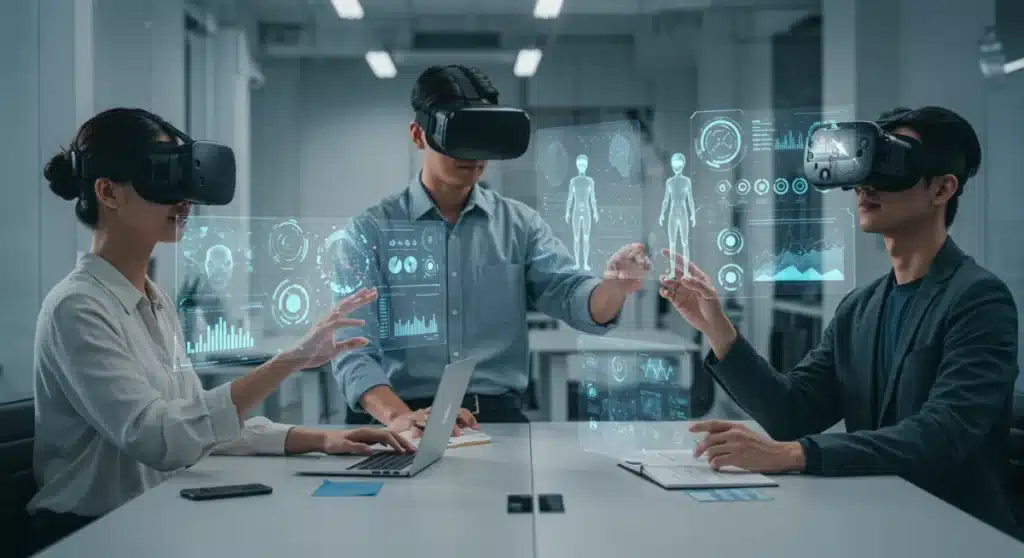
The landscape of work is undergoing a profound transformation, with remote collaboration becoming a cornerstone of modern business operations. The integration of AR VR remote collaboration technologies is not just an incremental improvement but a paradigm shift, promising a remarkable 35% boost in US remote collaboration by 2025. This evolution moves beyond simple video conferencing, creating truly immersive and interactive virtual workspaces.
The rise of AR/VR in the remote work era
The global shift towards remote work has accelerated the demand for more engaging and effective collaboration tools. Traditional video conferencing, while essential, often lacks the depth and presence required for complex teamwork or creative brainstorming. This is where augmented reality (AR) and virtual reality (VR) step in, offering solutions that bridge the physical distance with digital immersion.
AR overlays digital information onto the real world, enhancing our perception and interaction with our physical environment. VR, on the other hand, creates entirely simulated environments that users can explore and interact with, providing a sense of presence that mimics in-person interactions. Both technologies are rapidly maturing, making them viable for widespread business adoption.
Overcoming limitations of traditional remote tools
While tools like Zoom and Microsoft Teams have become ubiquitous, they often fall short in replicating the nuances of in-person collaboration. The lack of spatial awareness, non-verbal cues, and shared physical objects can hinder creative processes and team cohesion. AR and VR address these limitations by:
Providing a sense of shared space, making remote teams feel more connected.
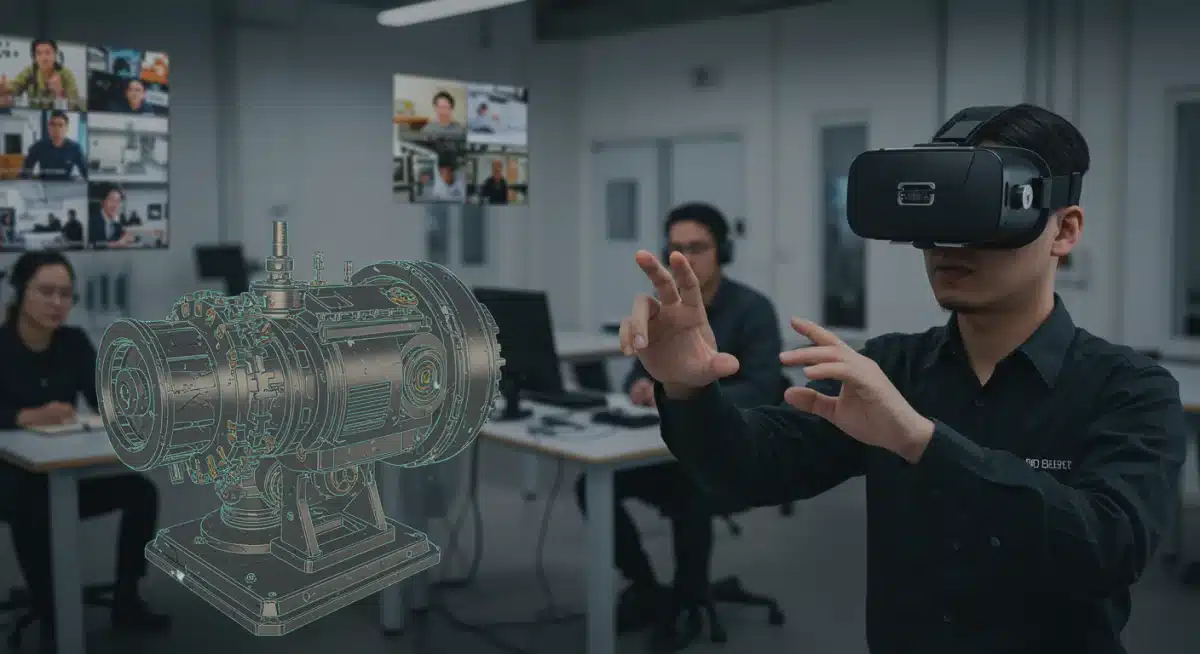
Enabling natural interaction with 3D models and digital content.
Facilitating more effective non-verbal communication through avatars and spatial audio.
The ability to interact with digital objects as if they were physically present opens up new avenues for design reviews, training, and complex problem-solving. This enhanced level of interaction is crucial for maintaining productivity and innovation in a distributed workforce.
The increasing accessibility of AR/VR hardware, coupled with the development of sophisticated collaboration platforms, is paving the way for their widespread adoption. Businesses are recognizing the tangible benefits these technologies offer in terms of efficiency, engagement, and employee satisfaction. This foundational shift is setting the stage for the projected growth in remote collaboration effectiveness.
The success of AR/VR in remote collaboration hinges on several key technological advancements. These include sophisticated hardware, robust software platforms, and improved connectivity infrastructure. Together, these elements create the immersive and interactive experiences necessary for effective virtual teamwork.
On the hardware front, VR headsets have become lighter, more comfortable, and offer higher resolution displays, reducing motion sickness and enhancing visual fidelity. AR glasses are also progressing, moving towards sleeker designs that can be worn for extended periods without discomfort, making them practical for daily use in professional settings.
Hardware innovations: headsets and haptics
Modern VR headsets, such as Meta Quest Pro and HTC VIVE XR Elite, offer standalone operation and advanced tracking capabilities, freeing users from tethered connections. These devices provide a wide field of view and precise hand tracking, enabling intuitive interaction within virtual environments. Haptic feedback devices further enhance immersion by providing tactile sensations, making virtual interactions feel more real.
Standalone VR Headsets: Increased portability and ease of use.
Advanced Tracking: Precise hand and body tracking for natural interactions.
Haptic Feedback: Tactile sensations for enhanced realism.
AR glasses, though still in earlier stages of widespread adoption, are becoming more powerful, integrating advanced optics and processing capabilities to seamlessly blend digital content with the real world. Devices like Microsoft HoloLens 2 are already demonstrating their utility in industrial and medical applications, hinting at broader enterprise potential.
Software platforms and networking
Beyond hardware, robust software platforms are crucial for facilitating AR/VR remote collaboration. These platforms provide the virtual spaces, collaboration tools, and integration capabilities needed for teams to work together effectively. Examples include Spatial, Engage, and Varjo Workspace, which offer features like shared whiteboards, 3D model manipulation, and spatial audio.
Networking infrastructure, particularly 5G, plays a vital role in ensuring low-latency, high-bandwidth connections, which are essential for seamless AR/VR experiences. The ability to transmit large amounts of data quickly and reliably prevents lag and ensures smooth interactions, critical for maintaining immersion and productivity in virtual environments.
The continuous evolution of both hardware and software, supported by robust network infrastructure, forms the backbone of effective AR/VR remote collaboration. These technological pillars are steadily converging to create a powerful ecosystem that redefines remote interaction.
Boosting productivity and engagement
The integration of AR/VR technologies into remote collaboration is not just about novelty; it’s about tangible improvements in productivity and engagement. By creating more immersive and interactive environments, these technologies address many of the shortcomings of traditional remote work, leading to more efficient and satisfying outcomes for teams.
Immersive virtual meetings can significantly reduce meeting fatigue by making interactions more dynamic and engaging. Participants feel more present and connected, leading to better focus and retention of information. This enhanced engagement translates directly into more productive discussions and quicker decision-making processes.
Enhanced problem-solving and training
AR/VR excels in scenarios requiring visual and spatial understanding, such as product design, engineering, and architecture. Teams can review 3D models together, manipulate virtual objects, and conduct simulations in a shared virtual space, regardless of their physical locations. This capability dramatically accelerates problem-solving and reduces errors.
3D Model Collaboration: Jointly review and modify complex designs.
Virtual Prototypes: Test and iterate product designs without physical manufacturing.
Immersive Training: Simulate real-world scenarios for hands-on learning.
For training, AR/VR offers unparalleled opportunities for immersive and experiential learning. Employees can undergo virtual training sessions that mimic real-world conditions, practicing complex procedures in a safe and controlled environment. This not only improves skill acquisition but also reduces training costs and logistical challenges.
The ability to interact with digital content in a spatial context fosters a deeper understanding and retention of information. This is particularly beneficial for complex subjects or tasks that require visual demonstration. The immersive nature of AR/VR makes learning and problem-solving more intuitive and effective, leading to a more skilled and capable workforce.
Challenges and considerations for adoption
While the potential of AR/VR in remote collaboration is undeniable, its widespread adoption faces several challenges. These range from the cost and accessibility of hardware to user comfort and the need for robust cybersecurity measures. Addressing these considerations is crucial for successful integration into enterprise workflows.
The initial investment in AR/VR hardware can be substantial, especially for large organizations. While prices are decreasing, high-end professional-grade equipment still represents a significant capital outlay. Furthermore, ensuring that all employees have access to reliable internet connectivity and adequate computing power is essential for a seamless experience.
User experience and data security
User comfort is another critical factor. Prolonged use of AR/VR headsets can sometimes lead to motion sickness, eye strain, or discomfort. Manufacturers are continuously working to improve ergonomics and reduce these issues, but it remains a consideration for widespread, daily use. Training and support for employees to adapt to these new interfaces are also vital.
Hardware Cost: Initial investment can be a barrier for some organizations.
User Comfort: Potential for motion sickness or eye strain with prolonged use.
Data Security: Protecting sensitive information in virtual environments.
Interoperability: Ensuring different platforms and devices can communicate seamlessly.
Data security and privacy are paramount concerns, especially when dealing with sensitive corporate information in virtual environments. Companies must implement robust security protocols to protect proprietary data and ensure compliance with privacy regulations. As with any new technology, establishing trust in the security of AR/VR platforms is key to adoption.
Finally, interoperability between different AR/VR platforms and existing enterprise systems is crucial. A fragmented ecosystem can hinder adoption, making it difficult for teams using different tools to collaborate effectively. Industry standards and open platforms will be essential for overcoming this challenge and fostering a more integrated AR/VR landscape.
The economic impact on US businesses
The projected 35% boost in US remote collaboration by 2025 through AR/VR integration is not merely a technological advancement; it represents a significant economic opportunity. This enhancement in collaboration efficiency is expected to yield substantial benefits for businesses, impacting everything from operational costs to market competitiveness.
Reduced travel expenses are an immediate and obvious benefit. With more immersive virtual meetings and collaborative workspaces, the need for employees to travel for training, meetings, or project reviews diminishes, leading to considerable savings in airfare, accommodation, and per diems. This also translates to a smaller carbon footprint, aligning with sustainability goals.
Increased market competitiveness and innovation
By enabling more efficient remote collaboration, AR/VR empowers US businesses to tap into a wider talent pool, hiring the best individuals regardless of their geographical location. This access to diverse talent can drive innovation and creativity, leading to the development of new products and services that keep companies competitive in a global market.
Cost Savings: Significant reduction in business travel expenses.
Access to Talent: Ability to hire globally, fostering diversity and innovation.
Faster Time-to-Market: Accelerated product development cycles.
Enhanced Customer Experience: Immersive virtual support and product demonstrations.
Faster decision-making and accelerated project timelines, facilitated by seamless virtual collaboration, can significantly reduce time-to-market for new products and services. This agility is a crucial competitive advantage in today’s fast-paced business environment. Furthermore, AR/VR can enhance customer engagement through immersive product demonstrations or virtual support, improving satisfaction and loyalty.
The economic impact extends beyond direct cost savings. The ability to innovate faster, attract top talent, and deliver superior customer experiences positions US businesses for sustained growth and leadership in the global economy. This transformative potential makes AR/VR integration a strategic imperative for forward-thinking organizations.
Future outlook and emerging trends
The trajectory of AR/VR in remote collaboration is one of continuous evolution, with exciting emerging trends set to further enhance its capabilities. Looking beyond 2025, we can anticipate even more sophisticated and seamless integrations that will blur the lines between physical and virtual workspaces, making remote collaboration indistinguishable from in-person interaction.
One significant trend is the development of more realistic avatars and digital twins. As AI and machine learning advance, avatars will become more expressive and capable of conveying subtle non-verbal cues, making virtual interactions feel even more human. Digital twins, virtual replicas of physical objects or systems, will enable unprecedented levels of remote monitoring, maintenance, and collaborative design.
AI integration and spatial computing
The integration of artificial intelligence (AI) with AR/VR platforms will unlock new levels of intelligence and automation. AI-powered virtual assistants could help manage meetings, summarize discussions, and even suggest solutions during collaborative sessions. This will free up human participants to focus on creative problem-solving and strategic thinking.
Realistic Avatars: Enhanced non-verbal communication and presence.
Digital Twins: Advanced remote monitoring and collaborative design.
AI-Powered Assistants: Automate tasks and enhance meeting productivity.
Spatial Computing: Seamless blending of digital and physical realities.
Spatial computing, the concept of interacting with digital content that understands and responds to its physical environment, is another transformative trend. This will enable AR devices to seamlessly integrate digital information into our surroundings, creating dynamic and interactive workspaces that adapt to our needs. Imagine walking into a physical room and instantly seeing relevant digital data overlaid onto objects or surfaces.
The convergence of AR/VR, AI, and spatial computing promises a future where remote collaboration is not just efficient but also deeply intuitive and integrated into our daily lives. These emerging trends suggest a future where the 35% boost in remote collaboration is just the beginning, paving the way for even greater efficiencies and innovations in the way we work.
Key Aspect
Description
Collaboration Boost
35% projected increase in US remote collaboration efficiency by 2025.
Key Technologies
Advanced AR/VR hardware, robust software platforms, and 5G connectivity.
Benefits for Businesses
Reduced costs, increased innovation, faster time-to-market, and enhanced employee engagement.
Challenges
Hardware cost, user comfort, data security, and interoperability issues.
Frequently asked questions about AR/VR in remote work
What is the primary benefit of AR/VR for remote collaboration?▼
The primary benefit is creating a heightened sense of presence and immersion, making remote interactions feel more akin to in-person meetings. This enhances communication, fosters stronger team cohesion, and allows for more intuitive interaction with digital content and 3D models, leading to improved productivity and decision-making.
How will AR/VR affect US remote collaboration by 2025?▼
By 2025, AR/VR integration is projected to boost US remote collaboration by an estimated 35%. This increase will stem from enhanced efficiency, engagement, and innovation facilitated by immersive virtual workspaces, leading to better problem-solving, reduced travel costs, and access to a wider talent pool for businesses.
What are the main technological components for effective AR/VR collaboration?▼
Effective AR/VR collaboration relies on advanced hardware like high-resolution headsets and haptic devices, sophisticated software platforms that offer shared virtual environments and collaboration tools, and robust networking infrastructure, particularly 5G, to ensure low latency and high bandwidth for seamless experiences.
What challenges must be overcome for widespread AR/VR adoption in businesses?▼
Key challenges include the initial cost of hardware, ensuring user comfort during prolonged use, implementing stringent data security measures for sensitive information, and achieving interoperability between diverse AR/VR platforms and existing enterprise systems to create a unified ecosystem.
Beyond collaboration, how else can AR/VR benefit businesses?▼
Beyond collaboration, AR/VR can revolutionize employee training through immersive simulations, accelerate product design and prototyping, enhance customer experiences with virtual product demonstrations, and improve remote maintenance and support through digital twins and augmented guidance, leading to significant operational efficiencies and competitive advantages.
Conclusion
The integration of AR/VR technologies into remote collaboration is poised to redefine the future of work in the United States. With a projected 35% boost in efficiency and engagement by 2025, these immersive tools are moving beyond novelty to become indispensable assets for businesses seeking to thrive in a distributed world. While challenges related to cost, comfort, and security remain, the relentless pace of technological innovation and increasing accessibility suggest that AR/VR will soon be a standard component of the modern workplace, fostering unprecedented levels of connection, productivity, and innovation.
Eduarda Moura has a degree in Journalism and a postgraduate degree in Digital Media. With experience as a copywriter, Eduarda strives to research and produce informative content, bringing clear and precise information to the reader.