Top 4 AI Tools Revolutionizing US Retail Customer Service 2025
By 2025, AI tools will profoundly transform customer service for US retailers, offering unprecedented levels of efficiency, personalization, and predictive capabilities to meet evolving consumer demands.
By: Eduarda Moura on June 24, 2025
Last updated on: November 28, 2025
By 2025, AI tools will profoundly transform customer service for US retailers, offering unprecedented levels of efficiency, personalization, and predictive capabilities to meet evolving consumer demands.
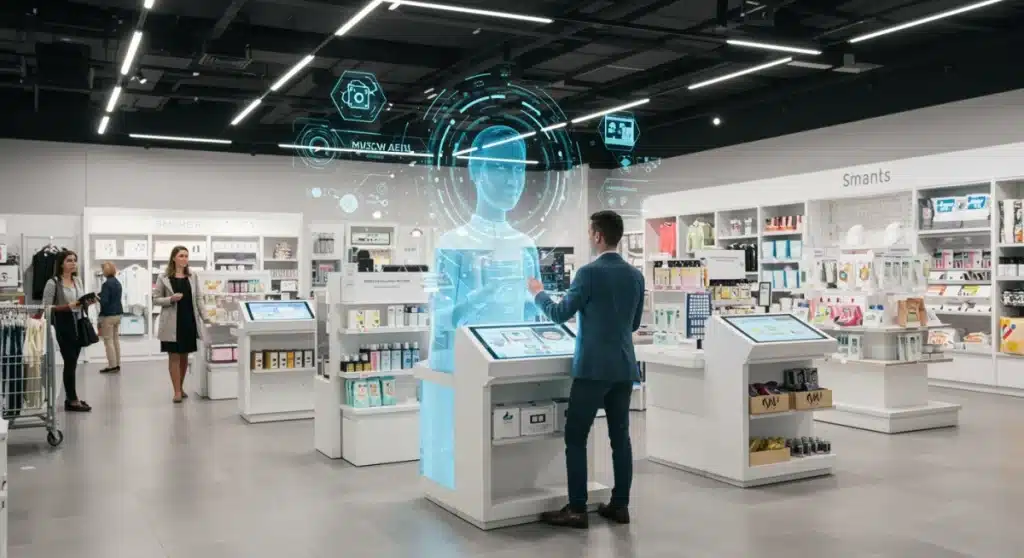
The landscape of retail customer service is on the cusp of a major transformation. By 2025, advanced artificial intelligence (AI) tools will no longer be a luxury but a necessity for US retailers aiming to stay competitive. This article delves into the top 4 AI tools revolutionizing customer service for US retailers in 2025, exploring how they are reshaping interactions, streamlining operations, and ultimately enhancing customer satisfaction.
the rise of AI in retail customer service
The retail sector, particularly in the United States, is experiencing an unprecedented shift towards digital transformation. Customers now expect instant gratification, personalized experiences, and seamless support across multiple channels. Traditional customer service models often struggle to keep pace with these escalating demands, leading to frustration for both consumers and businesses.
AI offers a powerful solution, moving beyond simple automation to deliver intelligent, empathetic, and proactive support. This evolution is driven by significant advancements in machine learning, natural language processing (NLP), and predictive analytics, enabling AI systems to understand, learn, and respond in increasingly sophisticated ways.
evolving customer expectations
Today’s consumers are more informed and digitally native than ever before. They expect brands to know their preferences, anticipate their needs, and provide assistance without delay. This has pushed retailers to re-evaluate their customer service strategies, recognizing that a superior experience is a key differentiator in a crowded market.
Instant availability: Customers demand 24/7 support, regardless of time zones or business hours.
Personalized interactions: Generic responses are no longer acceptable; tailored recommendations and solutions are paramount.
Seamless channel integration: The ability to switch between chat, email, phone, and social media without losing context is crucial.
Proactive problem-solving: Customers appreciate when issues are identified and resolved before they even realize there’s a problem.
The integration of AI in customer service is not merely about cost-cutting; it’s about building stronger customer relationships and fostering loyalty. By automating routine tasks and providing agents with intelligent assistance, AI empowers retailers to deliver a consistently high-quality service that resonates with modern consumers.
Ultimately, the rise of AI in retail customer service reflects a broader industry trend towards intelligent automation and data-driven decision-making. Retailers who embrace these technologies will be better positioned to meet the challenges and seize the opportunities of the evolving market.
AI-powered chatbots and virtual assistants
AI-powered chatbots and virtual assistants are quickly becoming the frontline of customer service for many US retailers. These sophisticated programs can handle a vast array of customer inquiries, from basic FAQs and order tracking to more complex troubleshooting and product recommendations. Their ability to operate 24/7 without human intervention makes them invaluable for enhancing availability and responsiveness.
Unlike traditional rule-based chatbots, modern AI virtual assistants leverage natural language processing and machine learning to understand context, interpret sentiment, and even learn from past interactions. This allows them to provide more natural, human-like conversations, improving the overall customer experience and reducing frustration.
enhanced conversational AI capabilities
The evolution of conversational AI has been rapid. Recent advancements mean these tools can now handle multi-turn conversations, remember previous interactions within a session, and even detect emotional cues in text. This level of sophistication enables them to resolve a higher percentage of customer issues independently.
Contextual understanding: AI can now grasp the nuances of customer queries, leading to more accurate responses.
Sentiment analysis: Identifying customer emotions helps tailor responses and escalate sensitive issues to human agents.
Personalized recommendations: Based on past purchases and browsing history, virtual assistants can suggest relevant products or services.
Proactive engagement: Chatbots can initiate conversations based on customer behavior on the website, offering help before it’s explicitly requested.
For US retailers, deploying AI-powered chatbots means customers receive immediate assistance, reducing wait times and improving satisfaction. This also frees up human agents to focus on more complex, high-value interactions, optimizing resource allocation and boosting overall efficiency. The seamless integration of these tools into existing customer service ecosystems is critical for their success.
The continuous improvement of AI algorithms ensures that these virtual assistants become smarter and more efficient over time, providing an ever-improving customer service experience. Their role is pivotal in shaping the future of retail interactions.
predictive analytics for proactive support
Predictive analytics, powered by AI, is transforming customer service from a reactive function into a proactive one. By analyzing vast amounts of customer data—including purchase history, browsing patterns, support tickets, and social media interactions—AI algorithms can identify potential issues before they escalate. This allows US retailers to address problems preemptively, often before the customer even realizes there’s a concern.
Imagine a scenario where an AI system flags a customer’s recent purchases and browsing behavior as indicative of a potential product return, then proactively offers a solution or alternative. This level of foresight not only prevents negative experiences but also builds trust and loyalty, demonstrating that the retailer truly understands and cares about its customers.
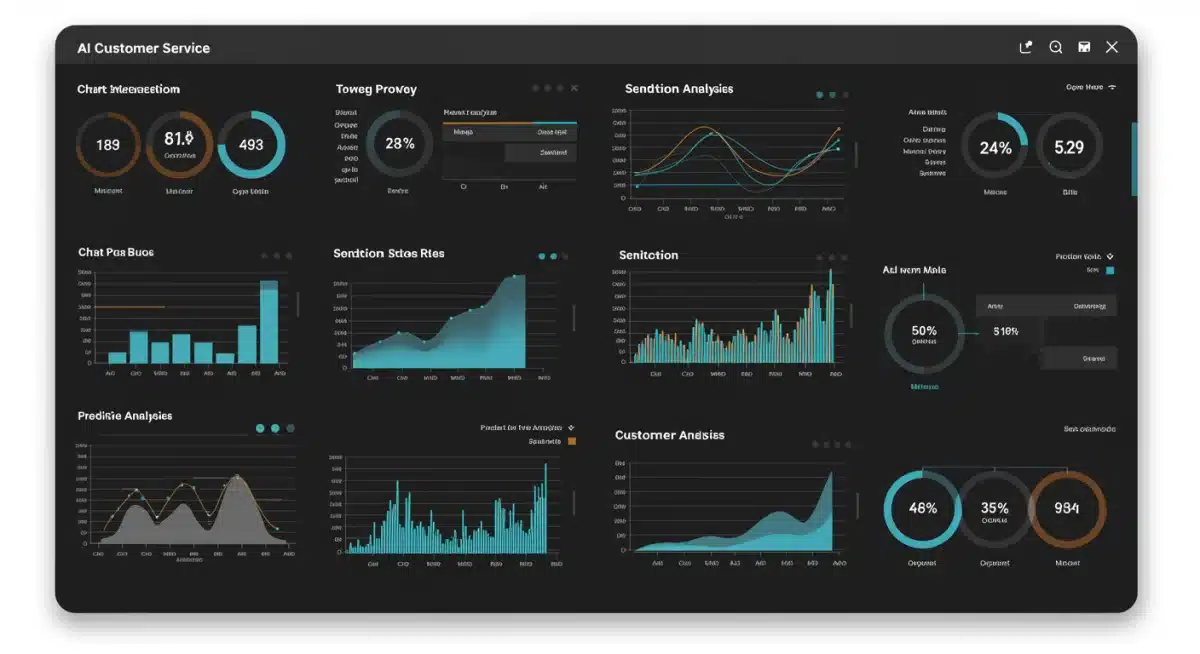
Predictive analytics leverages machine learning models to forecast future customer behavior, identify churn risks, and pinpoint opportunities for upselling or cross-selling. The data-driven insights provided by these tools are invaluable for optimizing various aspects of the customer journey.
identifying churn risk and enhancing retention
One of the most significant applications of predictive analytics is in identifying customers at risk of churn. By analyzing patterns associated with customer attrition, AI can flag these individuals, allowing retailers to intervene with targeted retention strategies.
Behavioral anomalies: Sudden changes in purchasing frequency or interaction patterns can signal dissatisfaction.
Sentiment shifts: Negative sentiment detected in customer interactions or reviews can indicate a brewing problem.
Product issues: Recurring complaints about specific products can be identified and addressed proactively, potentially through product updates or personalized support.
Engagement drops: A decrease in website visits, email opens, or app usage might suggest disengagement.
For US retailers, proactive support driven by predictive analytics translates into reduced customer churn, increased lifetime value, and a stronger brand reputation. It shifts the focus from fixing problems after they occur to preventing them from happening in the first place, leading to a much smoother and more satisfying customer experience. This strategic use of data is a game-changer for customer service.
In essence, predictive analytics empowers retailers to anticipate customer needs and challenges, enabling them to provide timely and relevant support that significantly elevates the overall service quality.
AI-driven personalization engines
In the highly competitive US retail market, personalization is no longer a luxury but a fundamental expectation. AI-driven personalization engines take this to the next level, moving beyond basic recommendations to create truly unique and dynamic customer experiences. These tools analyze individual data points—such as purchase history, browsing behavior, demographics, and even real-time interactions—to tailor every aspect of the customer journey.
From personalized product recommendations on a website to customized marketing emails and in-store promotions, AI ensures that each customer feels understood and valued. This level of tailored engagement fosters deeper connections, drives conversion rates, and builds long-term customer loyalty.
hyper-personalization across touchpoints
Hyper-personalization extends beyond simple product suggestions. It involves creating a cohesive and individualized experience across all customer touchpoints, both online and offline. This means that whether a customer is browsing an e-commerce site, interacting with a chatbot, or visiting a physical store, the experience is consistently adapted to their preferences and needs.
Dynamic website content: Layouts, banners, and product displays adjust based on individual user profiles.
Personalized email campaigns: Content and offers are tailored to past behavior and predicted interests.
In-store recommendations: AI can assist sales associates in suggesting relevant products to customers based on their digital profiles.
Optimized search results: Search algorithms prioritize products most relevant to the individual user.
For US retailers, AI-driven personalization engines mean a significant boost in customer engagement and satisfaction. When customers feel that a brand understands their unique tastes and needs, they are more likely to make purchases and become repeat buyers. This not only enhances the customer experience but also provides a substantial return on investment for retailers.
The ability of AI to process and interpret vast amounts of data in real-time is what makes this level of personalization possible, setting a new standard for customer service in retail.
intelligent contact center routing and agent assist
The traditional contact center model often involves customers navigating complex IVR systems or waiting in long queues, only to be transferred multiple times before reaching the right agent. Intelligent contact center routing, powered by AI, seeks to eliminate these pain points by directing customers to the most appropriate resource from the very first interaction.
AI analyzes the customer’s query, sentiment, and historical data to determine whether the issue can be resolved by a chatbot, or if it requires a human agent with specific expertise. If an agent is needed, the AI intelligently routes the call or chat to the agent best equipped to handle the specific problem, minimizing transfers and improving resolution times for US retailers.
empowering human agents with AI tools
Beyond routing, AI also plays a crucial role in assisting human agents. These ‘agent assist’ tools provide real-time information, suggest responses, and even summarize past customer interactions, ensuring agents have all the necessary context at their fingertips.
Real-time knowledge base access: AI can pull relevant articles and solutions from a knowledge base instantly.
Suggested responses: AI models can propose answers to common questions, reducing agent typing time and ensuring consistency.
Sentiment analysis for agents: Alerts agents to frustrated customers, allowing them to adjust their approach.
Automated call summaries: AI can summarize key points from a conversation, saving agents time on post-call wrap-up.
By integrating AI into contact center operations, US retailers can significantly improve both agent efficiency and customer satisfaction. Agents feel more supported and empowered, leading to higher morale and better performance, while customers benefit from faster, more accurate problem resolution. This synergistic approach between AI and human agents represents the future of effective customer service.
Ultimately, intelligent routing and agent assist tools create a more streamlined and effective support ecosystem, benefiting both the retail business and its customer base.
challenges and ethical considerations of AI adoption
While the benefits of AI in retail customer service are substantial, its adoption also presents several challenges and ethical considerations that US retailers must navigate carefully. Implementing AI tools requires significant investment in technology infrastructure, data security, and employee training. Moreover, ensuring customer trust and addressing concerns about privacy and algorithmic bias are paramount for successful long-term integration.
The ethical use of AI is not just a matter of compliance but a cornerstone of maintaining brand reputation and consumer confidence. Retailers must be transparent about how AI is used and ensure that these technologies enhance, rather than detract from, the human element of customer service.
data privacy and security concerns
AI systems rely heavily on vast amounts of customer data, which raises critical questions about privacy and security. Retailers must adhere to stringent data protection regulations and ensure that customer information is handled responsibly and securely. Any breach or misuse of data can severely damage customer trust and lead to significant legal repercussions.
Compliance with regulations: Adhering to laws like CCPA and future data privacy acts is essential.
Transparent data usage: Clearly communicating how customer data is collected, used, and protected.
Robust cybersecurity measures: Implementing strong safeguards to prevent data breaches and unauthorized access.
Anonymization and aggregation: Using techniques to protect individual identities while still leveraging data for insights.
Addressing these concerns proactively is vital for US retailers. Building customer trust in AI begins with a commitment to ethical data practices and clear communication. Companies that prioritize data privacy and security will be better positioned to harness the full potential of AI without alienating their customer base.
Furthermore, the issue of algorithmic bias must be actively managed to ensure fair and equitable service for all customers, regardless of their background. This requires careful design, testing, and continuous monitoring of AI systems.
the future outlook for AI in US retail
The trajectory for AI in US retail customer service by 2025 and beyond is one of continuous innovation and deeper integration. We can expect AI tools to become even more sophisticated, moving towards a truly symbiotic relationship with human agents. The focus will increasingly be on creating hyper-personalized, proactive, and seamless customer journeys that blur the lines between online and offline experiences.
Emerging technologies like generative AI and advanced emotion recognition will further enhance the capabilities of chatbots and virtual assistants, allowing for more nuanced and empathetic interactions. Retailers that embrace these advancements will not only meet but exceed customer expectations, setting new benchmarks for service excellence.
integrating AI across the customer journey
The future will see AI not just as a support tool, but as an integral part of every stage of the customer journey, from initial product discovery to post-purchase support and loyalty programs. This holistic integration will create a unified and highly efficient customer experience.
Voice AI and smart speakers: Increased use of voice-activated AI for shopping and customer support.
AR/VR for immersive experiences: AI-powered augmented and virtual reality tools to enhance product visualization and support.
Predictive inventory management: AI forecasting customer demand to optimize stock levels and prevent out-of-stock issues, improving delivery times.
Hyper-personalized marketing: AI driving even more targeted and effective marketing campaigns based on deep customer insights.
For US retailers, staying ahead means continuously exploring and adopting these cutting-edge AI solutions. The competitive advantage will lie with those who can effectively leverage AI to create memorable, efficient, and highly personalized customer experiences that foster loyalty and drive growth. The future of retail customer service is undoubtedly intelligent, interconnected, and customer-centric.
The ongoing development and refinement of AI technologies promise a future where customer service is not merely a cost center but a powerful engine for building lasting customer relationships and brand advocacy.
frequently asked questions about AI in retail customer service
What are the primary benefits of AI for US retail customer service?▼
AI significantly enhances customer service by providing 24/7 support, personalizing interactions, enabling proactive problem-solving, and improving agent efficiency. This leads to higher customer satisfaction, reduced operational costs, and increased customer loyalty for US retailers.
How do AI-powered chatbots differ from traditional chatbots?▼
Unlike traditional, rule-based chatbots, AI-powered chatbots utilize natural language processing and machine learning to understand context, interpret sentiment, and learn from interactions. This allows them to engage in more natural, human-like conversations and resolve complex inquiries effectively.
Can AI replace human customer service agents in retail?▼
No, AI is not intended to fully replace human agents but rather to augment their capabilities. AI handles routine tasks and provides agents with intelligent assistance, allowing human staff to focus on complex, empathetic, and high-value interactions that require a human touch, creating a more efficient system.
What ethical concerns should US retailers consider when implementing AI?▼
Key ethical concerns include data privacy and security, algorithmic bias, and transparency in AI usage. Retailers must ensure compliance with regulations, protect customer data, mitigate biases in AI models, and openly communicate how AI is employed to maintain customer trust.
How will AI impact customer personalization in retail by 2025?▼
By 2025, AI will drive hyper-personalization, tailoring every aspect of the customer journey from product recommendations to marketing messages across all touchpoints. This level of individualized experience will significantly boost customer engagement, satisfaction, and loyalty for US retailers.
conclusion
The integration of AI tools into customer service operations is not just an incremental improvement but a fundamental revolution for US retailers. By 2025, the four key AI tools discussed—AI-powered chatbots and virtual assistants, predictive analytics, AI-driven personalization engines, and intelligent contact center routing and agent assist—will be indispensable for delivering superior customer experiences. These technologies empower retailers to meet the evolving demands of modern consumers, offering instant, personalized, and proactive support. While challenges like data privacy and ethical considerations must be carefully managed, the overall trajectory points towards a future where AI-driven customer service is a cornerstone of competitive success, fostering stronger customer relationships and driving significant growth in the dynamic US retail landscape.
Eduarda Moura has a degree in Journalism and a postgraduate degree in Digital Media. With experience as a copywriter, Eduarda strives to research and produce informative content, bringing clear and precise information to the reader.