Edge AI Adoption in US Manufacturing: 12-Month Outlook
The next 12 months will be pivotal for Edge AI adoption in US manufacturing, driven by demands for real-time processing, enhanced security, and operational efficiency. Manufacturers must strategically invest and integrate these technologies to remain competitive and unlock new levels of productivity.
By: Eduarda Moura on November 12, 2025
Last updated on: November 28, 2025
The next 12 months present a critical window for US manufacturers to strategically implement and scale Edge AI solutions, leveraging real-time data processing for operational optimization and competitive advantage amidst a rapidly evolving technological landscape.
The landscape of American manufacturing is on the cusp of a profound transformation, driven by the accelerating integration of artificial intelligence at the edge. Understanding the implications of Edge AI Adoption in US Manufacturing: What You Need to Know for the Next 12 Months (TIME-SENSITIVE) is no longer an option, but a strategic imperative for businesses aiming to maintain their competitive edge and foster innovation.
The rise of Edge AI in US manufacturing
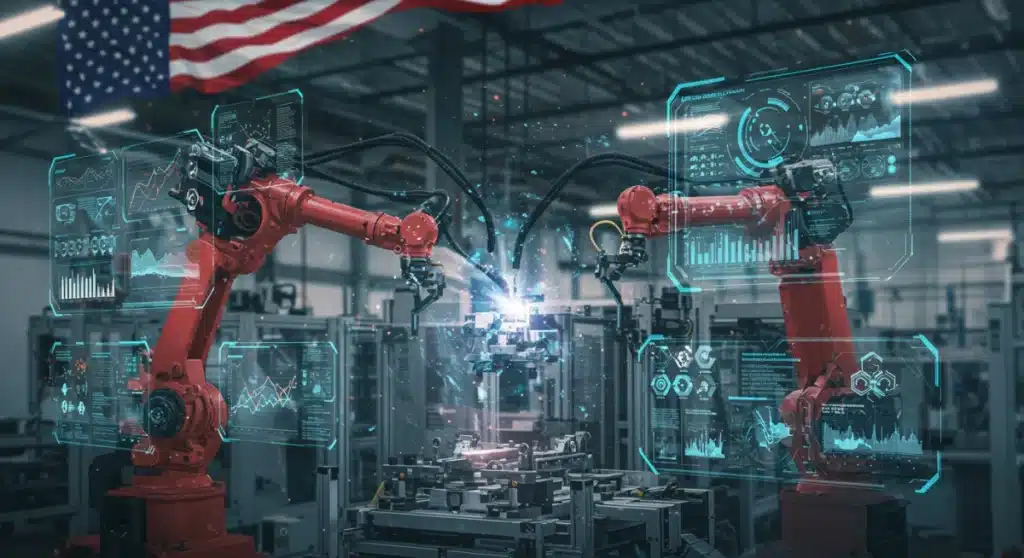
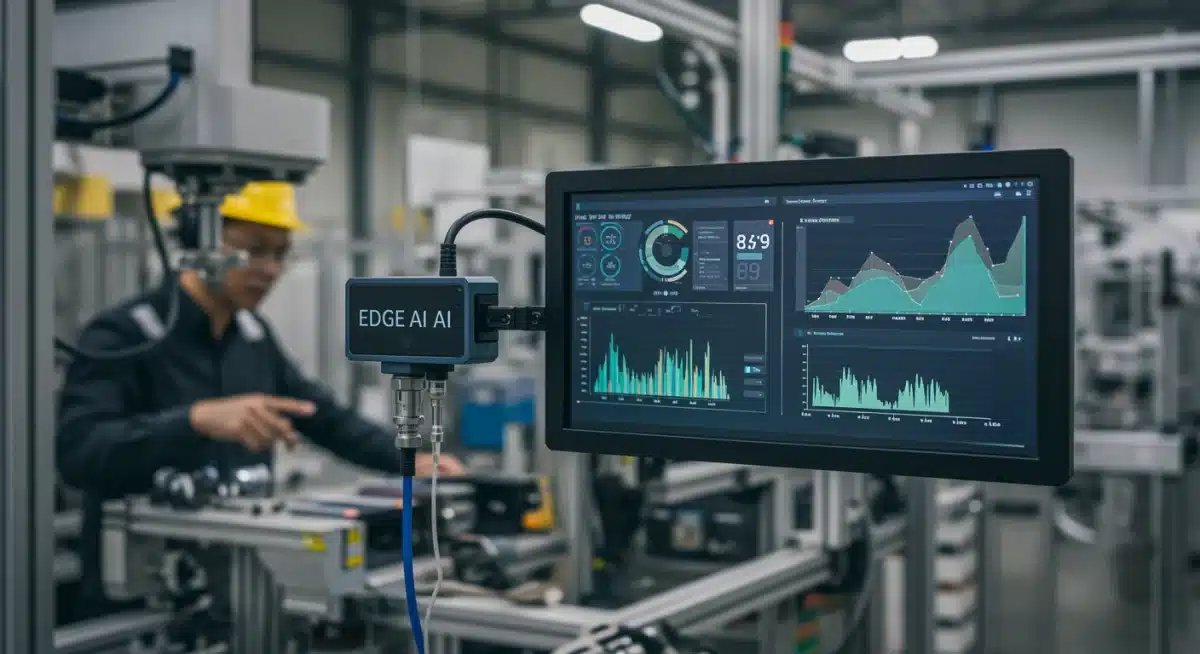
Edge AI, the deployment of AI algorithms directly on devices at the ‘edge’ of a network rather than relying solely on centralized cloud infrastructure, is rapidly gaining traction. This move brings computational power closer to the data source, offering significant advantages for US manufacturers seeking instantaneous insights and operational autonomy.
The shift towards edge computing in manufacturing is fueled by several factors. Traditional cloud-based AI often introduces latency, which can be detrimental in time-sensitive industrial processes where milliseconds matter. Edge AI mitigates this by processing data locally, enabling real-time decision-making, predictive maintenance, and immediate quality control on the factory floor.
Key drivers for adoption
Several critical drivers are propelling US manufacturers towards embracing Edge AI solutions. These factors are shaping investment strategies and implementation timelines across the industry.
Reduced Latency: Real-time data processing is crucial for applications like robotic control, autonomous vehicles within factories, and defect detection. Edge AI minimizes the delay inherent in cloud communication.
Enhanced Security: Processing sensitive operational data locally reduces the risk of data breaches and cyber-attacks associated with transmitting data to the cloud.
Operational Efficiency: Immediate insights lead to faster problem identification, reduced downtime, and optimized resource allocation, directly impacting the bottom line.
Bandwidth Optimization: By processing data at the source, only critical insights need to be sent to the cloud, significantly reducing bandwidth requirements and associated costs.
The convergence of these drivers creates a compelling case for US manufacturers to prioritize Edge AI implementation. The next 12 months will likely see a surge in pilot programs transitioning to full-scale deployments as companies recognize the tangible benefits.
Current landscape and projected growth
The current state of Edge AI adoption in US manufacturing varies significantly across sectors. While some early adopters have already integrated these technologies into their operations, many are still in the exploratory or pilot phase. However, the trajectory for the next 12 months points towards accelerated growth.
Industry reports suggest a robust compound annual growth rate for Edge AI in manufacturing, indicating a clear upward trend. This growth is not merely technological; it’s a strategic shift driven by the need for greater resilience, agility, and competitive differentiation in a global market.
Sector-specific impact
Different manufacturing sectors will experience the impact of Edge AI at varying paces and in unique ways. Understanding these nuances is key to strategic planning.
Automotive: Highly automated production lines will leverage Edge AI for real-time quality inspection, predictive maintenance of robotics, and optimizing assembly processes.
Aerospace & Defense: Precision manufacturing and strict quality control make Edge AI invaluable for anomaly detection, material inspection, and ensuring compliance with rigorous standards.
Consumer Goods: Manufacturers will use Edge AI for demand forecasting, optimizing supply chains, and personalizing production at scale, responding quickly to market shifts.
The projected growth is not without its challenges, but the overwhelming consensus among industry leaders is that Edge AI will become a cornerstone of modern US manufacturing. Companies that fail to adapt risk falling behind in terms of efficiency, innovation, and market share.
Key technologies enabling Edge AI
The successful implementation of Edge AI in manufacturing relies on a sophisticated ecosystem of interconnected technologies. These foundational elements work in tandem to deliver the promises of real-time intelligence and operational autonomy.
At the core are specialized hardware components, including powerful microcontrollers and purpose-built AI accelerators designed for low-power, high-performance processing at the edge. These devices are equipped to run complex AI models without constant cloud connectivity.
Essential technological components
A comprehensive Edge AI strategy integrates several critical technologies to form a robust and efficient system.
Edge Devices: These range from industrial PCs and gateways to embedded systems and specialized sensors capable of running AI models.
AI/ML Models: Optimized machine learning models, often trained in the cloud, are deployed to the edge for inference, performing tasks like object recognition, predictive analytics, and anomaly detection.
Connectivity: Reliable and low-latency network protocols, including 5G, Wi-Fi 6, and industrial Ethernet, are essential for data transfer between edge devices and other systems.
Data Management: Local data storage and processing capabilities are crucial for managing the vast amounts of data generated at the edge, ensuring data integrity and accessibility.
The synergy between these technologies allows manufacturers to create intelligent, self-optimizing production environments. The next 12 months will see further advancements in these areas, making Edge AI even more accessible and powerful for US manufacturers.
Challenges and considerations for adoption
While the benefits of Edge AI are clear, US manufacturers must navigate a series of challenges and considerations during implementation. These hurdles, if not adequately addressed, can impede successful adoption and limit the return on investment.
One of the primary concerns is the complexity of integrating new AI technologies with existing legacy systems. Many manufacturing facilities still rely on older infrastructure that may not be readily compatible with modern Edge AI solutions, requiring significant investment in upgrades or custom integration.
Navigating implementation hurdles
Addressing these challenges proactively is essential for a smooth transition to Edge AI-powered operations.
Data Governance & Security: Ensuring the security and privacy of data processed at the edge is paramount, requiring robust protocols and compliance with industry regulations.
Skill Gap: A shortage of skilled personnel proficient in AI, data science, and industrial automation poses a significant challenge for deployment and maintenance.
Scalability & Integration: Developing scalable Edge AI solutions that can seamlessly integrate with diverse operational technologies (OT) and information technologies (IT) is complex.
Cost of Implementation: Initial investments in hardware, software, and training can be substantial, requiring clear ROI projections and strategic budgeting.
Manufacturers must develop a comprehensive strategy that not only focuses on technological implementation but also addresses organizational readiness, workforce development, and robust cybersecurity measures. Overcoming these challenges will be critical for widespread Edge AI Adoption in US Manufacturing.
Strategic planning for the next 12 months
For US manufacturers, the next 12 months represent a critical window for strategic planning and execution regarding Edge AI. Proactive measures taken now will determine their competitive standing in the rapidly evolving industrial landscape.
Developing a clear roadmap that aligns Edge AI initiatives with broader business objectives is paramount. This involves identifying specific pain points that Edge AI can address, such as improving throughput, reducing waste, or enhancing product quality.
Actionable steps for manufacturers
To capitalize on the opportunities presented by Edge AI, manufacturers should consider the following actionable steps:
Pilot Programs: Start with small, well-defined pilot projects to test the feasibility and demonstrate the value of Edge AI before scaling up.
Workforce Development: Invest in training existing employees and recruiting new talent with expertise in AI, data analytics, and industrial automation.
Partnerships: Collaborate with technology providers, system integrators, and academic institutions to leverage external expertise and accelerate adoption.
Data Strategy: Develop a robust data collection, management, and analysis strategy to feed and optimize Edge AI models effectively.
A phased approach, coupled with continuous evaluation and adaptation, will enable manufacturers to successfully integrate Edge AI into their operations, realizing tangible benefits within the projected timeframe.
Impact on workforce and ethics
The integration of Edge AI in US manufacturing extends beyond technological advancements; it profoundly impacts the workforce and raises significant ethical considerations. Manufacturers must address these aspects thoughtfully to ensure a smooth transition and maintain societal trust.
While some fear job displacement, the more likely scenario is a shift in job roles, requiring new skills and fostering a more collaborative environment between humans and intelligent machines. Edge AI can automate repetitive or dangerous tasks, allowing human workers to focus on higher-value activities that require creativity, critical thinking, and complex problem-solving.
Ethical considerations and new skill requirements
Addressing the ethical implications and preparing the workforce are crucial for sustainable Edge AI adoption.
Job Redesign: Focus on retraining and upskilling programs to prepare the existing workforce for new roles that involve managing, monitoring, and collaborating with AI systems.
Bias in AI: Implement rigorous testing and validation processes to ensure AI models are fair and unbiased, preventing discriminatory outcomes in areas like resource allocation or performance evaluation.
Accountability: Establish clear guidelines for accountability when AI systems make critical decisions, defining responsibilities in cases of error or malfunction.
Data Privacy: Develop transparent policies regarding data collection and usage, respecting worker privacy while leveraging data for operational improvements.
The ethical framework surrounding Edge AI will evolve rapidly over the next 12 months. Manufacturers who prioritize human-centric AI design and invest in their workforce will not only gain a competitive edge but also build a more resilient and equitable industrial future.
Future outlook beyond 12 months
While the immediate focus for US manufacturing is on the next 12 months of Edge AI adoption, it’s crucial to also consider the longer-term trajectory. The foundational work laid in the coming year will set the stage for even more transformative changes in the years to come.
Beyond simply optimizing existing processes, Edge AI is poised to enable entirely new business models and manufacturing paradigms. We can anticipate hyper-personalized production, autonomous micro-factories, and even more sophisticated human-robot collaboration, where AI acts as a true cognitive assistant.
Long-term trends and predictions
Several key trends will shape the future of Edge AI in US manufacturing over the next several years.
Increased Autonomy: Factories will become increasingly self-managing, with Edge AI systems making more complex decisions independently, from scheduling to quality control.
Hyper-personalization: The ability to adapt production instantly at the edge will enable manufacturing of highly customized products at scale, catering to individual customer preferences.
AI-as-a-Service at the Edge: Expect more specialized Edge AI solutions offered as services, lowering barriers to entry for smaller manufacturers.
Sustainability Integration: Edge AI will play a critical role in optimizing energy consumption, reducing waste, and enabling circular economy models within manufacturing.
The journey of Edge AI in US manufacturing is just beginning. The next 12 months are crucial for establishing a strong foothold, but the long-term vision promises a revolution in efficiency, innovation, and sustainability. Manufacturers who embrace this future now will be the leaders of tomorrow.
Key Aspect
12-Month Outlook
Real-time Processing
Increased adoption for immediate decision-making and operational control.
Data Security
Prioritization of local data processing to mitigate cyber risks.
Workforce Adaptation
Growing demand for upskilling and reskilling programs for AI-driven roles.
Strategic Investment
Increased capital allocation towards pilot projects and scalable solutions.
Frequently Asked Questions About Edge AI in US Manufacturing
What is Edge AI in manufacturing?▼
Edge AI in manufacturing refers to deploying artificial intelligence capabilities directly on devices and sensors on the factory floor. This allows for real-time data processing and decision-making without needing to send all data to a centralized cloud, significantly reducing latency and improving operational responsiveness.
Why is Edge AI adoption time-sensitive for US manufacturers?▼
Edge AI adoption is time-sensitive due to the rapid technological advancements and increasing global competition. Manufacturers who delay implementation risk falling behind in efficiency, innovation, and cost-effectiveness, potentially losing market share to more agile competitors within the next 12 months.
What are the main benefits of Edge AI in manufacturing?▼
The primary benefits include reduced latency for real-time operations, enhanced data security by processing locally, optimized bandwidth usage, and improved operational efficiency through immediate insights for predictive maintenance, quality control, and resource allocation.
What challenges do US manufacturers face in adopting Edge AI?▼
Key challenges include integrating Edge AI with legacy systems, addressing the skill gap in AI and data science, ensuring robust data governance and cybersecurity, and managing the initial high costs of implementation. Strategic planning is essential to overcome these hurdles.
How will Edge AI impact the manufacturing workforce?▼
Edge AI will likely automate repetitive tasks, shifting human roles towards supervision, maintenance, and higher-level problem-solving. It necessitates significant investment in upskilling and reskilling programs to prepare the workforce for collaboration with AI systems and new job functions.
Conclusion
The imperative for Edge AI Adoption in US Manufacturing: What You Need to Know for the Next 12 Months (TIME-SENSITIVE) is undeniable. The upcoming year will serve as a crucial period for American manufacturers to solidify their strategies, invest in appropriate technologies, and cultivate a workforce capable of leveraging these advancements. By embracing Edge AI, businesses can unlock unparalleled operational efficiencies, enhance data security, and foster a new era of innovation, positioning themselves for sustained growth and global competitiveness in an increasingly intelligent industrial landscape.
Eduarda Moura has a degree in Journalism and a postgraduate degree in Digital Media. With experience as a copywriter, Eduarda strives to research and produce informative content, bringing clear and precise information to the reader.