Seed vs. Series A Funding US 2025: Right for Your Startup?
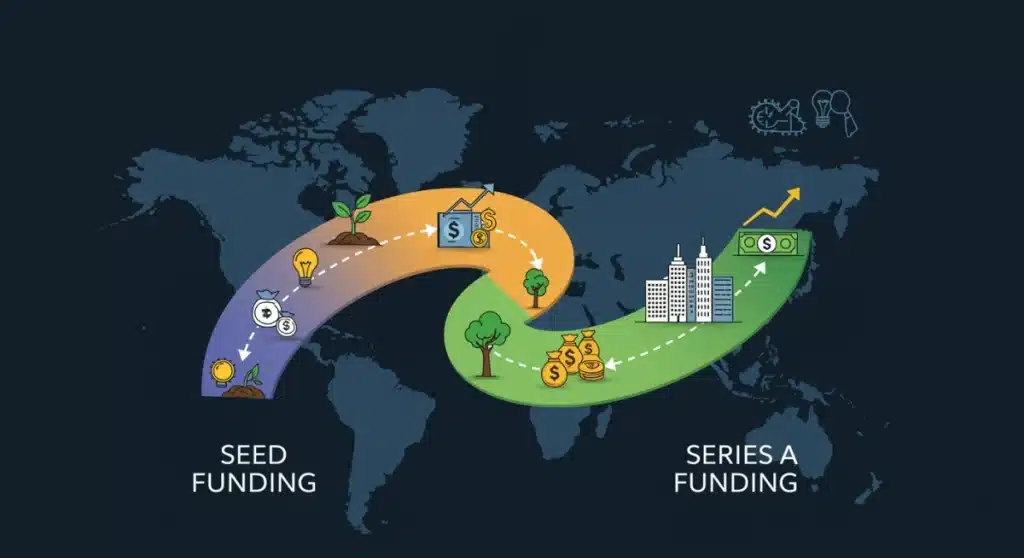
Understanding the fundamental differences between Seed and Series A funding in the US for 2025 is crucial for startups seeking capital, as each stage targets distinct growth phases and investor expectations.
For any ambitious entrepreneur in the United States, securing capital is a pivotal step in transforming a groundbreaking idea into a thriving business. The journey often begins with Seed vs. Series A Funding in the US for 2025, two distinct stages that cater to different levels of startup maturity and capital needs. Deciding which funding round is appropriate for your venture requires a deep understanding of investor expectations, valuation metrics, and the strategic implications of each.
Understanding Seed Funding: The Foundation of Innovation
Seed funding represents the earliest stage of formal investment in a startup. It’s typically used to help a company get off the ground, often before it has a fully developed product or a significant customer base. This capital is crucial for transforming an initial concept into a tangible prototype or a minimum viable product (MVP).
Founders seeking seed funding are usually looking to cover initial operational costs, conduct market research, develop their core technology, and attract early talent. The amounts raised in seed rounds can vary significantly, but they are generally smaller than subsequent funding stages. Investors at this level are often betting on the team, the idea, and the potential market opportunity rather than established metrics.
Typical characteristics of a seed round
Seed rounds are characterized by their early-stage nature and the inherent risks involved. Investors often include angel investors, incubators, accelerators, and sometimes early-stage venture capital firms. The valuation of a company at the seed stage is often based on projections and the perceived market size rather than proven revenue.
- Funding Amounts: Generally range from $50,000 to $2 million, though this can vary based on industry and location.
- Investor Focus: Strong emphasis on the founding team’s vision, expertise, and passion.
- Use of Funds: Product development, market validation, team building, and initial operational expenses.
- Milestones: Achieving product-market fit, securing initial users, and demonstrating early traction.
The goal of seed funding is to provide enough runway for the startup to reach key milestones that will make it attractive for a larger Series A investment. This often means demonstrating a viable product, securing initial customers, and showing clear potential for scalability.
In conclusion, seed funding is the foundational capital that breathes life into nascent ideas. It’s about taking that critical first step, validating your concept, and building a strong team, all while preparing for the next big leap in the startup funding journey.
Series A Funding: Scaling and Proving the Business Model
Series A funding marks a significant transition for a startup. At this stage, companies typically have a developed product, some initial market traction, and a clear business model. The primary objective of Series A is to scale the business, refine the product, and expand the customer base.
Unlike seed funding, Series A investors are looking for more than just a great idea and a passionate team. They want to see evidence of product-market fit, demonstrable revenue or user growth, and a clear path to profitability. This round is often led by institutional venture capital firms, which bring not only capital but also strategic guidance and industry connections.
Key indicators for Series A readiness
Before a startup can successfully raise a Series A round, it must meet several critical criteria. These indicators demonstrate that the company has moved beyond the experimental phase and is ready for significant growth.
- Proven Product-Market Fit: Evidence that the product solves a real problem for a defined market segment.
- Revenue or User Traction: Consistent growth in revenue, active users, or customer acquisition.
- Scalable Business Model: A clear strategy for expanding operations and reaching a wider audience.
- Strong Management Team: A cohesive and experienced team capable of executing the growth plan.
The capital raised in a Series A round is typically used for aggressive market expansion, hiring key personnel, further product development, and building out sales and marketing infrastructure. The valuation at this stage is significantly higher than seed rounds, reflecting the reduced risk and increased potential.
Series A funding is a validation of a startup’s initial success and its potential for long-term viability. It’s about moving from proving the concept to proving the business, setting the stage for substantial scaling and market dominance.
Valuation and Investor Expectations: A Critical Divide
The disparity in valuation and investor expectations between seed and Series A funding is perhaps the most significant differentiator. At the seed stage, valuation is often more art than science, heavily influenced by the founding team’s background, the uniqueness of the idea, and the size of the total addressable market.
Seed investors, including angels and accelerators, are generally comfortable with higher risk in exchange for a potentially larger equity stake. They understand that many seed-stage companies will fail, but the few that succeed can provide exponential returns. Their due diligence often focuses on the team’s ability to execute and the market problem being solved.
Valuation methodologies and investor focus
As a startup progresses to Series A, the valuation process becomes more data-driven. Investors will scrutinize key performance indicators (KPIs) and financial projections. They are looking for tangible evidence of progress and a clear return on investment.
- Seed Stage Valuation: Often based on qualitative factors, comparable seed rounds, and future growth potential. Valuations typically range from $2 million to $10 million pre-money.
- Series A Stage Valuation: Heavily reliant on metrics such as revenue growth, customer acquisition cost (CAC), lifetime value (LTV), and market share. Valuations can range from $10 million to $50 million or more pre-money.
Series A investors, primarily venture capital firms, are seeking companies that have demonstrated strong initial traction and have the potential to grow into large, market-leading businesses. Their investment decisions are based on a combination of quantitative data and a strategic assessment of the company’s long-term competitive advantage.
Understanding these differing valuation approaches and investor mindsets is paramount for founders. It helps them prepare the right materials, set realistic expectations, and negotiate effectively at each stage of the funding process.
Strategic Implications: Equity, Control, and Growth Trajectory
Beyond capital, the choice between seed and Series A funding carries significant strategic implications for a startup’s equity structure, control dynamics, and overall growth trajectory. Each funding stage introduces different types of investors with varying levels of involvement and expectations.
Seed investors might be more hands-off, offering advice when requested, or they might be deeply involved, especially if they are experienced angel investors or part of an accelerator program. Their primary goal is to help the company achieve the milestones necessary for a Series A round.
Impact on equity and board composition
As a startup raises more capital, founders will dilute their ownership stake. This dilution is a necessary trade-off for growth, but managing it strategically is crucial. Series A rounds typically involve more significant dilution than seed rounds, and investors will often take board seats.
- Equity Dilution: Seed rounds generally involve 10-25% dilution, while Series A rounds can lead to another 20-30% dilution.
- Board Representation: Seed investors may or may not take board seats; Series A investors almost always demand board representation, influencing strategic decisions.
- Investor Network: Series A investors often bring extensive networks, opening doors to talent, partnerships, and future funding rounds.
The composition of the board of directors changes significantly with Series A funding. Venture capitalists on the board will provide strategic oversight, help with recruiting, and guide the company towards profitability and eventual exit opportunities. This shift requires founders to adapt to a more structured governance model.
Ultimately, the strategic implications of each funding round shape the company’s future direction. Founders must carefully weigh the benefits of capital against the potential loss of control and the increased expectations that come with institutional investment.
The US Funding Landscape in 2025: Trends and Outlook
The US funding landscape for startups in 2025 is dynamic, influenced by technological advancements, economic shifts, and evolving investor appetites. Understanding these trends is vital for founders planning their fundraising strategy.
One notable trend is the continued rise of specialized funds, particularly those focusing on specific sectors like AI, biotech, sustainable tech, and fintech. These funds often bring deep industry expertise and networks, which can be invaluable beyond just capital.
Emerging trends impacting seed and Series A
Several factors are shaping how seed and Series A rounds are structured and executed in 2025. Founders need to be aware of these to position their companies effectively.
- Increased Due Diligence: Investors are becoming more cautious, demanding stronger metrics and clearer paths to profitability even at earlier stages.
- Focus on AI and Deep Tech: Startups leveraging artificial intelligence, machine learning, and other deep technologies are attracting significant attention and larger checks.
- Geographic Diversification: While Silicon Valley remains a hub, other ecosystems like Austin, Miami, and emerging tech cities are gaining prominence, offering alternative funding sources.
- Impact Investing: A growing interest in companies that not only generate financial returns but also create positive social and environmental impact.
The macroeconomic environment, including interest rates and inflation, will also play a role in investor behavior. A tighter capital market might lead to more conservative valuations and a greater emphasis on capital efficiency.
For founders in 2025, staying informed about these trends and adapting their fundraising narratives accordingly will be key to successfully securing seed or Series A capital. The competitive nature of the US startup ecosystem demands a well-researched and agile approach.
Preparing for Your Funding Round: Essential Steps
Regardless of whether you are targeting seed or Series A funding, meticulous preparation is non-negotiable. The fundraising process is rigorous, and founders must present a compelling case to potential investors. This involves more than just a good idea; it requires a well-articulated strategy, solid execution, and a clear understanding of your financial needs.
For seed-stage companies, the focus should be on demonstrating the problem you are solving, the uniqueness of your solution, and the potential market size. Having a strong MVP and early user feedback can significantly strengthen your position.
Key elements of a successful pitch
A successful pitch deck and investor meeting require careful attention to detail and a clear, concise narrative. Investors are busy and receive numerous pitches, so yours needs to stand out.
- Compelling Pitch Deck: Clearly outline the problem, solution, market opportunity, business model, team, and financial projections.
- Detailed Financial Projections: Realistic and well-substantiated forecasts for revenue, expenses, and growth.
- Strong Team Profile: Highlight the experience, skills, and synergy of your founding and early team members.
- Data-Driven Traction: For Series A, showcase tangible metrics like user growth, revenue, engagement, and customer retention.
- Clear Ask and Use of Funds: Articulate exactly how much capital you are seeking and how it will be used to achieve specific milestones.
Networking is also a critical component. Building relationships with angels, VCs, and other founders well before you need capital can open doors and provide valuable insights. Attending industry events and leveraging your existing network can lead to warm introductions, which are often more effective than cold outreach.
In summary, preparing for a funding round involves a combination of strategic planning, meticulous documentation, and effective communication. The more prepared you are, the higher your chances of securing the capital your startup needs to thrive.
Choosing the Right Funding Stage for Your Startup
Deciding between seed and Series A funding is a strategic choice that depends entirely on your startup’s current stage of development, market traction, and long-term aspirations. There is no one-size-fits-all answer, and a misstep can have significant consequences for your company’s future.
If your startup is still in the ideation or early product development phase, with little to no revenue or significant user base, seed funding is likely the appropriate path. This capital will allow you to validate your concept, build an MVP, and gather initial feedback without the pressure of proving a fully scalable business model.
Factors influencing your funding decision
Several critical factors should guide your decision-making process when considering which funding stage to pursue. Each factor helps assess your readiness and alignment with investor expectations.
- Product Maturity: Do you have a functional product or just an idea? A robust MVP with early users is ideal for seed, while a proven product with strong engagement is essential for Series A.
- Market Validation: Have you confirmed a strong product-market fit? Seed funding helps achieve this, while Series A requires it to be demonstrated.
- Team Strength: A strong, complete team with relevant experience is crucial for both, but Series A demands a more established management structure.
- Financial Traction: Are you generating revenue or showing significant user growth? This is a key differentiator, with Series A requiring clearer financial performance.
- Growth Ambition: Are you looking for initial validation or aggressive scaling? Your growth plans will dictate the amount of capital and type of investor you need.
It’s also important to consider the current economic climate and investor sentiment. In 2025, a focus on sustainable growth and clear profitability pathways might favor startups with stronger metrics moving into Series A. Conversely, innovative, high-potential ideas might still attract seed capital even with less immediate traction.
Ultimately, a careful self-assessment of your startup’s current status and future potential, combined with a thorough understanding of the funding landscape, will enable you to make an informed decision about whether seed or Series A funding is the right step for your venture.
| Funding Stage | Key Characteristics |
|---|---|
| Seed Funding | Early-stage capital for idea validation, MVP development, and initial team building. High risk, investor focus on team and potential. |
| Series A Funding | Capital for scaling a proven business model, expanding market reach, and further product development. Requires demonstrable traction. |
| Valuation Differences | Seed valuations are qualitative; Series A valuations are data-driven, based on metrics and growth. |
| Investor Types | Seed: Angels, accelerators; Series A: Institutional VCs, often with board seats. |
Frequently Asked Questions About Startup Funding
In 2025, Seed funding rounds in the US typically range from $50,000 to $2 million. However, this can fluctuate based on the industry, the startup’s potential, and the specific geographic market. Some highly promising startups in competitive sectors might secure larger seed investments.
Before Series A, a startup should demonstrate strong product-market fit, consistent revenue growth or user traction, and a scalable business model. Key metrics like customer acquisition cost (CAC), lifetime value (LTV), and retention rates are also vital for investors.
Seed rounds typically result in 10-25% equity dilution for founders. Series A rounds, being larger, often lead to an additional 20-30% dilution. Managing this dilution strategically is crucial for founders to maintain sufficient ownership and control over time.
Seed funding often comes from angel investors, incubators, and accelerators, who focus on early-stage potential. Series A funding is usually led by institutional venture capital firms that seek proven traction and greater scalability, often taking board seats.
In 2025, US economic trends, such as interest rates and inflation, lead to increased investor caution. This often translates to more rigorous due diligence, a greater emphasis on profitability, and potentially conservative valuations, especially for Series A rounds.
Conclusion
Navigating the complex world of startup funding in the US for 2025 requires a clear understanding of the distinctions between Seed and Series A rounds. Each stage serves a unique purpose, caters to different investor expectations, and demands specific preparation from founders. Seed funding provides the essential capital to validate an idea and build an initial product, while Series A funding propels a proven business model into a phase of significant scaling and market expansion. By carefully assessing their startup’s maturity, market traction, and strategic goals, entrepreneurs can make informed decisions that pave the way for sustainable growth and long-term success in the competitive American startup ecosystem. The right funding at the right time is not just about capital; it’s about securing the strategic partnerships and resources necessary to thrive.
Related Posts: