US Government Grants: Up to $100K for Startup Innovation 2025
The US government is launching new initiatives in 2025, offering up to $100,000 in grants to fuel startup innovation across various sectors. These programs aim to support groundbreaking ventures and drive economic growth.
By: Eduarda Moura on October 27, 2025
Last updated on: November 28, 2025
The US government is introducing new initiatives in 2025, providing up to $100,000 in grants to stimulate startup innovation across diverse sectors, fostering economic development and technological advancement.
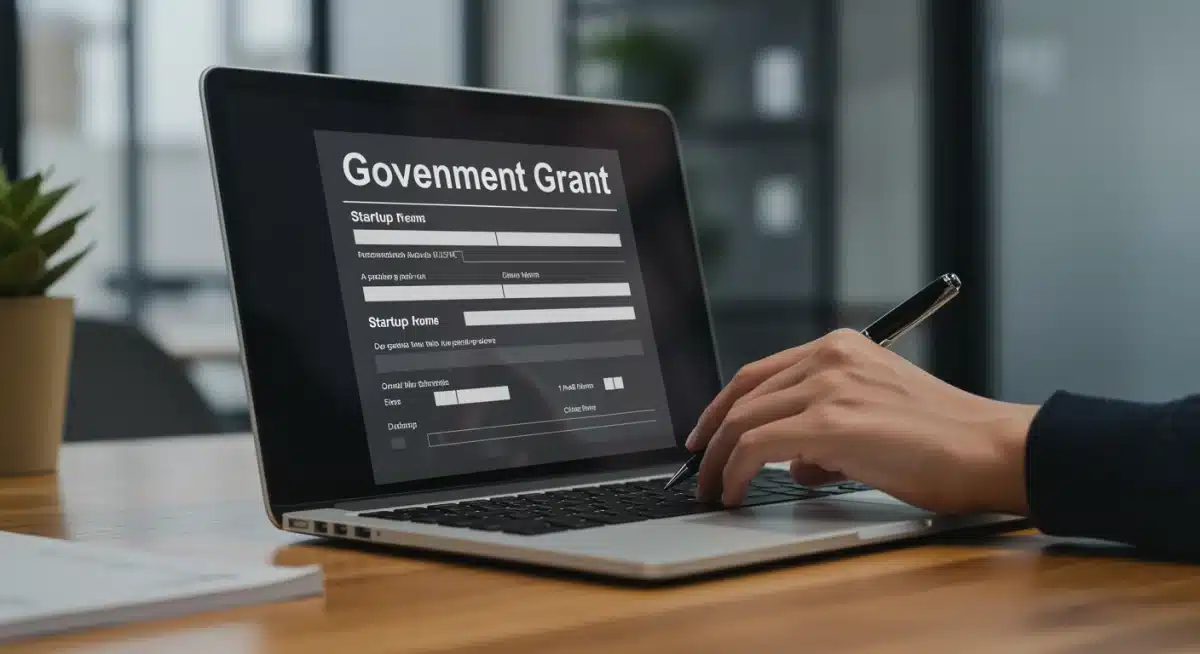
Are you an aspiring entrepreneur with a groundbreaking idea? The landscape of startup funding is constantly evolving, and US government startup grants are emerging as a significant catalyst for innovation. In 2025, new initiatives promise to inject substantial capital, offering up to $100,000 to promising ventures. This is a pivotal moment for innovators looking to transform their concepts into reality with non-dilutive funding.
Understanding the Landscape of Government Funding
Navigating the world of government grants can seem daunting, but it’s a crucial first step for any startup seeking non-dilutive funding. Unlike venture capital or angel investments, grants don’t require you to give up equity in your company. This makes them incredibly attractive, especially for early-stage ventures that need capital to prove their concepts and build initial traction.
The US government, through various agencies, has a vested interest in fostering innovation that addresses national priorities, stimulates economic growth, and creates jobs. These priorities often span critical areas such as clean energy, healthcare, advanced manufacturing, artificial intelligence, and national security. Understanding these overarching goals is key to identifying the right funding opportunities for your startup.
Key Agencies and Their Focus
Several federal agencies are instrumental in distributing grants. Each has its own mission and specific areas of interest, which dictates the types of projects they fund:
Small Business Administration (SBA): While not a direct grant-making agency, the SBA oversees programs like SBIR/STTR, which are primary sources of government funding for small businesses engaged in R&D.
National Science Foundation (NSF): Focuses on fundamental research and education in science and engineering. Their grants often support early-stage technological innovations with high commercial potential.
National Institutes of Health (NIH): A major funder of biomedical research, supporting health-related innovations from basic science to clinical trials.
Department of Energy (DOE): Supports research and development in energy efficiency, renewable energy, and other energy-related fields.
Each agency provides detailed guidelines and application processes, often requiring a strong scientific or technical proposal demonstrating innovation and potential impact. Thorough research into each agency’s specific solicitations is essential before applying.
In essence, government funding represents a strategic partnership between the public sector and innovative private enterprises. By understanding the motivations and mechanisms behind these programs, startups can better position themselves to secure the financial resources needed to grow without sacrificing ownership.
New Initiatives and Funding Opportunities for 2025
As we look towards 2025, the US government is actively rolling out new initiatives designed to bolster startup innovation. These programs are often a response to evolving economic landscapes, technological advancements, and pressing national challenges. A significant focus is being placed on making these grants more accessible and impactful for a wider range of startups, particularly those in underserved communities or emerging technology sectors.
The anticipated initiatives for 2025 are expected to streamline the application process for smaller grant amounts, making it easier for early-stage startups to secure initial funding. This includes simplified proposals and faster review cycles for grants up to $100,000, specifically targeting proof-of-concept and prototype development phases.
Targeted Sectors for Innovation
Several key sectors are slated for increased government investment in 2025, reflecting national priorities:
Sustainable Technologies: Innovations in renewable energy, carbon capture, sustainable agriculture, and waste reduction are high on the agenda. The government aims to accelerate the transition to a greener economy.
Biotechnology and Health Tech: Advancements in personalized medicine, AI-driven diagnostics, vaccine development, and accessible healthcare solutions will receive significant attention.
Artificial Intelligence and Machine Learning: Funding will support novel applications of AI, particularly those enhancing national security, cybersecurity, and educational tools.
Advanced Manufacturing: Projects that improve supply chain resilience, develop new materials, or enhance automation in manufacturing processes are strong candidates.
These targeted areas indicate where the government sees the greatest potential for societal benefit and economic growth. Startups whose innovations align with these priorities will find themselves in a strong position to attract funding.
The new initiatives for 2025 represent a renewed commitment from the US government to nurture a dynamic and competitive startup ecosystem. By focusing on critical sectors and simplifying access to initial capital, these programs aim to empower a new generation of innovators to tackle complex problems and drive progress.
The Application Process: What to Expect
Securing a government grant requires a meticulous and well-prepared application. While each agency and program has its specific requirements, there are common elements and best practices that can significantly increase your chances of success. Understanding these expectations upfront is crucial for efficient preparation.
The application process typically begins with identifying relevant solicitations or announcements of funding opportunities (FOAs) that align with your startup’s mission and innovation. These can usually be found on official government websites like Grants.gov or the specific agency’s portal. Once a suitable opportunity is identified, a detailed proposal outlining your project, its impact, and your team’s capabilities is required.
Key Components of a Strong Proposal
A compelling grant proposal is more than just a request for money; it’s a persuasive argument for why your innovation deserves public investment. Essential components generally include:
Executive Summary: A concise overview of your project, its objectives, and anticipated outcomes. It should capture the reviewer’s attention immediately.
Problem Statement: Clearly articulate the problem your innovation addresses and its significance, often aligning with national priorities.
Proposed Solution: Detail your innovative approach, technology, or service. Explain how it works, its advantages over existing solutions, and its technical feasibility.
Team Qualifications: Highlight the expertise and experience of your team members, demonstrating their capability to execute the project successfully.
Budget Justification: Provide a detailed breakdown of how the requested funds will be used, ensuring it aligns with project activities and deliverables.
Impact and Commercialization Plan: Describe the potential broader impact of your innovation (economic, social, environmental) and your strategy for bringing it to market.
Attention to detail and adherence to all formatting and content requirements specified in the solicitation are paramount. Even minor deviations can lead to disqualification. It’s often beneficial to have multiple team members review the proposal for clarity, completeness, and grammatical accuracy.
The application process for government grants is rigorous by design, ensuring that taxpayer money is invested wisely in projects with the highest potential. By approaching it with thorough preparation and a clear understanding of what reviewers are looking for, startups can significantly improve their prospects of securing funding.
Maximizing Your Chances: Strategies for Success
While the prospect of securing up to $100,000 in government funding is exciting, the competition is often fierce. To stand out, startups need to adopt strategic approaches that go beyond merely filling out forms. It involves understanding the nuances of government expectations and building a compelling narrative around your innovation.
One of the most critical strategies is to conduct thorough due diligence before even starting an application. This means not just reading the solicitation, but truly understanding the agency’s mission, its past funding patterns, and the specific language used in its calls for proposals. Tailoring your proposal to resonate deeply with these aspects can make a significant difference.
Building a Strong Foundation
Networking with Program Officers: Where permitted, engaging with program officers can provide invaluable insights into the agency’s priorities and the types of projects they are most interested in funding.
Demonstrating Technical Merit: Government grants, especially in innovation, heavily weigh the technical soundness and novelty of your proposed solution. Strong scientific data or proof-of-concept is highly beneficial.
Clear and Concise Communication: Reviewers often have limited time. Your proposal must be easy to read, well-organized, and articulate your ideas with precision and clarity. Avoid jargon where possible, or explain it thoroughly.
Partnerships and Collaborations: Demonstrating collaborations with academic institutions, other businesses, or non-profits can strengthen your application by showing broader impact and resource leverage.
Furthermore, consider starting with smaller, less competitive grants to build a track record of success. This demonstrates your ability to manage public funds and deliver on project objectives, which can be a strong credential for larger future applications.
Ultimately, maximizing your chances involves a combination of meticulous preparation, strategic alignment with agency goals, and exceptional articulation of your innovative vision. It’s a journey that demands patience and persistence, but the rewards of non-dilutive funding can be transformative for a startup’s trajectory.
Case Studies: Startups That Thrived with Government Support
Examining real-world examples of startups that have successfully leveraged US government grants can provide invaluable inspiration and practical insights. These stories highlight not only the potential impact of such funding but also the diverse range of innovations that the government is willing to support.
Consider the journey of ‘Bio-Renewables Inc.’, a biotech startup that received an initial $75,000 grant from the National Science Foundation (NSF) through the Small Business Innovation Research (SBIR) program. This seed funding allowed them to develop a novel enzymatic process for converting agricultural waste into biodegradable plastics. The grant not only provided crucial capital but also lent significant credibility, attracting subsequent private investment.
Diverse Success Stories
‘Quantum Computing Solutions’: An early-stage deep tech company secured a $90,000 grant from the Department of Defense (DoD) to research new cryptographic algorithms robust against quantum attacks. This initial funding enabled them to hire specialized talent and develop proprietary software, positioning them as leaders in a niche but critical field.
‘Eco-Housing Innovations’: This startup, focused on sustainable building materials, received a $60,000 grant from the Department of Energy (DOE) to pilot their energy-efficient insulation technology in low-income housing projects. The grant helped them gather vital performance data and establish community partnerships, leading to scalable solutions.
‘Health-AI Diagnostics’: A healthcare AI startup obtained a $100,000 grant from the National Institutes of Health (NIH) to refine their AI-powered diagnostic tool for early detection of a rare disease. This funding was instrumental in validating their algorithm and navigating initial regulatory hurdles, accelerating their path to clinical trials.
These case studies underscore a common theme: government grants often serve as a critical bridge, allowing startups to de-risk their technology, build prototypes, gather data, and attract further investment. They also illustrate the breadth of government interest in innovations that address societal needs and advance scientific frontiers.
The success of these startups demonstrates that with a compelling idea, a strong team, and a well-articulated plan, government grants can be a powerful engine for growth. Their experiences offer a blueprint for future innovators aiming to tap into this vital source of funding.
Beyond the Grant: Leveraging Government Support for Long-Term Growth
While securing a government grant is a significant achievement, its value extends far beyond the monetary award. Government support often comes with a halo effect, offering credibility, networking opportunities, and access to resources that can be instrumental for a startup’s long-term growth and sustainability. It’s about strategically leveraging every aspect of the partnership.
The prestige associated with government funding can open doors to private investors who view grant recipients as de-risked ventures. It signals that your innovation has undergone rigorous review by experts and aligns with national priorities, making it a more attractive investment opportunity. This ‘stamp of approval’ can be invaluable in a competitive funding landscape.
Strategic Advantages of Government Backing
Enhanced Credibility: A grant from a federal agency provides a strong endorsement of your technology and team, making it easier to attract talent, partners, and customers.
Access to Expertise: Many government programs offer technical assistance, mentorship, or access to research facilities and data that would otherwise be inaccessible to early-stage startups.
Networking Opportunities: Being part of a government-funded cohort can connect you with other innovators, industry leaders, and potential collaborators, fostering a rich ecosystem for growth.
Future Funding Pathways: Success with an initial grant can pave the way for follow-on funding opportunities from the same or different agencies, creating a sustainable funding pipeline.
Furthermore, government agencies often have a vested interest in the long-term success of the projects they fund. This can translate into continued support, advocacy, and even procurement opportunities once your innovation is ready for market. Building strong relationships with program officers and adhering to reporting requirements are key to maintaining this beneficial relationship.
In essence, government grants should be viewed as a strategic stepping stone rather than just a one-time financial injection. By actively engaging with the resources and networks that come with government backing, startups can build a robust foundation for enduring success, turning initial funding into sustainable growth and impact.
Preparing Your Startup for 2025 Opportunities
As the 2025 window for new government initiatives draws closer, proactive preparation is essential for startups aiming to secure funding. The competitive nature of these grants means that early planning and strategic positioning can make a significant difference in your application’s success. It’s not just about having a great idea, but about presenting it effectively and aligning it with funding priorities.
Start by thoroughly reviewing your startup’s current stage of development, technological readiness, and alignment with potential government interest areas. Conduct a self-assessment to identify any gaps in your team, technology, or business plan that might need to be addressed before applying.
Key Preparatory Steps
Refine Your Value Proposition: Clearly articulate what problem your startup solves, how your solution is innovative, and its potential impact. This forms the core of any grant application.
Build a Strong Team: Highlight the expertise and experience of your founders and key personnel. A strong team with relevant skills and a proven track record is a major asset.
Develop a Detailed Project Plan: Outline your project’s objectives, methodology, timelines, and measurable outcomes. This demonstrates your ability to execute and manage the grant effectively.
Understand Financial Needs: Be clear about how much funding you need and precisely how it will be used. A well-justified budget is critical for demonstrating fiscal responsibility.
Engage in Early Research: Monitor government websites and funding portals for early announcements or draft solicitations related to 2025 initiatives. This allows you to tailor your preparation.
Consider seeking advice from grant consultants or mentors who have experience with government funding applications. Their insights can be invaluable in navigating the complexities and ensuring your proposal meets all requirements. Additionally, attending webinars or workshops offered by agencies can provide direct guidance.
The period leading up to 2025 is an opportune time for startups to refine their offerings, build their teams, and strategically position themselves for the upcoming wave of government funding. By investing time and effort in preparation, you can significantly enhance your chances of securing the capital needed to drive your innovation forward.
Clear problem statement, innovative solution, team qualifications.
Long-term Benefits
Credibility, networking, access to expertise, future funding.
Frequently Asked Questions About Government Startup Grants
What types of startups are eligible for these government grants?▼
Eligibility varies by program, but generally, startups focused on innovation in areas like sustainable technologies, biotechnology, artificial intelligence, and advanced manufacturing are prime candidates. Small businesses engaged in research and development (R&D) are especially targeted by programs such as SBIR/STTR. Specific criteria are detailed in each grant’s solicitation.
Is the $100,000 grant a one-time payment, or can it be renewed?▼
The $100,000 typically refers to initial seed funding, often for Phase I of programs like SBIR/STTR, focusing on feasibility and proof-of-concept. While not directly renewable, successful completion often qualifies startups for larger, subsequent funding phases (e.g., Phase II for R&D leading to prototypes) which can be significantly higher, sometimes in the millions.
What is the typical timeline for applying for and receiving a government grant?▼
The timeline can vary significantly. Preparing a strong proposal can take weeks to months. After submission, the review process can range from 3 to 9 months, sometimes longer. Once approved, funds are typically disbursed within a few weeks to a couple of months. It’s a non-trivial process requiring patience and foresight.
Do I need to repay government grants if my startup fails?▼
No, government grants are non-dilutive funding, meaning they do not need to be repaid, even if your startup does not achieve commercial success. However, recipients are typically required to adhere to strict reporting and accountability standards, ensuring funds are used as outlined in the approved proposal and for the intended project objectives.
Where can I find information about specific grant opportunities for 2025?▼
The primary portal for federal grants is Grants.gov, where all federal agencies post their funding opportunities. Additionally, specific agencies like the NSF (National Science Foundation), NIH (National Institutes of Health), and DOE (Department of Energy) maintain their own websites with detailed solicitations and program information relevant to their respective fields.
Conclusion
The impending US government initiatives for 2025, offering up to $100,000 for startup innovation, present a monumental opportunity for entrepreneurs. This non-dilutive funding can be a game-changer for early-stage ventures, providing the essential capital to de-risk technology, develop prototypes, and gain crucial credibility. By thoroughly understanding the landscape of government funding, strategically preparing robust applications, and leveraging the broader support ecosystem, startups can significantly enhance their chances of securing these transformative grants. The commitment to fostering innovation in critical sectors underscores a national drive for economic advancement and technological leadership, making 2025 a pivotal year for groundbreaking ventures.
Eduarda Moura has a degree in Journalism and a postgraduate degree in Digital Media. With experience as a copywriter, Eduarda strives to research and produce informative content, bringing clear and precise information to the reader.