Sustainable Tech 2025: Green IT for US Carbon Reduction
By 2025, US companies can significantly reduce their carbon footprint by 15% through strategic adoption of green IT, encompassing energy-efficient hardware, optimized data centers, and sustainable software practices, fostering both ecological responsibility and operational efficiency.
By: Eduarda Moura on July 30, 2025
Last updated on: November 28, 2025
US companies can achieve a 15% carbon footprint reduction by 2025 through comprehensive green IT strategies, integrating energy-efficient hardware, cloud optimization, and sustainable lifecycle management to foster environmental stewardship and operational gains.
The imperative for businesses to adopt sustainable practices has never been more urgent. As we look towards 2025, the potential for US companies to significantly curb their environmental impact through technological innovation is immense. This article explores how embracing green IT carbon reduction strategies can enable a crucial 15% decrease in carbon footprints, making a tangible difference for our planet and fostering long-term business resilience.
The Urgent Need for Green IT in the US Corporate Landscape
The digital age, while transformative, has also brought an unprecedented demand for energy, largely driven by our technological infrastructure. Data centers, networks, and end-user devices consume vast amounts of electricity, contributing significantly to global carbon emissions. For US companies, addressing this energy consumption isn’t just about corporate social responsibility; it’s becoming a business imperative driven by regulatory pressures, consumer expectations, and operational cost savings.
As 2025 approaches, companies are increasingly recognizing that sustainable practices are not merely a compliance issue but a strategic advantage. Integrating green IT principles allows businesses to operate more efficiently, reduce waste, and build a more resilient infrastructure. This shift is critical for meeting ambitious carbon reduction targets and positioning enterprises as leaders in the sustainable economy.
The urgency for green IT stems from both environmental and economic factors. Climate change demands immediate action, and the tech sector, with its substantial energy footprint, has a pivotal role to play. Furthermore, the rising cost of energy and the potential for carbon taxes make energy efficiency a direct path to financial savings and competitive advantage. Companies that proactively invest in green IT now will be better prepared for future market demands and environmental regulations.
Defining Green IT: Beyond Energy Efficiency
Green IT, often oversimplified as just using less electricity, is a holistic approach to managing the entire lifecycle of IT systems in an environmentally sustainable manner. It encompasses the design, manufacture, use, and disposal of computers, servers, and associated subsystems such as monitors, printers, storage devices, and networking and communications systems.
Beyond mere energy savings, green IT strategies consider the environmental impact at every stage. This includes sourcing raw materials responsibly, minimizing waste during manufacturing, designing products for longevity and recyclability, and ensuring ethical end-of-life disposal. It’s a comprehensive framework that aims to minimize the overall ecological footprint of technology.
The scope of green IT extends to software development and data management. Optimizing code for efficiency, reducing data storage needs, and leveraging cloud computing with renewable energy-powered providers are all integral components. By looking at the entire ecosystem, companies can identify numerous opportunities to reduce their environmental impact effectively.
Key Pillars of Green IT Implementation
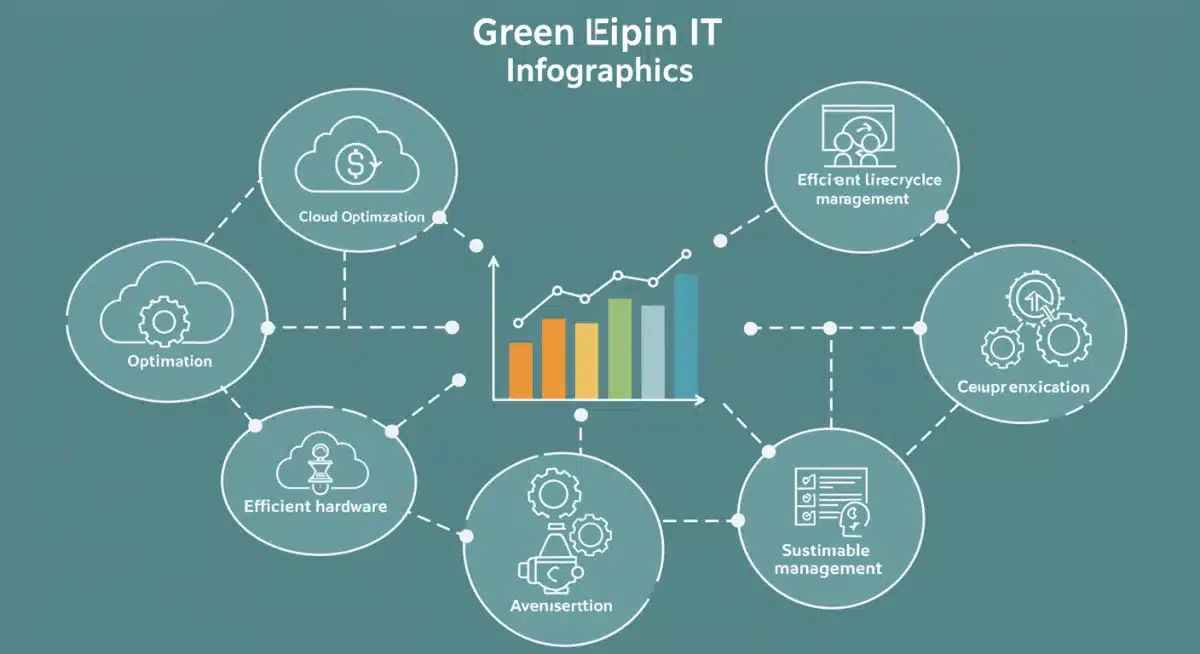
Energy-Efficient Hardware: Utilizing hardware designed for lower power consumption, such as ENERGY STAR certified devices and high-efficiency servers.
Virtualization and Cloud Computing: Consolidating servers and leveraging cloud resources to reduce physical hardware needs and energy usage.
Sustainable Software Development: Writing efficient code that requires fewer computing resources, thereby reducing energy consumption.
Lifecycle Management: Implementing strategies for responsible procurement, reuse, recycling, and disposal of IT equipment.
In conclusion, green IT is far more than a simple energy-saving initiative. It’s a strategic, multi-faceted approach that integrates environmental considerations into every aspect of an organization’s technological operations, promising a significant reduction in carbon footprint.
Leveraging Data Center Optimization for Carbon Reduction
Data centers are the backbone of modern business operations, yet they are also notorious energy guzzlers. Their continuous operation and cooling requirements contribute substantially to a company’s carbon footprint. Optimizing data center efficiency is one of the most impactful steps US companies can take to reduce their carbon emissions by 2025.
This optimization involves a combination of hardware upgrades, improved cooling systems, and intelligent power management. Moving from traditional, less efficient servers to modern, high-density, and energy-efficient models can drastically cut power consumption. Furthermore, adopting liquid cooling solutions or optimizing airflow within facilities can significantly reduce the energy needed for thermal management, a major component of data center electricity usage.
Strategies for Data Center Efficiency
Server Virtualization: Consolidating multiple physical servers into fewer, more powerful virtual machines reduces hardware footprint and energy needs.
Power Usage Effectiveness (PUE) Improvement: Focusing on lowering the PUE score, which measures how efficiently a data center uses energy, by optimizing infrastructure and operational practices.
Renewable Energy Sourcing: Powering data centers with electricity from renewable sources, such as solar or wind, directly reduces Scope 2 emissions.
Edge Computing Optimization: Strategically placing computational resources closer to data sources can reduce data transmission distances, leading to lower network energy consumption.
By implementing these strategies, companies can transform their data centers from energy liabilities into models of efficiency and sustainability, directly contributing to their 15% carbon reduction goal.
Cloud computing has emerged as a powerful tool for businesses, offering scalability, flexibility, and cost savings. Critically, it also presents a significant opportunity for carbon footprint reduction. By migrating infrastructure and applications to the cloud, companies can indirectly contribute to environmental sustainability.
Cloud providers often operate at massive scales, enabling them to achieve economies of scale in energy efficiency that individual companies cannot match. They invest heavily in state-of-the-art, energy-efficient hardware, optimized data center designs, and increasingly, in renewable energy sources to power their operations. This means that by using cloud services, companies can leverage these green initiatives without having to build and maintain their own sustainable infrastructure.
Furthermore, the dynamic resource allocation capabilities of cloud platforms mean that computing power is used more efficiently. Resources are scaled up or down based on demand, preventing the waste of energy that occurs with always-on, over-provisioned on-premise servers. This elastic nature ensures that energy is consumed only when and where it is needed.
Cloud Optimization for Reduced Emissions
While cloud adoption inherently offers environmental benefits, companies can further optimize their cloud usage to maximize carbon reduction. This includes selecting cloud providers with strong public commitments to renewable energy and transparent reporting on their environmental impact. It also involves optimizing cloud architecture to ensure workloads are running efficiently and eliminating unnecessary resources.
For example, right-sizing virtual machines, deleting unused data, and implementing serverless architectures can minimize the computational resources required, thereby reducing the energy footprint of cloud operations. Companies should also explore multi-cloud strategies to diversify their reliance on providers and potentially access greener options.
Ultimately, cloud computing provides a pathway for US companies to offload the environmental burden of IT infrastructure to specialized providers who are often better equipped to manage it sustainably. This shift is a key enabler for achieving ambitious carbon reduction targets by 2025.
Sustainable Software Development and Application Efficiency
While hardware and infrastructure often receive the most attention in green IT discussions, the software that runs on these systems plays an equally crucial role. Inefficient software can demand more processing power, memory, and storage, leading to increased energy consumption across the entire IT stack. Sustainable software development focuses on creating applications that are inherently resource-efficient.
This includes practices such as writing optimized code that executes tasks with fewer computational cycles, designing algorithms that minimize data transfers, and building applications that can operate effectively on less powerful hardware. The goal is to reduce the ‘digital weight’ of software, making it leaner and less demanding on energy resources.
Developers increasingly have a role to play in sustainability by considering the environmental impact of their code. Tools and methodologies are emerging to help quantify the energy consumption of different software designs and guide developers towards more sustainable choices. This shift towards ‘green coding’ is vital for a comprehensive green IT strategy.
Practical Steps for Greener Software
Code Optimization: Refactor code to reduce complexity and improve execution speed, minimizing CPU cycles.
Efficient Data Handling: Implement smart data compression, deduplication, and efficient database queries to reduce storage and network traffic.
Power-Aware Design: Develop applications that can adapt their power consumption based on workload, entering low-power states when idle.
User Experience (UX) Considerations: Design intuitive interfaces that minimize user interaction time, thereby reducing the energy spent on device usage.
By focusing on sustainable software development, US companies can ensure that their digital products and services contribute to, rather than detract from, their carbon reduction goals, making every line of code a step towards a greener future.
The Importance of IT Asset Disposition (ITAD) and Circular Economy
The lifecycle of IT equipment doesn’t end when it’s replaced or upgraded. The responsible disposal and recycling of electronic waste, or e-waste, is a critical component of green IT and a major opportunity for US companies to reduce their carbon footprint. E-waste is often toxic and contributes significantly to landfill pollution if not handled properly.
IT Asset Disposition (ITAD) refers to the formal process of retiring and disposing of IT assets in a secure and environmentally responsible manner. This goes beyond simple recycling; it involves secure data destruction, remarketing usable equipment, and ensuring that components that cannot be reused are recycled according to strict environmental standards.
Embracing a circular economy model for IT assets means moving away from the linear ‘take-make-dispose’ approach. Instead, it focuses on extending the life of products through repair, refurbishment, and reuse, and when products reach their end-of-life, recovering valuable materials for new production. This significantly reduces the demand for virgin resources and minimizes waste.
Implementing a Circular IT Strategy
To integrate ITAD and circular economy principles effectively, US companies should:
Partner with Certified ITAD Vendors: Work with reputable vendors who adhere to environmental certifications (e.g., R2, e-Stewards) for secure and responsible e-waste handling.
Prioritize Reuse and Refurbishment: Establish internal programs or external partnerships to refurbish and reuse equipment, either within the company or for donation.
Design for Longevity: When procuring new equipment, prioritize products designed for durability, repairability, and upgradability.
Track and Report E-waste: Maintain clear records of IT asset disposal to monitor environmental impact and ensure compliance.
By adopting robust ITAD practices and embracing circular economy principles, companies can significantly reduce their Scope 3 emissions associated with their supply chain and product lifecycles, moving closer to their 15% carbon reduction target by 2025.
Measuring Progress and Setting Ambitious Green IT Goals
Achieving a 15% reduction in carbon footprint by 2025 through green IT requires more than just implementing new technologies; it demands a rigorous approach to measurement, reporting, and continuous improvement. What gets measured gets managed, and this is especially true for sustainability initiatives.
Companies must establish clear baseline metrics for their current IT-related carbon emissions. This involves calculating Scope 1, Scope 2, and relevant Scope 3 emissions attributable to IT operations. Tools and frameworks like the Greenhouse Gas (GHG) Protocol can provide a standardized methodology for this measurement. Once a baseline is established, clear, quantifiable targets can be set for reduction.
Regular reporting and transparency are also crucial. Communicating progress internally and externally not only builds stakeholder trust but also helps identify areas where further improvements are needed. This iterative process of measure, act, and report is fundamental to achieving ambitious green IT goals and demonstrating genuine commitment to sustainability.
Key Metrics for Green IT Success
Power Usage Effectiveness (PUE): For data centers, tracking PUE provides a direct measure of energy efficiency.
Carbon Emissions per Unit of IT Work: Measuring emissions per transaction, user, or computation provides a normalized view of efficiency.
E-waste Diversion Rate: The percentage of e-waste that is reused or recycled versus sent to landfills.
Renewable Energy Procurement: The percentage of IT energy consumption sourced from renewable energy.
By diligently tracking these metrics and continuously seeking innovative ways to optimize their IT operations, US companies can confidently work towards and achieve their 15% carbon reduction target by 2025, setting a new standard for sustainable business practices.
Key Green IT Strategy
Carbon Reduction Impact
Data Center Optimization
Significant reduction in energy consumption through virtualization, efficient cooling, and hardware upgrades.
Cloud Computing Migration
Leveraging hyperscale providers’ efficiency and renewable energy commitments for lower emissions.
Sustainable Software Development
Reduced resource demands from optimized code, leading to lower energy consumption across IT infrastructure.
IT Asset Disposition (ITAD)
Minimizing e-waste and promoting circularity through reuse and responsible recycling, reducing Scope 3 emissions.
Frequently Asked Questions About Green IT and Carbon Reduction
What is green IT and why is it important for US companies?▼
Green IT refers to environmentally sustainable computing, encompassing the design, manufacture, use, and disposal of IT equipment. It’s crucial for US companies to reduce their carbon footprint, meet regulatory requirements, lower operational costs, and enhance their brand reputation by demonstrating environmental responsibility.
How can cloud computing help reduce a company’s carbon footprint?▼
Cloud providers typically operate highly efficient, large-scale data centers often powered by renewable energy. Migrating to the cloud allows companies to leverage this efficiency, reduce their on-premise hardware, and dynamically scale resources, minimizing wasted energy and contributing to a lower carbon footprint.
What role does IT asset disposition (ITAD) play in green IT?▼
ITAD ensures the secure and environmentally responsible disposal of old IT equipment. It’s vital for preventing e-waste pollution, recovering valuable materials, and extending the lifecycle of hardware through reuse and refurbishment, directly reducing the environmental impact associated with IT equipment manufacturing and disposal.
Is achieving a 15% carbon reduction by 2025 realistic for US companies?▼
Yes, achieving a 15% carbon reduction by 2025 is realistic with a concerted effort towards green IT. By implementing strategies like data center optimization, cloud migration, sustainable software development, and robust ITAD, companies can make significant strides towards this goal through incremental and transformative changes.
What are the business benefits of investing in green IT?▼
Beyond environmental benefits, green IT offers substantial business advantages, including reduced energy costs, improved operational efficiency, enhanced brand reputation, compliance with environmental regulations, increased investor appeal, and a more resilient and future-proof IT infrastructure. It aligns profitability with planetary responsibility.
Conclusion: Paving the Way for a Sustainable Digital Future
The journey towards a 15% reduction in carbon footprint for US companies by 2025 through green IT is not merely an aspiration but an achievable goal. By strategically embracing energy-efficient hardware, optimizing data centers, leveraging the power of cloud computing, fostering sustainable software development, and implementing robust IT asset disposition, businesses can make profound and measurable impacts. This holistic approach to sustainable technology not only addresses urgent environmental concerns but also unlocks significant economic benefits, positioning companies for long-term success in an increasingly eco-conscious world. The time for action is now, transforming technological prowess into environmental stewardship for a greener, more sustainable digital future.
Eduarda Moura has a degree in Journalism and a postgraduate degree in Digital Media. With experience as a copywriter, Eduarda strives to research and produce informative content, bringing clear and precise information to the reader.