From Raw Data to Revenue: US Startups’ 2025 Data Growth Framework
This article outlines a pragmatic 4-step framework for US startups to implement data-driven growth strategies in 2025, transforming raw data into actionable insights and sustainable revenue streams.
By: Eduarda Moura on November 5, 2025
Last updated on: November 28, 2025
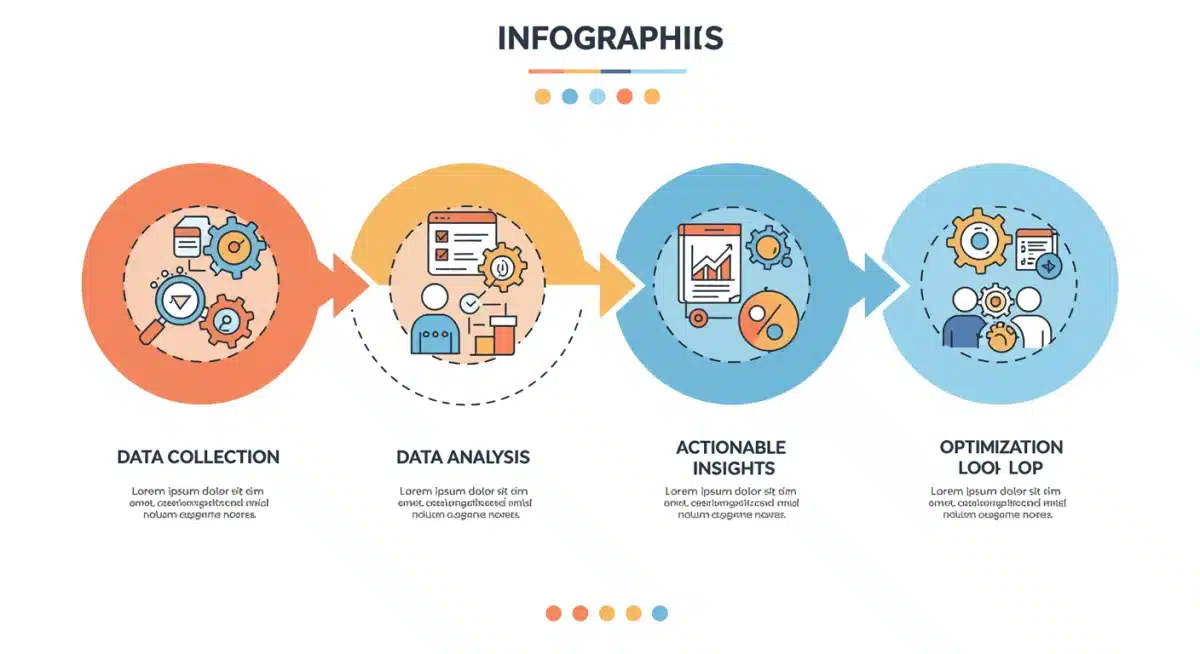
Implementing a robust 4-step framework for data-driven growth strategies is crucial for US startups aiming to convert raw data into tangible revenue and secure a competitive edge in 2025.
In today’s hyper-competitive landscape, US startups face an imperative: transform their vast reservoirs of raw data into concrete revenue. The journey from scattered information to strategic advantage demands a clear, actionable roadmap. This article unveils a robust 4-step framework designed to empower US startups to implement effective data-driven growth strategies in 2025, ensuring every byte contributes to the bottom line.
understanding the imperative: why data-driven growth now?
The digital economy has fundamentally reshaped how businesses operate, with data emerging as the most valuable asset. For US startups, understanding and leveraging this asset isn’t just an option; it’s a necessity for survival and scalable growth. The sheer volume of information generated daily presents both a challenge and an unparalleled opportunity to outmaneuver established players.
Ignoring data or treating it as a secondary concern can lead to missed opportunities, inefficient resource allocation, and a failure to anticipate market shifts. Conversely, a proactive, data-centric approach enables startups to identify emerging trends, understand customer behavior with precision, and optimize every facet of their operations, from product development to marketing and sales.
the evolving data landscape for startups
The tools and technologies available for data collection and analysis have become more accessible and powerful, democratizing data science to some extent. This means even lean startups can implement sophisticated data practices without massive initial investments. The challenge lies in knowing which data matters, how to collect it ethically, and how to translate it into actionable insights.
Increased accessibility of cloud-based analytics platforms.
Stricter data privacy regulations impacting collection methods.
Customer expectations for personalized experiences driven by data.
Ultimately, the imperative for data-driven growth stems from the need for agility and precision in decision-making. Startups can no longer afford to rely on intuition alone when competitors are making informed choices based on real-time data. Embracing this shift is the first step towards building a sustainable and profitable future.
Understanding the critical role of data in today’s business environment sets the stage for implementing strategic frameworks. Without a clear ‘why,’ the ‘how’ becomes convoluted and lacks the necessary organizational buy-in. This foundational understanding is what propels a startup from merely collecting data to actively harnessing it for growth.
step 1: strategic data collection and infrastructure
The foundation of any successful data-driven strategy lies in meticulous and strategic data collection. It’s not about gathering every piece of information, but rather identifying and acquiring the data that directly informs your business objectives and growth hypotheses. For US startups, this often involves a lean yet robust approach to infrastructure.
Begin by defining your key performance indicators (KPIs) and the specific questions you need answered to achieve your revenue goals. This clarity will guide your data collection efforts, preventing the accumulation of irrelevant or ‘noisy’ data that can complicate analysis and consume valuable resources.
building a robust data infrastructure
Selecting the right tools and platforms for data storage and management is paramount. Cloud-based solutions offer scalability and cost-effectiveness, making them ideal for startups. Consider data warehouses (like Google BigQuery or Amazon Redshift) for structured data and data lakes (like Amazon S3) for unstructured data, ensuring flexibility as your data needs evolve.
Identify key data sources (CRM, website analytics, social media, transactional data).
Implement data pipelines for automated collection and integration.
Ensure data quality through validation and cleansing processes.
Prioritize data security and compliance with US regulations (e.g., CCPA, state-specific privacy laws).
Furthermore, establishing clear data governance policies from the outset is crucial. This includes defining data ownership, access controls, and maintenance protocols. A well-structured infrastructure not only facilitates efficient data handling but also builds trust, which is vital for both customers and internal stakeholders.
Effective data collection and a solid infrastructure are the bedrock upon which all subsequent data-driven initiatives are built. Without reliable, clean, and accessible data, even the most sophisticated analytical tools will yield flawed insights. Investing time and resources here ensures a strong start on your path to revenue generation.
step 2: advanced data analysis and insight generation
Once you have a clean and structured dataset, the next critical step is to transform this raw information into meaningful, actionable insights. This involves employing advanced analytical techniques to uncover patterns, trends, and correlations that might not be immediately obvious. For US startups, this stage is where the true value of their data begins to materialize.
Moving beyond basic reporting, advanced data analysis delves into predictive modeling, customer segmentation, and behavioral economics. The goal is to understand not just what happened, but why it happened, and what is likely to happen next. This foresight is invaluable for strategic planning and proactive decision-making.
leveraging analytical tools and techniques
Modern analytical tools, often powered by AI and machine learning, can process vast amounts of data to identify complex relationships. Startups can utilize platforms like Tableau, Power BI, or even open-source libraries in Python (e.g., Pandas, Scikit-learn) to perform sophisticated analyses. The key is to select tools that align with your team’s capabilities and your specific analytical needs.
The process of insight generation is iterative. It involves formulating hypotheses, testing them with data, and refining your understanding. Encourage a culture of curiosity and continuous questioning within your team. Data scientists and business analysts play a crucial role in translating complex analytical outputs into clear, business-relevant narratives that can be understood by non-technical stakeholders.
This stage is where raw numbers gain context and significance. By rigorously analyzing data, US startups can move beyond guesswork, making informed decisions that directly contribute to revenue growth and market differentiation. The insights derived here will directly feed into the action-oriented steps of the framework.
step 3: actionable implementation and experimentation
Having gathered and analyzed data to generate powerful insights, the next crucial phase is to translate these insights into concrete actions and strategies. For US startups, this means moving from data discovery to tangible implementation, often through iterative experimentation. This step closes the loop between understanding and doing, directly impacting revenue.
The most brilliant insights are worthless if they aren’t acted upon. This stage emphasizes the importance of a clear process for converting analytical findings into operational changes, marketing campaigns, product enhancements, or new business models. It requires a cross-functional approach, ensuring that insights reach the teams best equipped to utilize them.
designing and executing data-driven initiatives
Successful implementation often involves creating specific projects or initiatives directly stemming from data insights. For example, if analysis reveals a high churn rate among a particular customer segment, the action might be to develop targeted retention campaigns or modify product features to address their pain points. Experimentation, through methodologies like A/B testing, is vital for validating these actions.
Develop targeted marketing campaigns based on customer segmentation.
Optimize pricing strategies using demand elasticity data.
Improve product features or user experience based on user behavior analytics.
Streamline operational processes to reduce costs identified through efficiency data.
Furthermore, establishing a culture of experimentation is key. Not every data-driven initiative will succeed immediately. The ability to quickly test, measure, learn, and iterate is what differentiates agile startups. Documenting experiments, their hypotheses, methodologies, and outcomes is essential for continuous learning and refinement.
This implementation phase is where the rubber meets the road, transforming abstract insights into measurable business outcomes. By systematically acting on data, US startups can directly influence their revenue streams, customer satisfaction, and overall market position, reinforcing the value of their data-driven growth strategies.
step 4: continuous monitoring and optimization loop
The journey of data-driven growth is not a one-time event; it’s a continuous cycle of monitoring, evaluating, and optimizing. For US startups, establishing a robust feedback loop is essential to ensure that implemented strategies remain effective, adapt to changing market conditions, and continually drive revenue growth. This final step solidifies the framework as a dynamic, evolving system.
After implementing data-driven actions, it’s imperative to track their performance against predefined KPIs. This monitoring allows startups to understand the real-world impact of their strategies, identify any unforeseen consequences, and pinpoint areas for further improvement. Without this continuous oversight, even well-conceived plans can lose their efficacy over time.
establishing a feedback mechanism for growth
Effective monitoring involves setting up dashboards and reporting tools that provide real-time visibility into key metrics. These dashboards should be accessible to relevant teams, fostering transparency and accountability. Regular review meetings should be held to discuss performance, celebrate successes, and critically analyze shortcomings.
Implement real-time dashboards to track KPI performance.
Conduct post-implementation reviews to assess strategy effectiveness.
Gather qualitative feedback from customers and stakeholders.
Regularly revisit and refine data collection and analysis processes.
The optimization loop is where the insights gained from monitoring feed back into the earlier stages of the framework. If a marketing campaign isn’t performing as expected, new data might be collected, analyzed for fresh insights, and then new actions implemented. This iterative process ensures that your data-driven growth strategies are always evolving and improving.
Continuous monitoring and optimization are the hallmarks of truly data-mature organizations. By embracing this ongoing cycle, US startups can maintain a competitive edge, adapt quickly to market dynamics, and ensure that their efforts consistently translate into sustained revenue generation, making their data strategy a living, breathing component of their business.
navigating common challenges in data implementation
While the 4-step framework provides a clear path, US startups will inevitably encounter challenges during its implementation. Anticipating and addressing these hurdles proactively is crucial for maintaining momentum and achieving successful data-driven growth. Common obstacles range from data quality issues to organizational resistance.
One significant challenge is ensuring data accuracy and consistency across various sources. Disparate systems, manual data entry, and lack of standardized protocols can lead to ‘dirty data,’ which can skew analyses and lead to flawed conclusions. Investing in data cleansing tools and establishing robust data governance policies from the outset can mitigate this.
overcoming technical and cultural barriers
Technical complexity can also be a barrier. Integrating different data sources, setting up analytical environments, and deploying machine learning models require specialized skills. Startups might need to invest in training their existing team, hiring data professionals, or leveraging external consultants to bridge skill gaps.
Address data silos by integrating disparate systems.
Invest in data quality tools and processes.
Foster a data-literate culture across all departments.
Prioritize cybersecurity and data privacy compliance.
Perhaps one of the most subtle yet potent challenges is cultural resistance. Employees accustomed to intuition-based decision-making might view data-driven approaches with skepticism or even hostility. Overcoming this requires strong leadership, clear communication of the benefits, and demonstrating early successes to build buy-in and trust in the new methodologies.
By acknowledging these common challenges and developing strategies to overcome them, US startups can smoothly navigate the complexities of implementing data-driven growth strategies. Proactive problem-solving ensures that the framework remains effective and contributes consistently to revenue generation, strengthening the overall data ecosystem.
future-proofing your data-driven growth strategy
As technology and market dynamics continue to evolve at a rapid pace, US startups must not only implement data-driven growth strategies but also future-proof them. This involves anticipating upcoming trends, adapting to new technologies, and building a resilient data ecosystem that can withstand future shifts. Staying ahead means continuous innovation in how data is perceived and utilized.
The landscape of data privacy regulations, for instance, is constantly changing. Startups must remain vigilant and agile in adapting their data collection and usage practices to comply with new laws, both domestically and internationally. Proactive compliance not only avoids hefty fines but also builds customer trust, a valuable asset in the digital age.
embracing emerging data technologies
New technologies such as advanced AI, edge computing, and blockchain are poised to further revolutionize data management and analytics. Startups should keep an eye on these developments, exploring how they might enhance their data capabilities, improve efficiency, or unlock new revenue streams. Early adoption of relevant technologies can provide a significant competitive advantage.
Stay informed about evolving data privacy regulations and ethical guidelines.
Explore new data sources, such as IoT device data or alternative datasets.
Invest in upskilling teams in emerging data science and AI techniques.
Build flexible data architectures that can easily integrate new technologies.
Ultimately, future-proofing your data strategy means cultivating a mindset of continuous learning and adaptation. Data is not static, and neither should be your approach to it. By consistently evaluating your methods, exploring new tools, and fostering a culture of innovation, US startups can ensure their data-driven growth strategies remain potent and relevant for years to come, securing long-term revenue and success.
Key Step
Brief Description
Strategic Data Collection
Identify relevant data, build robust infrastructure, and ensure data quality and compliance.
Advanced Data Analysis
Transform raw data into actionable insights using advanced analytical tools and techniques.
Actionable Implementation
Translate insights into concrete actions and conduct iterative experimentation for validation.
Continuous Optimization
Monitor performance, gather feedback, and continuously refine strategies for sustained growth.
frequently asked questions about data-driven growth
What is a data-driven growth strategy for US startups?▼
A data-driven growth strategy involves using collected data to make informed decisions across all business functions, from product development to marketing and sales, with the ultimate goal of increasing revenue and efficiency. For US startups, it’s about leveraging insights to achieve sustainable, scalable growth in competitive markets.
Why is data quality crucial for startups?▼
Data quality is paramount because flawed or inaccurate data leads to misleading insights and poor decision-making. For startups with limited resources, making choices based on bad data can be detrimental, wasting time and capital. High-quality data ensures reliable analysis and effective strategy implementation.
How can startups overcome data silo challenges?▼
Overcoming data silos requires integrating disparate systems and creating a centralized data repository, such as a data warehouse or data lake. Implementing robust data pipelines and fostering cross-functional collaboration also helps ensure that all relevant data is accessible and usable across the organization, enabling holistic analysis.
What role does AI play in data-driven growth?▼
AI and machine learning significantly enhance data-driven growth by enabling advanced analytics, predictive modeling, and automation. They can uncover complex patterns, forecast trends, personalize customer experiences, and optimize operations, allowing startups to extract deeper insights and implement more sophisticated strategies with greater efficiency.
How often should a startup review its data strategy?▼
A startup should review its data strategy regularly, ideally quarterly or bi-annually, to ensure it remains aligned with evolving business goals, market conditions, and technological advancements. Continuous monitoring and an agile approach to strategy refinement are essential for sustained data-driven success and revenue generation.
conclusion
The journey from raw data to robust revenue is a strategic imperative for US startups aiming for sustained success in 2025. By diligently following the outlined 4-step framework—strategic data collection, advanced analysis, actionable implementation, and continuous optimization—startups can transform their data into a powerful engine for growth. Embracing a data-centric culture, anticipating challenges, and future-proofing strategies will not only enhance decision-making but also forge a resilient path toward market leadership and significant financial returns.
Eduarda Moura has a degree in Journalism and a postgraduate degree in Digital Media. With experience as a copywriter, Eduarda strives to research and produce informative content, bringing clear and precise information to the reader.