Predictive Maintenance in US Manufacturing: IoT Data for 2025 Efficiency
Predictive maintenance, leveraging IoT data, is set to drastically cut downtime by 20% and extend equipment lifespan by 18% in US manufacturing by 2025, driving significant operational improvements and cost savings.
By: Eduarda Moura on October 20, 2025
Last updated on: November 28, 2025
Predictive maintenance, enhanced by IoT data, is projected to reduce downtime in US manufacturing by 20% and extend equipment lifespan by 18% by 2025, fundamentally transforming operational efficiency.
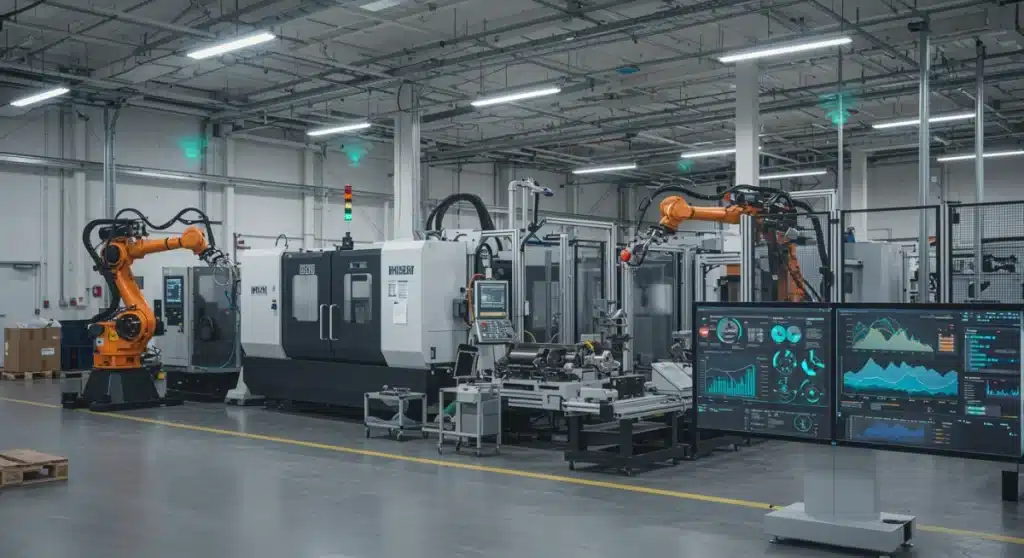
The landscape of modern manufacturing is undergoing a profound transformation, driven by technological advancements that promise unprecedented levels of efficiency and reliability. At the forefront of this revolution is predictive maintenance in US manufacturing, an approach that harnesses the power of IoT data to anticipate equipment failures before they occur. This strategic shift is not just about fixing problems; it’s about preventing them, with ambitious targets set for 2025: a 20% reduction in downtime and an 18% extension in equipment lifespan. But how exactly is this being achieved, and what does it mean for the future of American industry?
the strategic imperative of predictive maintenance
Predictive maintenance is no longer a futuristic concept but a present-day necessity for US manufacturers striving for global competitiveness. The traditional reactive and preventive maintenance models, while having their merits, often fall short in optimizing operational costs and maximizing asset utilization. Reactive maintenance, waiting for a failure to occur, leads to costly downtime, emergency repairs, and lost production. Preventive maintenance, based on fixed schedules, can result in unnecessary maintenance activities or, conversely, failures occurring between scheduled checks.
The strategic imperative stems from the desire to move beyond these limitations. By leveraging real-time data from industrial IoT sensors, manufacturers can gain deep insights into the health and performance of their machinery. This allows for a proactive approach, where maintenance interventions are precisely timed for when they are most needed, avoiding both premature overhauls and catastrophic breakdowns. The economic implications are substantial, impacting everything from labor costs to spare parts inventory and overall production output.
evolution from traditional maintenance
Understanding the journey from traditional maintenance methodologies to predictive models helps contextualize its current significance. For decades, manufacturers relied on manual inspections and scheduled servicing. While reliable to a degree, these methods were inherently inefficient, leading to either under-maintenance or over-maintenance.
Reactive Maintenance: Fixing equipment only after it breaks, leading to unpredictable downtime and high emergency costs.
Preventive Maintenance: Scheduled maintenance based on time or usage, often resulting in unnecessary interventions or missed early signs of failure.
Condition-Based Monitoring: Utilizing sensor data to monitor equipment health, but often requiring manual analysis and threshold setting.
Predictive maintenance builds on condition-based monitoring by integrating advanced analytics, machine learning, and artificial intelligence to not just monitor, but predict. This evolution represents a paradigm shift from a reactive or time-based mindset to a data-driven, proactive strategy that optimizes resource allocation and minimizes operational disruptions.
the role of IoT data in transforming manufacturing
The Internet of Things (IoT) serves as the foundational technology enabling the widespread adoption of predictive maintenance in US manufacturing. IoT devices, embedded within machinery and across factory floors, continuously collect vast amounts of data on various operational parameters. This data—ranging from vibration, temperature, and pressure to lubrication levels and energy consumption—provides a comprehensive digital snapshot of equipment health.
The true power of IoT lies not just in data collection but in its ability to transmit this information in real-time to centralized platforms for analysis. This constant stream of operational telemetry allows for immediate detection of anomalies and trending patterns that indicate potential issues. Without robust IoT infrastructure, the vision of predictive maintenance would remain largely theoretical, lacking the granular, timely information required for accurate predictions.
data collection and sensor technology
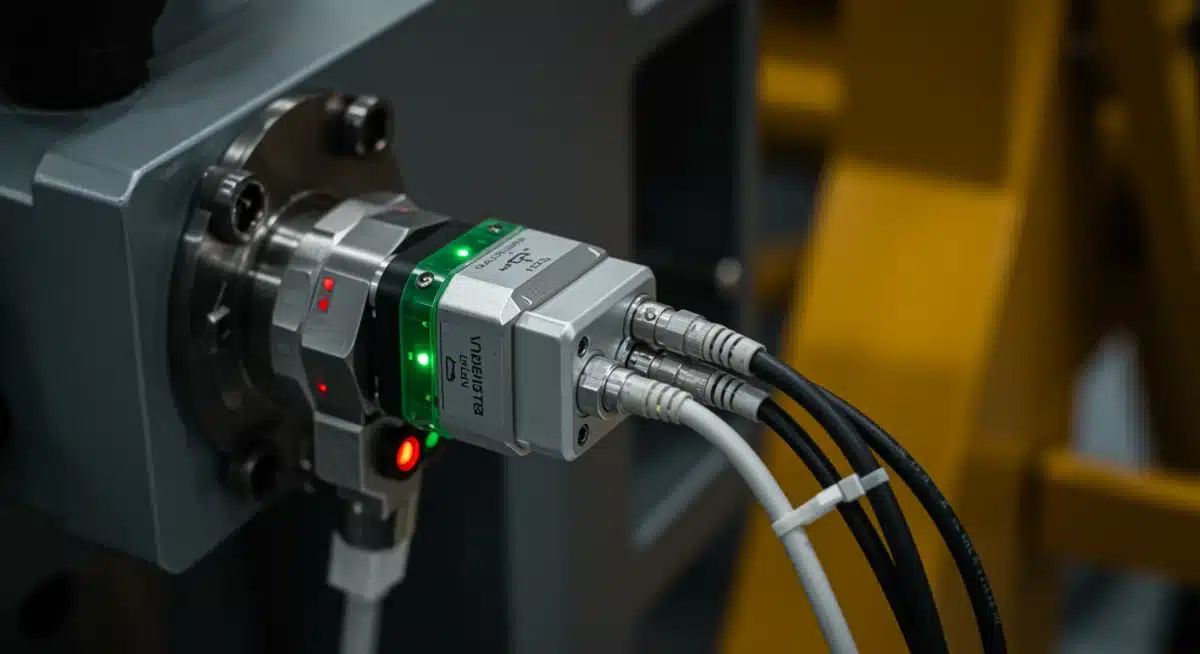
Effective predictive maintenance hinges on the quality and quantity of data collected. Modern sensor technology has become incredibly sophisticated, capable of monitoring a diverse array of parameters with high precision and reliability. These sensors are designed to withstand harsh industrial environments, ensuring continuous data acquisition even in challenging conditions.
Vibration Sensors: Detect imbalances, misalignments, and bearing wear, key indicators of mechanical stress.
Temperature Sensors: Monitor heat levels, crucial for identifying overheating motors, friction issues, or cooling system malfunctions.
Acoustic Sensors: Capture sound signatures that can indicate unusual operational noises, such as grinding or knocking.
Pressure and Flow Sensors: Gauge fluid dynamics in hydraulic or pneumatic systems, signaling blockages or leaks.
The integration of these diverse sensor types creates a multi-dimensional view of equipment status, allowing for more accurate and holistic diagnostics. This rich data set forms the backbone for the analytical models that drive predictive insights.
from data to actionable insights: analytics and AI
Raw IoT data, however voluminous or precise, is only valuable when transformed into actionable insights. This is where advanced analytics, machine learning (ML), and artificial intelligence (AI) come into play. These technologies process the incoming data, identify patterns, and build models that can predict future equipment behavior with remarkable accuracy. Machine learning algorithms, for instance, can learn from historical data—including past failures and maintenance records—to recognize the subtle precursors to component degradation or system failure.
AI-powered platforms can go a step further, not only predicting failures but also recommending optimal maintenance actions, scheduling repairs, and even ordering necessary parts automatically. This intelligent automation minimizes human intervention, reduces decision-making time, and ensures that maintenance activities are carried out efficiently and effectively. The goal is to shift from reactive firefighting to strategic foresight, ensuring operational continuity and maximizing asset longevity.
machine learning models for prediction
The heart of predictive maintenance lies in its sophisticated machine learning models. These models are trained on vast datasets, encompassing normal operating conditions, various fault signatures, and corresponding maintenance actions. Through this training, they learn to differentiate between healthy and unhealthy operational states and to forecast when a component is likely to fail.
Common ML techniques include:
Regression Models: Used to predict continuous values, such as the remaining useful life (RUL) of a component.
Classification Models: Categorize equipment states (e.g., healthy, minor fault, critical fault) and predict impending failure types.
Anomaly Detection: Identifies deviations from normal operating parameters that may indicate emerging issues.
These models are continuously refined with new data, improving their accuracy over time. The ability to predict failure probabilities and timelines allows manufacturers to schedule maintenance during planned downtime, avoiding costly interruptions to production.
reducing downtime and extending equipment lifespan
The twin benefits of predictive maintenance—reduced downtime and extended equipment lifespan—are critical drivers for its adoption in US manufacturing. By anticipating failures, manufacturers can replace components or conduct repairs before a critical breakdown occurs. This proactive approach eliminates unplanned downtime, which is often far more disruptive and expensive than scheduled maintenance. A 20% reduction in downtime, as targeted for 2025, translates directly into increased production capacity and revenue.
Furthermore, understanding the actual condition of equipment allows for condition-based replacement, rather than time-based. Instead of replacing a part because it has reached a certain number of operating hours, it is replaced only when its performance data indicates significant wear or impending failure. This extends the useful life of components and entire machines by up to 18%, reducing capital expenditure on new equipment and lowering overall maintenance costs. This intelligent utilization of assets optimizes the return on investment for manufacturing infrastructure.
operational and financial benefits
The operational and financial advantages of implementing predictive maintenance are multifaceted and significant. Beyond the headline figures of reduced downtime and extended lifespan, the ripple effects contribute to a healthier bottom line and a more resilient operation.
Cost Savings: Reduced emergency repairs, optimized spare parts inventory, and lower labor costs due to planned interventions.
Increased Production: Minimization of unplanned outages means more consistent production runs and higher output.
Improved Safety: Proactive identification and resolution of potential equipment failures mitigate safety risks for workers.
Enhanced Product Quality: Well-maintained machinery operates within optimal parameters, leading to more consistent and higher-quality products.
These benefits collectively contribute to a more efficient, safer, and ultimately more profitable manufacturing enterprise, strengthening its position in a competitive global market.
challenges and implementation strategies
While the benefits of predictive maintenance are compelling, its implementation is not without challenges. Integrating new IoT infrastructure, managing vast datasets, and overcoming organizational resistance to change are common hurdles. The initial investment in sensors, software platforms, and data analytics capabilities can be substantial, requiring a clear return on investment (ROI) projection to gain stakeholder buy-in.
Furthermore, cultural shifts within an organization are often necessary. Maintenance teams need to be retrained in data interpretation and new diagnostic tools. IT and operations departments must collaborate closely to ensure seamless data flow and system integration. However, strategic implementation, often starting with pilot projects on critical assets, can demonstrate value quickly and pave the way for broader adoption.
overcoming data integration complexities
One of the primary challenges in deploying predictive maintenance is the complexity of integrating data from disparate sources. Modern factories often operate with a mix of legacy equipment and newer, IoT-enabled machines. Bridging these data silos is crucial for a holistic view of operations.
Standardized Protocols: Adopting common communication protocols for IoT devices simplifies data exchange.
Data Lakes and Cloud Platforms: Utilizing centralized data storage solutions allows for aggregation and analysis of diverse data types.
API Integration: Developing APIs (Application Programming Interfaces) to connect different systems, such as enterprise resource planning (ERP) and manufacturing execution systems (MES), with predictive maintenance platforms.
Addressing these integration complexities systematically is vital for building a robust and scalable predictive maintenance system that delivers on its promises.
the future outlook for us manufacturing
The trajectory for predictive maintenance in US manufacturing is one of continuous growth and increasing sophistication. As IoT technology becomes more affordable and easier to deploy, and as AI algorithms become more powerful and accessible, its adoption will only accelerate. The targeted reductions in downtime and extensions in equipment lifespan for 2025 are just milestones on a longer journey toward fully autonomous and self-optimizing manufacturing facilities.
Future developments will likely include deeper integration with supply chain management, enabling predictive maintenance to influence inventory levels of spare parts more accurately. The emergence of digital twins, virtual replicas of physical assets, will allow for even more precise simulations of equipment behavior and maintenance scenarios. Ultimately, predictive maintenance is not just a tool; it’s a strategic pillar of Industry 4.0, empowering US manufacturers to achieve unparalleled levels of efficiency, resilience, and innovation.
emerging trends and technologies
The field of predictive maintenance is dynamic, constantly evolving with new technological advancements. Staying abreast of these trends is crucial for manufacturers looking to maintain a competitive edge.
Edge Computing: Processing data closer to the source (on the factory floor) reduces latency and bandwidth requirements, enabling faster insights.
5G Connectivity: High-speed, low-latency 5G networks will facilitate the seamless transmission of massive IoT data streams, especially in large facilities.
Augmented Reality (AR) for Maintenance: AR tools can overlay digital information onto physical equipment, guiding technicians through complex repair procedures and improving first-time fix rates.
These emerging technologies promise to further enhance the capabilities of predictive maintenance, making it even more effective and indispensable for the modern manufacturing enterprise.
Key Aspect
Brief Description
Core Objective
Reduce downtime by 20% and extend equipment lifespan by 18% in US manufacturing by 2025.
Enabling Technology
Internet of Things (IoT) sensors for real-time data collection from machinery.
Key Mechanism
Advanced analytics and AI/ML models convert raw data into predictive insights for maintenance.
frequently asked questions about predictive maintenance
What is predictive maintenance in US manufacturing?▼
Predictive maintenance uses IoT data and advanced analytics to forecast equipment failures before they occur. This allows US manufacturers to schedule timely maintenance, minimizing unplanned downtime and optimizing machinery performance, moving beyond reactive or time-based maintenance.
How does IoT data contribute to predictive maintenance?▼
IoT sensors collect real-time data on parameters like vibration, temperature, and pressure from manufacturing equipment. This continuous stream of data is then analyzed by AI/ML algorithms to detect anomalies and predict potential issues, forming the backbone of effective predictive strategies.
What are the main benefits of predictive maintenance for US factories?▼
Key benefits include a significant reduction in unplanned downtime, extended equipment lifespan, lower maintenance costs, improved operational efficiency, and enhanced safety. These factors collectively boost productivity and competitiveness for US manufacturers.
What challenges might US manufacturers face when implementing predictive maintenance?▼
Challenges include initial investment costs for IoT infrastructure and software, integrating data from diverse systems, and the need for organizational cultural shifts. Retraining maintenance teams and ensuring IT/OT collaboration are also crucial for successful adoption.
What is the expected impact of predictive maintenance by 2025?▼
By 2025, predictive maintenance is projected to reduce equipment downtime by 20% and extend equipment lifespan by 18% in US manufacturing. This will lead to substantial improvements in efficiency, cost savings, and overall operational resilience across the industry.
conclusion
The journey toward widespread adoption of predictive maintenance in US manufacturing, powered by sophisticated IoT data and advanced analytics, is not merely an incremental improvement; it represents a fundamental shift in how industries approach operational efficiency and asset management. The ambitious targets of reducing downtime by 20% and extending equipment lifespan by 18% by 2025 are well within reach, promising a future where manufacturing plants operate with unprecedented levels of reliability and cost-effectiveness. This transformation solidifies the position of US manufacturing at the forefront of global industrial innovation, fostering a more sustainable, productive, and competitive economic landscape.
Eduarda Moura has a degree in Journalism and a postgraduate degree in Digital Media. With experience as a copywriter, Eduarda strives to research and produce informative content, bringing clear and precise information to the reader.