Angel Investor Networks US: January 2025 Funding for Startups
Actively funding angel investor networks in the US are crucial for startups seeking capital in January 2025, providing vital early-stage investment opportunities and strategic partnerships for growth.
By: Eduarda Moura on August 19, 2025
Last updated on: November 28, 2025
Actively funding angel investor networks in the US are crucial for startups seeking capital in January 2025, providing vital early-stage investment opportunities and strategic partnerships for growth.
The landscape of startup funding is ever-evolving, and for founders seeking crucial early-stage capital, understanding where to look is paramount. This January 2025 presents a unique window for startups to connect with active angel investor networks in the US, a vital source of not only financial backing but also invaluable mentorship and industry connections. This guide delves into the current opportunities, offering insights into navigating this dynamic environment to secure the funding your innovative venture needs.
Understanding the January 2025 Angel Investor Landscape
January 2025 marks a critical period for both angel investors and startups. Following the holiday season and year-end reviews, many angel groups finalize their investment theses and allocate capital for the new year. This creates a surge in activity, offering a prime opportunity for well-prepared startups to make their pitch. The US market, with its robust innovation ecosystem, remains a global hub for angel investing. However, knowing which networks are particularly active and what their current focus areas are can significantly enhance a startup’s chances of success.
The economic climate, while always a factor, influences angel investment patterns. In January 2025, we anticipate continued interest in disruptive technologies, sustainable solutions, and scalable business models that address emerging market needs. Angel networks are often more agile than traditional venture capital firms, allowing them to react quickly to new trends and invest in nascent ideas that show high potential.
Key Trends Shaping Angel Investments
Several overarching trends are influencing where angel investors are directing their capital. Understanding these can help startups tailor their pitches and identify suitable networks.
AI and Machine Learning: Continued strong interest in applications across various sectors, from healthcare to finance.
Sustainable Technologies: Growing emphasis on climate tech, renewable energy, and eco-friendly solutions.
HealthTech Innovation: Digital health platforms, telehealth, and biotech advancements are consistently attractive.
SaaS for SMBs: Solutions that enhance efficiency and productivity for small and medium-sized businesses.
Regional Hotbeds of Angel Activity
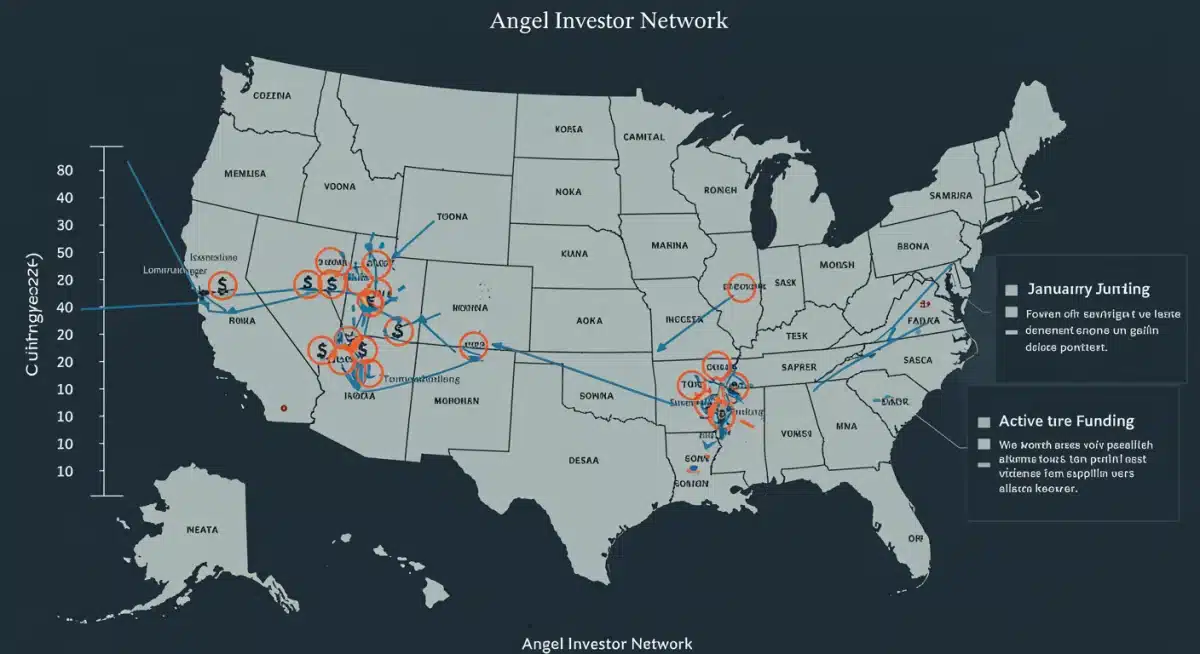
While angel investing occurs across the US, certain regions consistently demonstrate higher levels of activity. Silicon Valley, New York, Boston, and Austin remain powerhouses, but emerging tech hubs in places like Miami, Denver, and Raleigh are also seeing significant growth in angel networks. Each region often has its own unique flavor and sector specializations, which founders should research carefully.
In conclusion, January 2025 presents a strategic window for startups to engage with US angel investor networks. By understanding the prevailing investment trends and regional concentrations of activity, founders can more effectively target their outreach and position their ventures for success in securing early-stage funding.
Identifying Active Angel Networks in January 2025
Pinpointing the most active angel investor networks in the US for January 2025 requires diligent research and networking. Many networks operate with a degree of discretion, but their activity can often be gauged through recent press releases, portfolio updates, and participation in industry events. Leveraging online platforms and databases specifically designed for startup funding can also provide valuable leads.
Founders should prioritize networks that align with their industry, stage of development, and geographic location. A targeted approach is always more effective than a broad, untargeted outreach. Look for networks that have recently announced new investments or have publicly stated their investment focus for the upcoming quarter.
Top-Tier Angel Investor Networks to Watch
While the landscape is fluid, several prominent networks consistently demonstrate high activity. These often have well-defined processes and experienced members.
Tech Coast Angels (TCA): One of the largest angel investor groups in the US, with chapters across Southern California, known for its diverse portfolio.
New York Angels: A highly respected group focusing on a broad range of industries, particularly strong in tech and consumer products.
Boston Harbor Angels: Active in the vibrant Boston tech and biotech scene, with a focus on early-stage companies.
Keiretsu Forum: A global network with numerous US chapters, known for its extensive due diligence process and diverse member base.
Band of Angels: Based in Silicon Valley, this group has a long history of investing in high-growth technology startups.
Researching Niche and Emerging Networks
Beyond the well-known names, many niche and emerging angel networks are forming, often specializing in specific verticals like AI, clean energy, or women-led businesses. These smaller, more focused groups can offer a higher chance of connection for startups in their specific domains. Attending virtual pitch events and industry-specific conferences in late 2024 and early 2025 can provide direct access to these networks and their members. Personal introductions through mentors or advisors can also open doors to less publicly visible groups.
The key to identifying active networks is continuous monitoring of the startup funding ecosystem. Subscribing to industry newsletters, following prominent angel investors on professional platforms, and engaging with startup communities can provide real-time intelligence on where the capital is flowing. This proactive approach is crucial for any founder aiming to secure funding in January 2025.
Crafting a Compelling Pitch for Angel Investors
Once potential angel investor networks in the US are identified, the next critical step is to craft a pitch that resonates. Angel investors often see hundreds of pitches, so yours must be concise, clear, and compelling. It’s not just about the idea; it’s about the team, the market opportunity, and the potential for significant returns. January 2025 is a competitive funding period, making a standout pitch even more essential.
A strong pitch deck is the foundation, but the delivery and ability to articulate your vision, answer tough questions, and demonstrate passion are equally important. Remember that angels are often investing in the founders as much as the idea. They want to see conviction, resilience, and a clear understanding of the path to market and scalability.
Elements of an Effective Angel Pitch
Every successful pitch deck typically includes several core components, each designed to answer key questions an investor will have.
Problem: Clearly define the significant problem your startup is solving.
Solution: Present your unique and innovative solution.
Market Opportunity: Quantify the size and growth potential of your target market.
Traction: Showcase any progress, such as user growth, revenue, partnerships, or product development.
Team: Highlight the experience, expertise, and passion of your founding team.
Business Model: Explain how your company will generate revenue and achieve profitability.
Competition: Analyze your competitive landscape and articulate your sustainable advantage.
Financials: Provide realistic projections and your funding ask, along with how the capital will be used.
Tailoring Your Pitch to Specific Networks
Generic pitches rarely succeed. Research each angel network’s investment thesis, their portfolio companies, and the individual angels you might be pitching to. Understand their preferences, their typical investment size, and the industries they favor. Customizing your pitch to speak directly to their interests demonstrates diligence and a serious approach.
Furthermore, be prepared for rigorous due diligence. Angel investors will scrutinize your financials, market assumptions, and team capabilities. Having all your documentation ready and being transparent about challenges will build trust. A well-crafted pitch, backed by thorough preparation, significantly increases your chances of securing early-stage funding in January 2025.
The Due Diligence Process: What to Expect
After a compelling pitch captures the attention of angel investor networks in the US, the real work of due diligence begins. This is a comprehensive investigation into every aspect of your startup, designed to validate your claims and assess the risks and potential returns of an investment. For January 2025 funding, being prepared for this phase is as crucial as the initial pitch.
Angel investors, often seasoned entrepreneurs or executives themselves, will delve deep into your business model, market, technology, team, and legal structure. This process can be intensive and may take several weeks, or even months, depending on the complexity of your business and the investor group’s internal procedures. Transparency and responsiveness are key during this period.
Key Areas of Angel Due Diligence
Angel investors typically focus on a few critical areas to ensure their investment is sound.
Market Validation: Verifying your market size, customer acquisition strategy, and competitive advantages.
Technology & Product: Assessing the viability, scalability, and defensibility of your intellectual property.
Financials: Scrutinizing your projections, burn rate, existing capital, and historical financial data.
Legal & IP: Reviewing company formation documents, contracts, and intellectual property registrations.
Team Assessment: Evaluating the experience, commitment, and cohesion of your founding and management team.
Preparing for Due Diligence
Proactive preparation can significantly streamline the due diligence process. Organize all relevant documents in a secure data room or cloud storage, making them easily accessible upon request. This includes financial statements, legal documents, pitch decks, business plans, market research, and team resumes. Anticipate common questions and have well-thought-out answers ready.
Engagement with the angel investors during this phase is paramount. Be open to feedback, transparent about challenges, and demonstrate a willingness to address any concerns. A smooth due diligence process not only expedites funding but also builds a strong foundation of trust and partnership, which is invaluable for a startup’s long-term success. January 2025 offers a window for funding, but preparedness for due diligence ensures that window doesn’t close prematurely.
Post-Investment: Leveraging Angel Network Value
Securing funding from angel investor networks in the US in January 2025 is not merely about receiving capital; it’s about gaining strategic partners. Angel investors often bring a wealth of experience, industry connections, and mentorship that can be far more valuable than the financial investment itself. Founders should actively seek to leverage these resources to accelerate their startup’s growth and navigate challenges.
Many angel investors have built and scaled successful companies, providing them with firsthand knowledge of the entrepreneurial journey. Their insights can help founders avoid common pitfalls, refine their strategies, and open doors to new opportunities. Establishing clear communication channels and setting expectations for engagement post-investment are crucial for a productive relationship.
Beyond Capital: The Strategic Advantages
Angel investors offer a multitude of benefits that extend far beyond the initial cash injection. These advantages can significantly impact a startup’s trajectory.
Mentorship: Guidance from experienced entrepreneurs on strategy, operations, and fundraising.
Network Access: Introductions to potential customers, partners, future investors, and key talent.
Credibility: Association with reputable angels can enhance a startup’s standing in the market.
Operational Support: Hands-on advice and support in specific areas like marketing, sales, or product development.
Building a Productive Relationship
To maximize the value of your angel investors, cultivate a proactive and transparent relationship. Provide regular updates on your progress, celebrate successes, and openly communicate about challenges. Seek their advice on strategic decisions and leverage their networks when appropriate. Remember, their success is tied to yours, so they are generally invested in seeing you thrive.
Establishing a formal advisory board with some of your angel investors can also be beneficial, providing structured guidance and accountability. By actively engaging with their angel network, startups funded in January 2025 can transform a financial transaction into a powerful partnership that fuels sustainable growth and helps overcome the inherent challenges of building a new venture.
Common Pitfalls and How to Avoid Them
Navigating the world of angel investor networks in the US can be fraught with challenges, especially for first-time founders. While January 2025 offers numerous funding opportunities, it’s equally important to be aware of common pitfalls that can derail a startup’s fundraising efforts or lead to suboptimal outcomes. Proactive awareness and strategic planning can help founders avoid these traps.
One of the most frequent mistakes is a lack of thorough preparation, both in terms of the pitch and the subsequent due diligence. Another common issue is targeting the wrong investors, leading to wasted time and effort. Founders must also be careful about valuation expectations and the terms of investment, ensuring they don’t give away too much equity too early.
Avoiding Fundraising Missteps
Several key areas require careful attention to ensure a smooth and successful fundraising journey.
Unrealistic Valuation: Overvaluing your company can deter investors seeking reasonable returns.
Poor Communication: Lack of transparency or infrequent updates during due diligence can signal red flags.
Ignoring Feedback: Dismissing constructive criticism from angels can close doors to potential investment.
Undefined Use of Funds: Not having a clear plan for how the investment capital will be deployed.
Lack of Industry Knowledge: Inability to articulate market trends, competitive landscape, or customer needs.
Strategic Considerations for Founders
Founders should focus on building strong relationships, not just securing a check. This means doing your own due diligence on potential investors to ensure they are a good fit for your company culture and long-term vision. Understand their track record, their previous investments, and their reputation within the startup community.
Furthermore, be mindful of legal aspects. Always have legal counsel review term sheets and investment agreements. While speed might seem appealing, rushing through legal processes can lead to significant problems down the line. By being diligent, realistic, and strategic, founders can navigate the angel investment landscape effectively and secure favorable terms for their ventures in January 2025.
The Future of Angel Investing Beyond January 2025
While our immediate focus is on the time-sensitive opportunities with angel investor networks in the US for January 2025, it’s also valuable for founders to consider the broader trends shaping the future of angel investing. The ecosystem is dynamic, constantly adapting to technological advancements, economic shifts, and evolving regulatory environments. Understanding these longer-term trajectories can help startups plan for future funding rounds and strategic growth.
We anticipate a continued rise in specialized angel groups focusing on niche industries, as well as an increased emphasis on impact investing and diversity. Technology itself will also play a larger role, with platforms facilitating connections between angels and founders, and potentially even AI-driven tools assisting in due diligence and investment matching. The geographical spread of angel investing is also likely to continue diversifying beyond traditional tech hubs.
Emerging Trends in Angel Investment
Several trends are poised to redefine the angel investing landscape in the coming years.
Increased Diversification: More angel investors from diverse backgrounds, and greater focus on funding diverse founders.
Syndication Platforms: Growth of online platforms that allow angels to pool resources and invest collectively in larger deals.
Impact Investing: A stronger emphasis on startups that generate both financial returns and positive social or environmental impact.
Geographic Decentralization: Continued growth of angel networks in secondary and tertiary markets across the US.
Preparing for Long-Term Fundraising
For startups looking beyond January 2025, building a strong foundation now is critical. This includes developing robust business models, achieving measurable traction, and fostering strong relationships with early investors. The reputation you build with your first angel investors can significantly influence your ability to attract subsequent funding rounds from venture capitalists or later-stage angel groups.
Staying informed about market shifts and investor preferences will remain essential. The world of angel investing is a partnership, and successful long-term fundraising is built on trust, performance, and a shared vision for the future. By embracing these evolving dynamics, startups can position themselves for sustained success in the competitive funding landscape.
Key Aspect
Brief Description
Current Opportunity
January 2025 is a prime time for angel funding as networks finalize annual allocations.
Key Investment Areas
AI, sustainable tech, HealthTech, and SaaS for SMBs are attracting significant angel interest.
Pitching & Due Diligence
A compelling pitch and thorough preparation for due diligence are crucial for securing funding.
Leveraging Value
Beyond capital, angels offer mentorship, network access, and credibility vital for growth.
Frequently asked questions about angel investing
What distinguishes angel investor networks from venture capital firms?▼
Angel investor networks typically provide earlier-stage funding, often in smaller amounts, and comprise individual accredited investors. Venture capital firms usually invest larger sums in more established startups and manage institutional funds, often having a more formal investment process and higher expectations for rapid scalability.
How can startups best identify active angel investor networks in the US for January 2025?▼
To identify active networks, startups should research recent investment announcements, attend industry-specific virtual events, leverage online funding platforms, and seek introductions through mentors or incubators. Tailoring research to specific industries and regions can also yield better results.
What should be included in a compelling pitch to angel investors?▼
A compelling pitch should clearly articulate the problem, your unique solution, market opportunity, team’s expertise, business model, traction, competitive advantage, and financial projections. It must be concise, data-driven, and demonstrate a clear path to significant returns for investors.
What is the typical timeline for securing angel funding in January 2025?▼
While January 2025 offers a peak opportunity, the entire process from initial outreach to receiving funds can take anywhere from 3 to 6 months. This includes pitching, multiple meetings, extensive due diligence, and legal documentation. Preparedness can significantly shorten this timeline.
Beyond capital, what value do angel investors bring to a startup?▼
Angel investors offer invaluable mentorship, leveraging their entrepreneurial experience to guide founders. They also provide access to extensive professional networks, enhance a startup’s credibility, and can offer operational support in specific business areas, all contributing significantly to growth and strategic direction.
Conclusion
The window of opportunity presented by active angel investor networks in the US during January 2025 is a critical moment for startups ready to scale. By meticulously researching potential investors, crafting a compelling and tailored pitch, and preparing thoroughly for the due diligence process, founders can significantly enhance their chances of securing vital early-stage capital. Beyond the financial investment, the strategic guidance, industry connections, and mentorship offered by angel networks can prove to be an even more impactful catalyst for long-term success. As the startup ecosystem continues to evolve, a proactive and informed approach to engaging with these networks will remain paramount for any aspiring entrepreneur.
Eduarda Moura has a degree in Journalism and a postgraduate degree in Digital Media. With experience as a copywriter, Eduarda strives to research and produce informative content, bringing clear and precise information to the reader.